Vol. 03 — Banana Leaf and Sea Air
Bali
From Ubud to Jimbaran
Standfirst
Volcanic soil, rice terraces, coconut husks glowing over a grill, and offerings placed on doorsteps at dawn. The Balinese kitchen is inseparable from the island itself — and from the small daily ceremonies that hold it together.
Chapter One
A cuisine of quiet ceremony
Balinese cooking is built around rice, coconut, sambal and the fragrant paste known as base gede — lemongrass, galangal, turmeric, shrimp paste and chilli, pounded fresh each morning. Every household has its own version, and every warung tastes slightly different from the next.
What sets Bali apart is its ritual generosity. Food is offered to the gods before it is eaten by people, and shared platters like nasi campur — a small mound of rice ringed by six or seven side dishes — turn everyday lunch into a quiet celebration of variety, colour and craft.
Food is offered to the gods before it is offered to the family. Every meal begins as a small ceremony.
Chapter Two
Grill smoke, sunset, sea
Babi guling, the ceremonial spit-roasted suckling pig, is crisp-skinned and herb-stuffed, cooked for temple days and family gatherings. Sate lilit — minced fish or chicken pressed onto lemongrass sticks — is grilled over coconut husks until the smoke perfumes the whole warung.
Down on Jimbaran beach, whole snapper and prawns come off the coals at sunset, dressed with lime and sambal matah, served on paper-lined tables just above the tide.
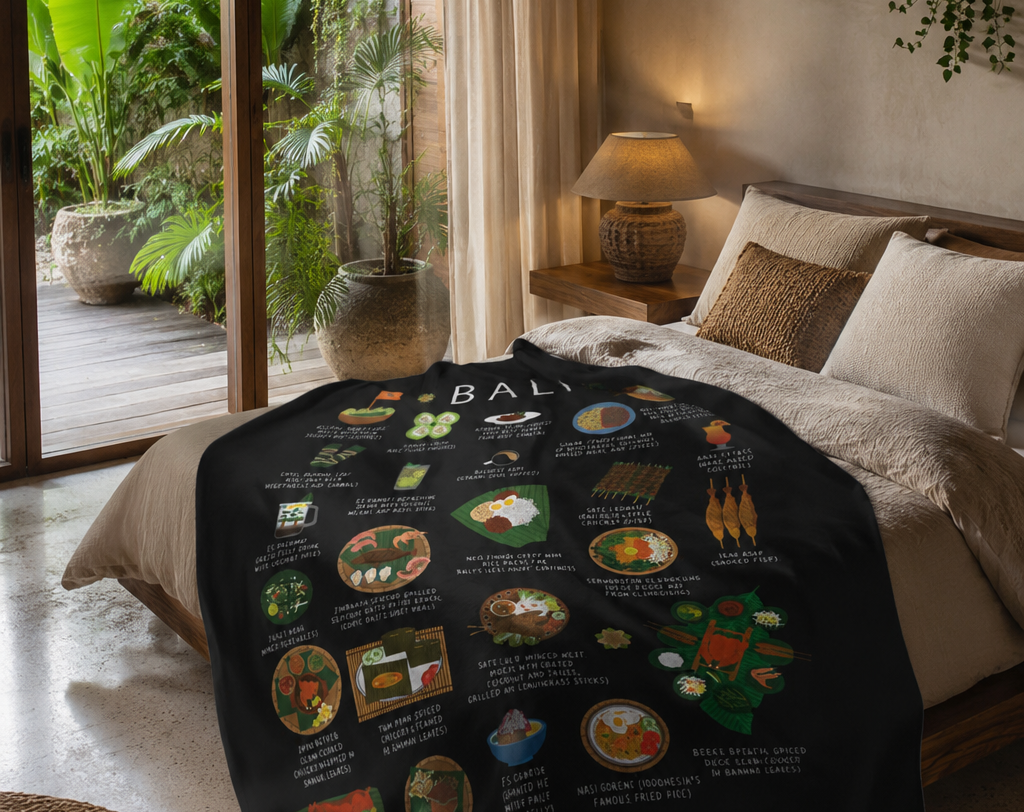
The Bali blanket — designed to feel like a slow afternoon on the island.
Chapter Three
The small rituals of the day
Balinese kopi in the morning, es campur in the afternoon, cold Bintangs at sunset — pieces made to slot into that easy tropical rhythm.
Tote — Ubud
Tee — Canggu
Poster — Seminyak
The Collection
The Bali Collection
Banana leaves, coconut, temple offerings, warung plates and beach seafood — gathered into a single illustrated composition.