The Story
Peru Food Culture
Lima Mornings, Market Colour
Lima wakes between the Pacific and the market stall. Citrus is cut, ají is ground and fish arrives while the morning is still cool. At neighbourhood counters, breakfast might be tamal with salsa criolla; by noon, ceviche has become the city's bright, urgent centre.
The capital's cooking is not one tradition but many conversations — coastal, Andean, Amazonian, Chinese-Peruvian chifa and Japanese-Peruvian Nikkei — held together by confidence in acidity, heat and texture.
Ceviche, Causa and the Language of Ají
Ceviche is a lesson in timing: fish, lime, salt, onion and ají brought together at the last possible moment. Causa layers yellow potato with ají amarillo, avocado and fillings in cool, careful slices. Anticuchos meet the grill after dark, smoky and sharpened with spice.
These dishes show how Peruvian food can be vivid without becoming loud. Each ingredient keeps its shape, and every plate balances something cool, hot, crisp, soft or deeply savoury.
From the Andes to the Chifa Table
Potatoes, maize and quinoa carry the highlands into kitchens across Peru. In Lima's chifas, lomo saltado moves through the wok — beef, tomato, onion and soy served with both rice and fries — a dish made by migration and now inseparable from the national table.
At home, recipes travel between generations less as fixed instructions than as gestures: the right colour for an ají sauce, the moment rice is ready, the amount of lime judged by taste.
Why Maison Maps Celebrates Peru
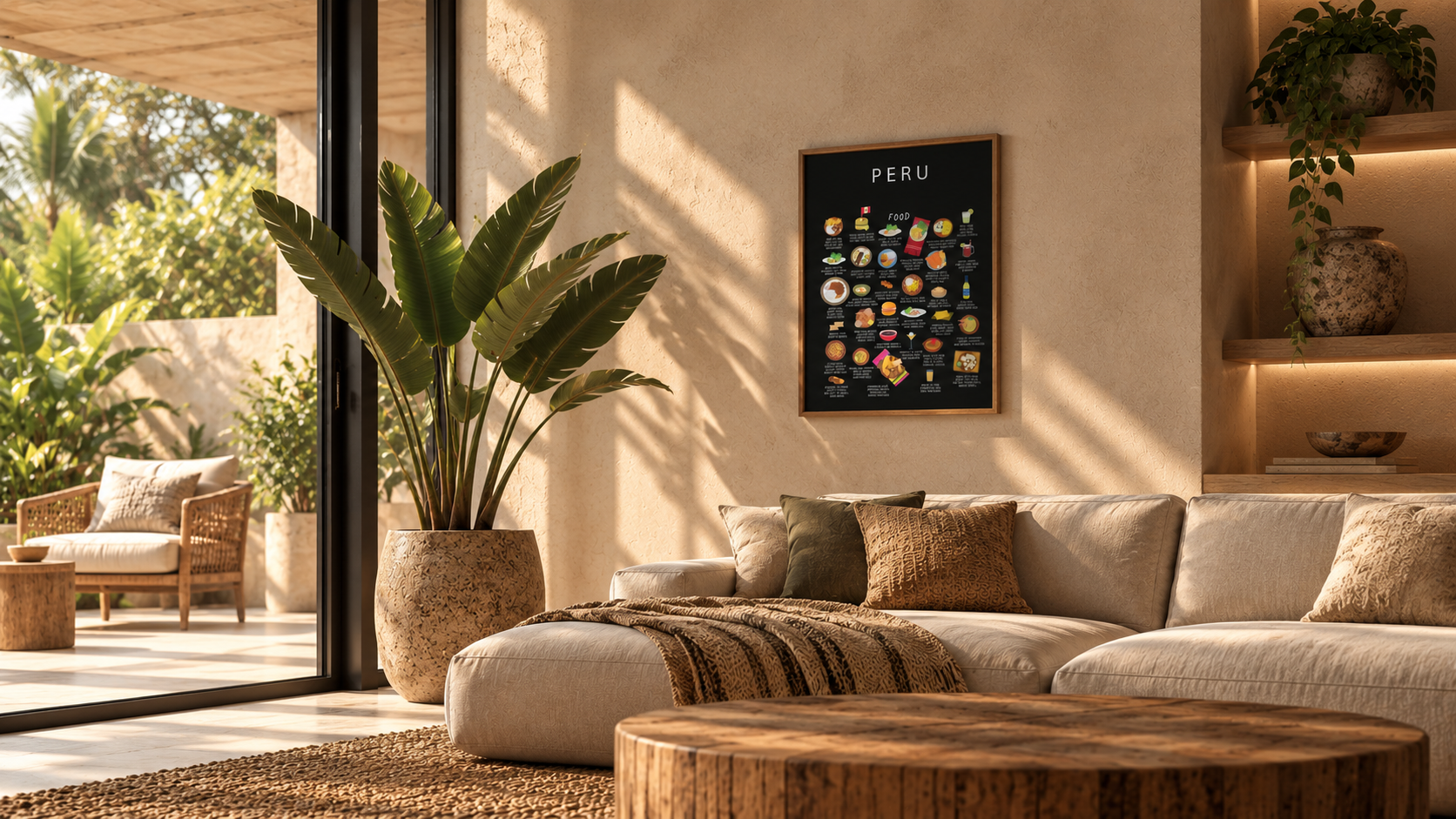
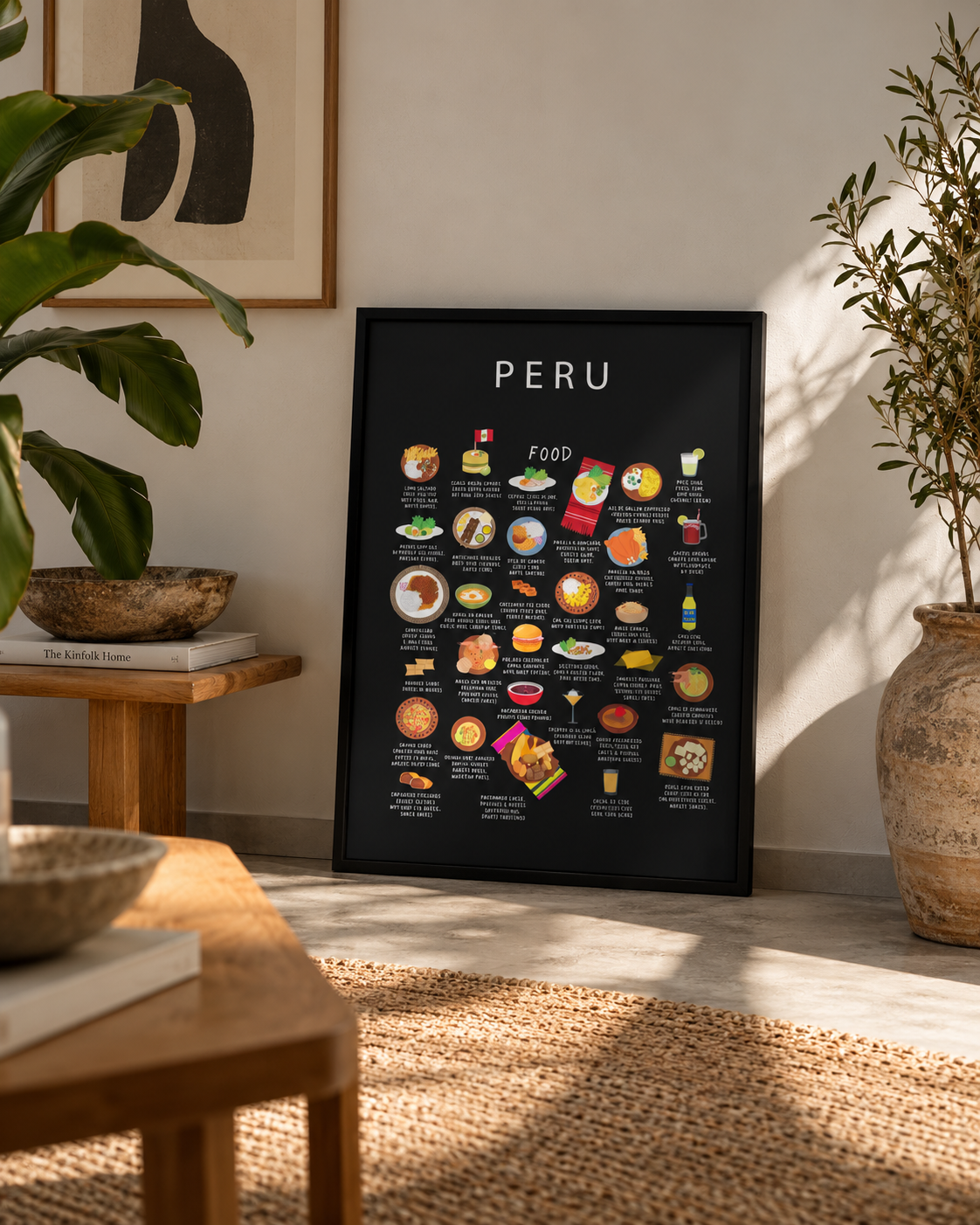
The Maison Maps Peru poster collection gathers ceviche, causa, anticuchos, ají de gallina, lomo saltado and pisco sour into illustrated Peruvian wall art. These are food posters for kitchens and family homes — a visual record of dishes people remember, cook and share.
Ready to bring the Peru kitchen home?
Shop the Peru collection →