The Story
Chile Food Culture
A Long, Narrow Country with a Deep, Wide Table
Chile stretches more than four thousand kilometres from the Atacama desert to the glaciers of Patagonia, and its kitchen carries that geography on every plate. Few countries in the world have this much coastline, this many microclimates, this much altitude — and Chilean cooking has quietly turned all of it into dinner. To eat here is to taste the Pacific, the Andes and the central valley in a single afternoon.
What ties it all together is a certain unhurried warmth. Meals are long, tables are shared, and the pisco sour is poured with the same casual generosity as a glass of water. The Chilean kitchen doesn't shout; it simply keeps arriving with more.
The Ocean, the Andes and the Central Valley
Along the coast, ceviche, machas a la parmesana and paila marina speak of one of the richest cold-water fisheries on the planet. Sea urchin, king crab from the far south, congrio, reineta and machas — Chilean seafood is intense, briny and treated with almost no interference. A squeeze of lemon, a scatter of coriander, an ice-cold glass of white from Casablanca, and the plate is finished.
Inland, the central valley pours out cazuela, pastel de choclo and porotos granados — the slow, comforting stews that made Chilean home cooking famous. In the south, German and Mapuche traditions meet in kuchen, curanto and hearty potato dishes cooked in earth ovens. And in the desert north, quinoa, llama, and the earliest wines of the country carry an Andean quietness all their own.
Signature Dishes and Everyday Favourites
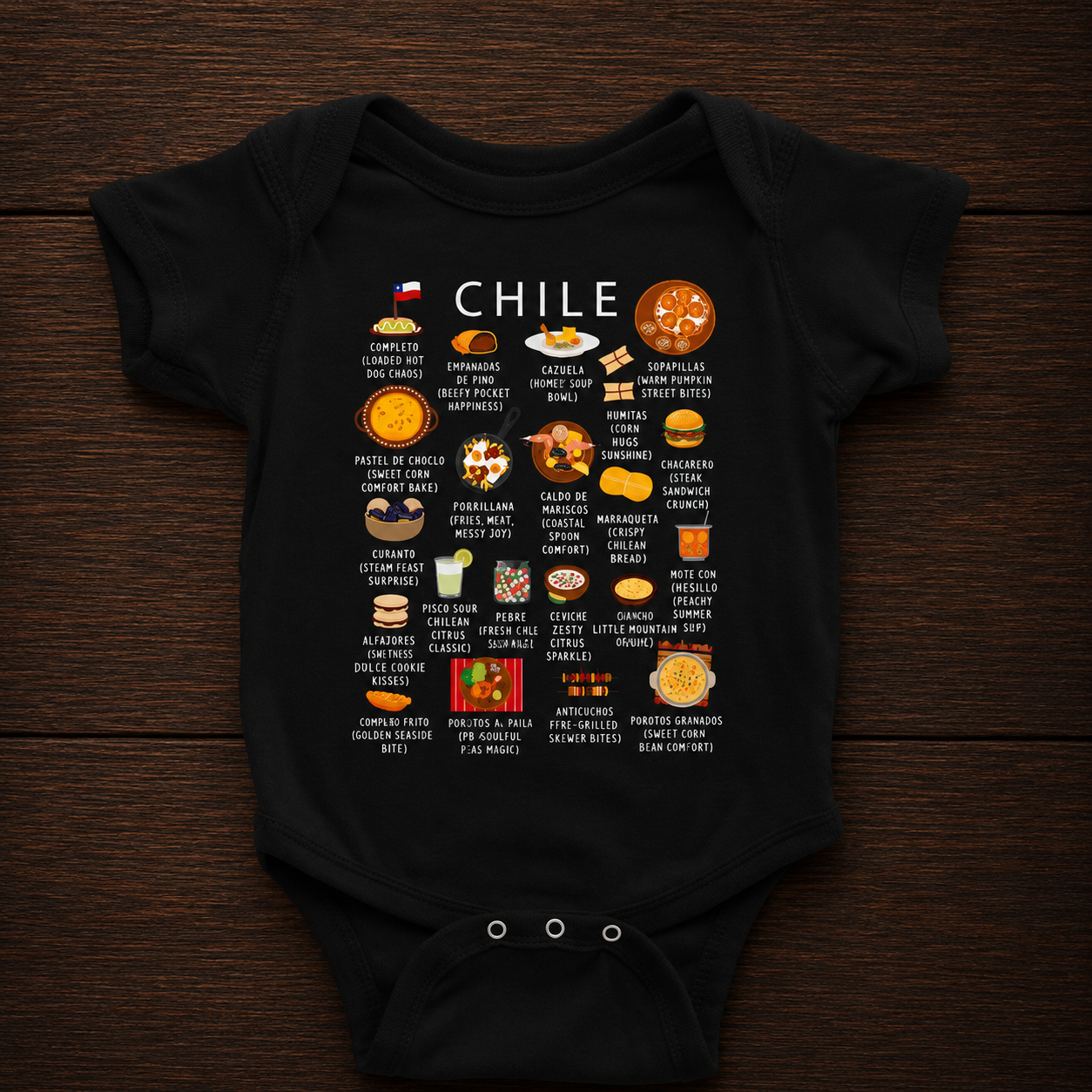
The empanada de pino — baked, folded around beef, onion, olive and a slice of hard-boiled egg — is the country's most beloved snack. Completos, the maximalist Chilean hot dog crowned with avocado, tomato and mayonnaise, are eaten standing up on street corners. Pastel de choclo, a sweet-corn casserole layered over spiced meat, is the taste of a Sunday lunch in a farmhouse.
Then there are the small, addictive things: sopaipillas fried in pumpkin dough and dipped in pebre, mote con huesillos on hot summer afternoons, manjar spread thickly on everything from alfajores to bread. Chilean sweets lean toward caramel, milk and gentle spice — comfort more than spectacle.
Pisco, Wine and the Long Afternoon
Chile is a wine country in the deepest sense: Carmenère, Cabernet Sauvignon, País, Sauvignon Blanc from Casablanca, Syrah from Elqui. Wine is on almost every table, and rarely discussed with pretension. Pisco — the grape brandy at the heart of the pisco sour — is the national spirit, poured with lemon, sugar and a foamy egg-white crown that has become a shorthand for Chilean hospitality.
Afternoons often slow down for once (tea time), a merienda of avocado toast, marraqueta bread, ham, cheese and a strong cup of black tea. It's an unfussy ritual, but a very Chilean one — a pause built into the day.
Why Maison Maps Celebrates Chile
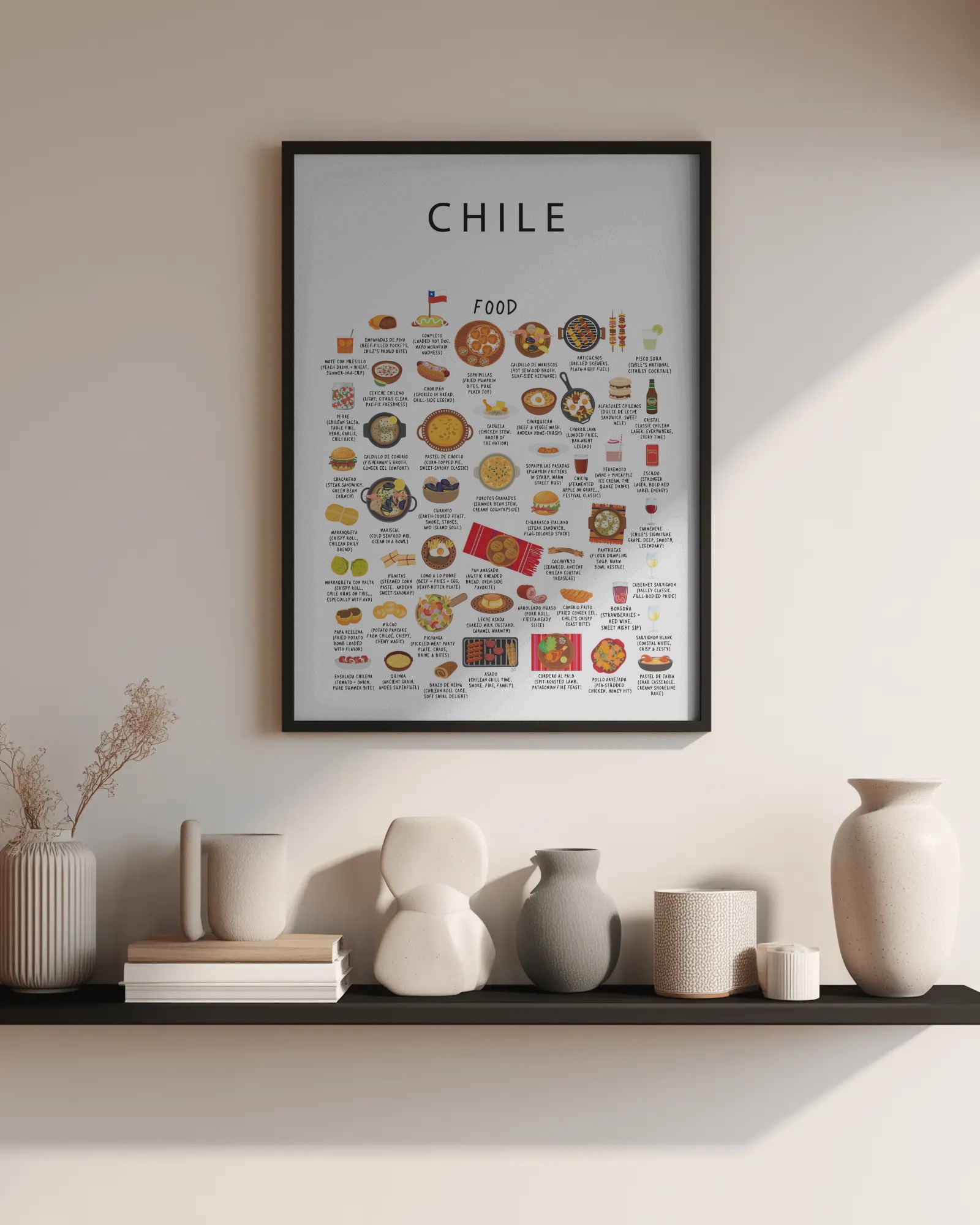
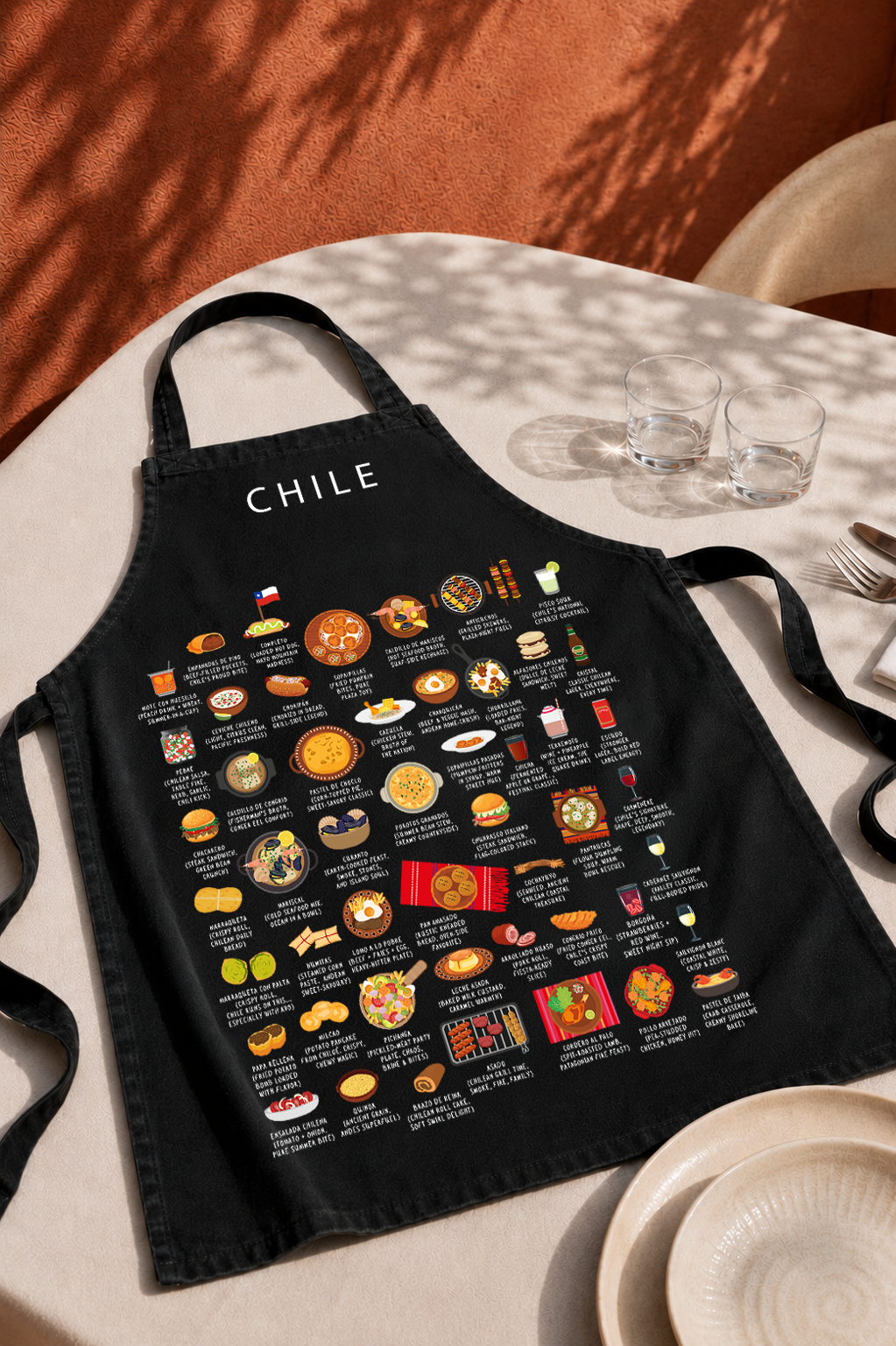
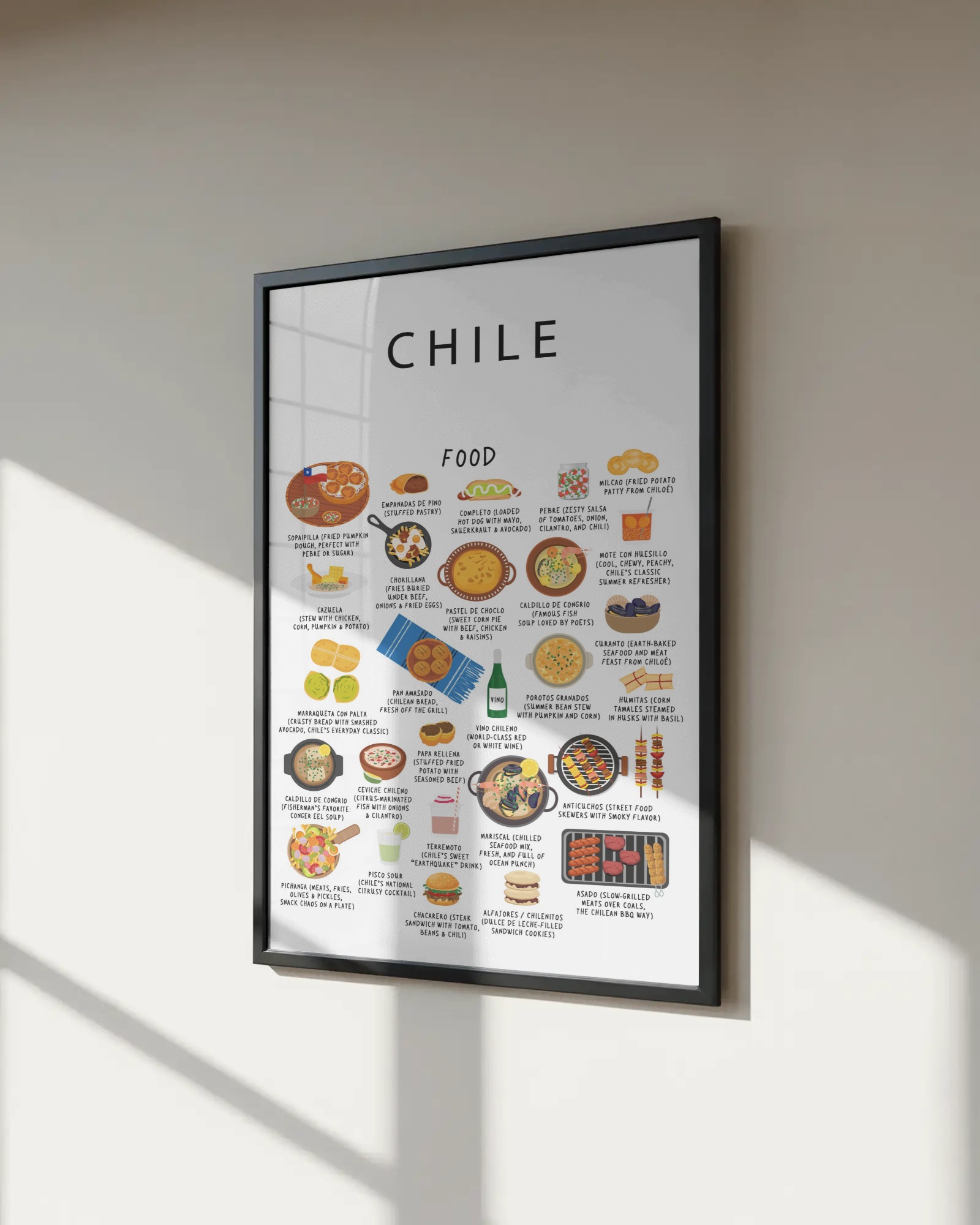
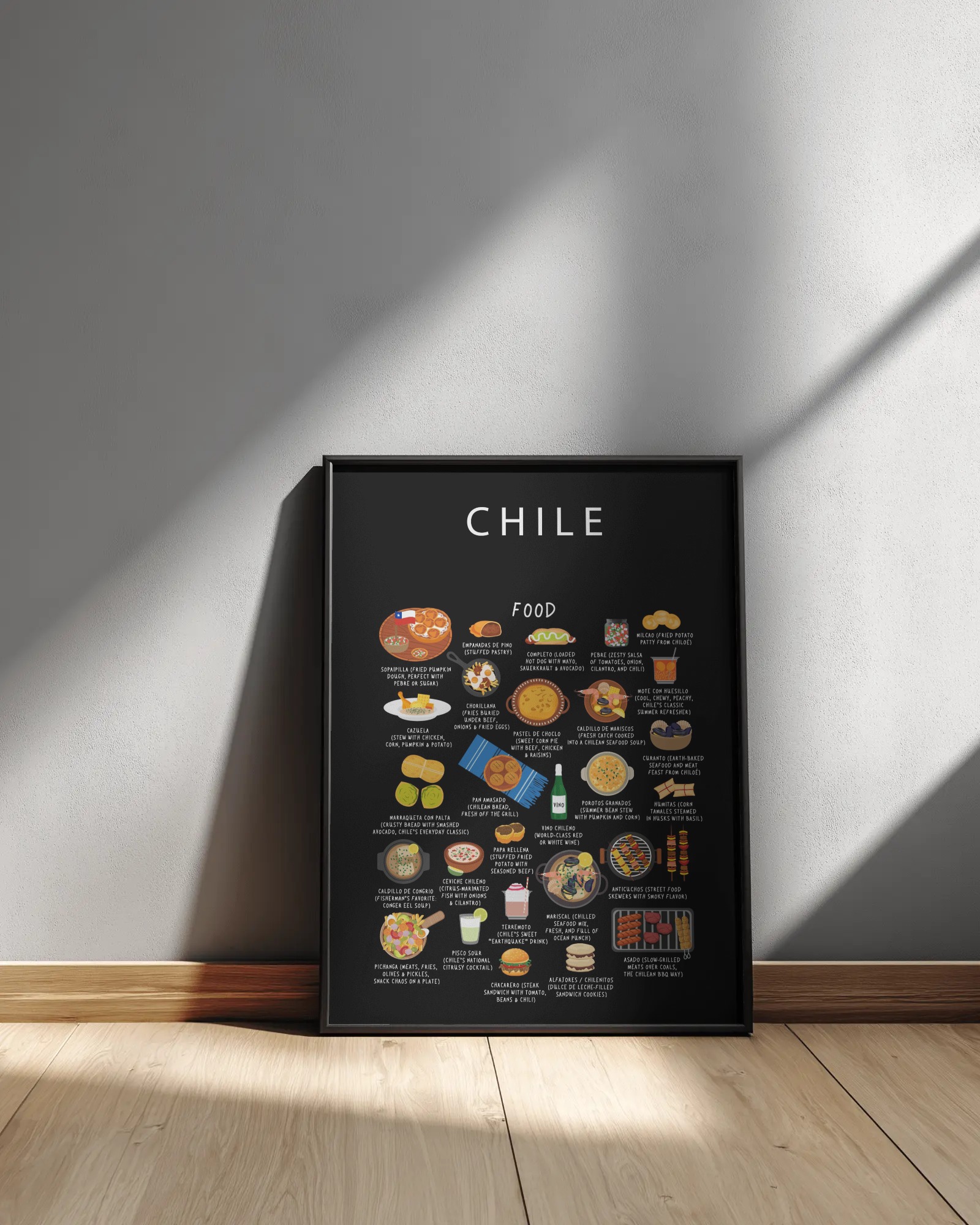
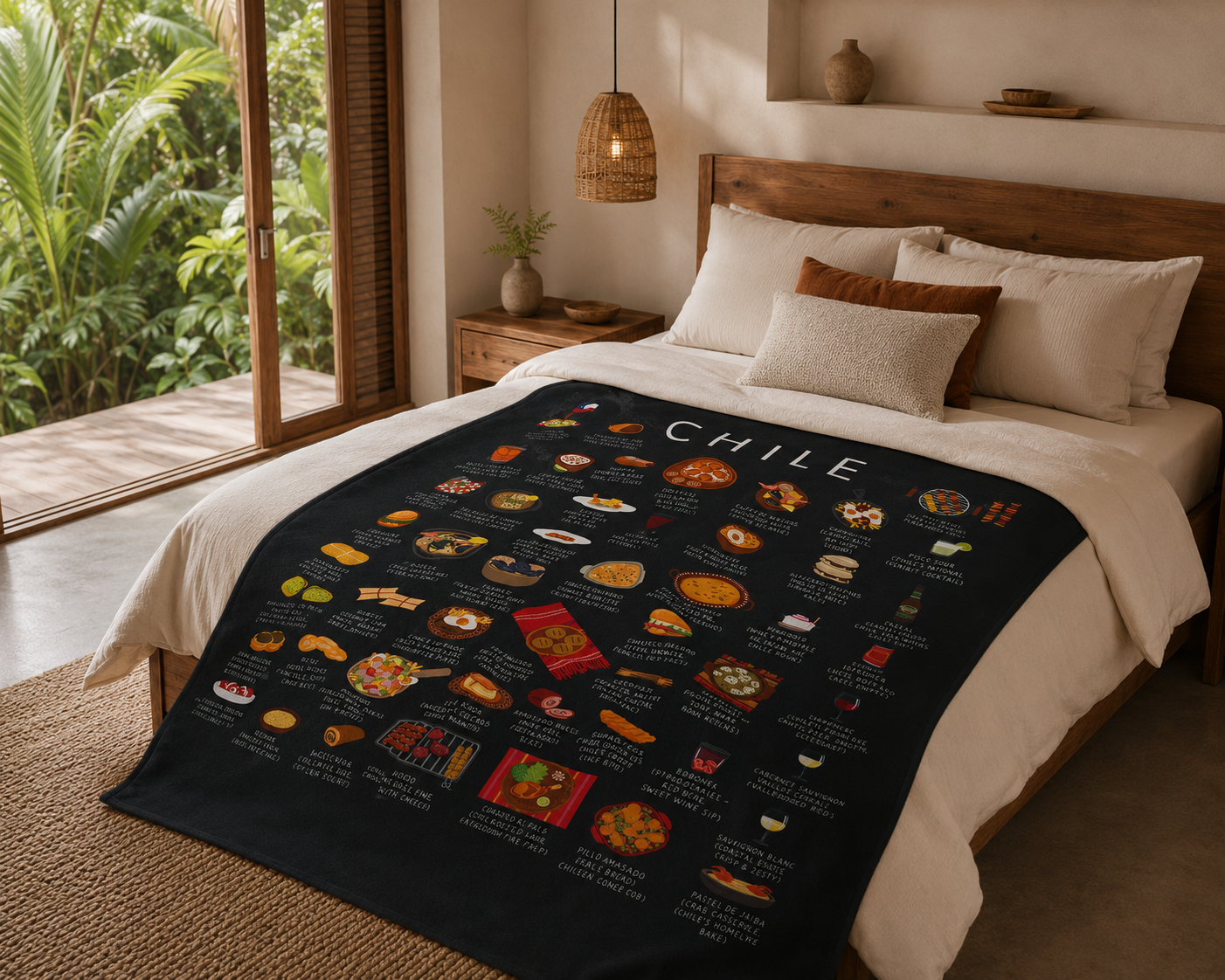
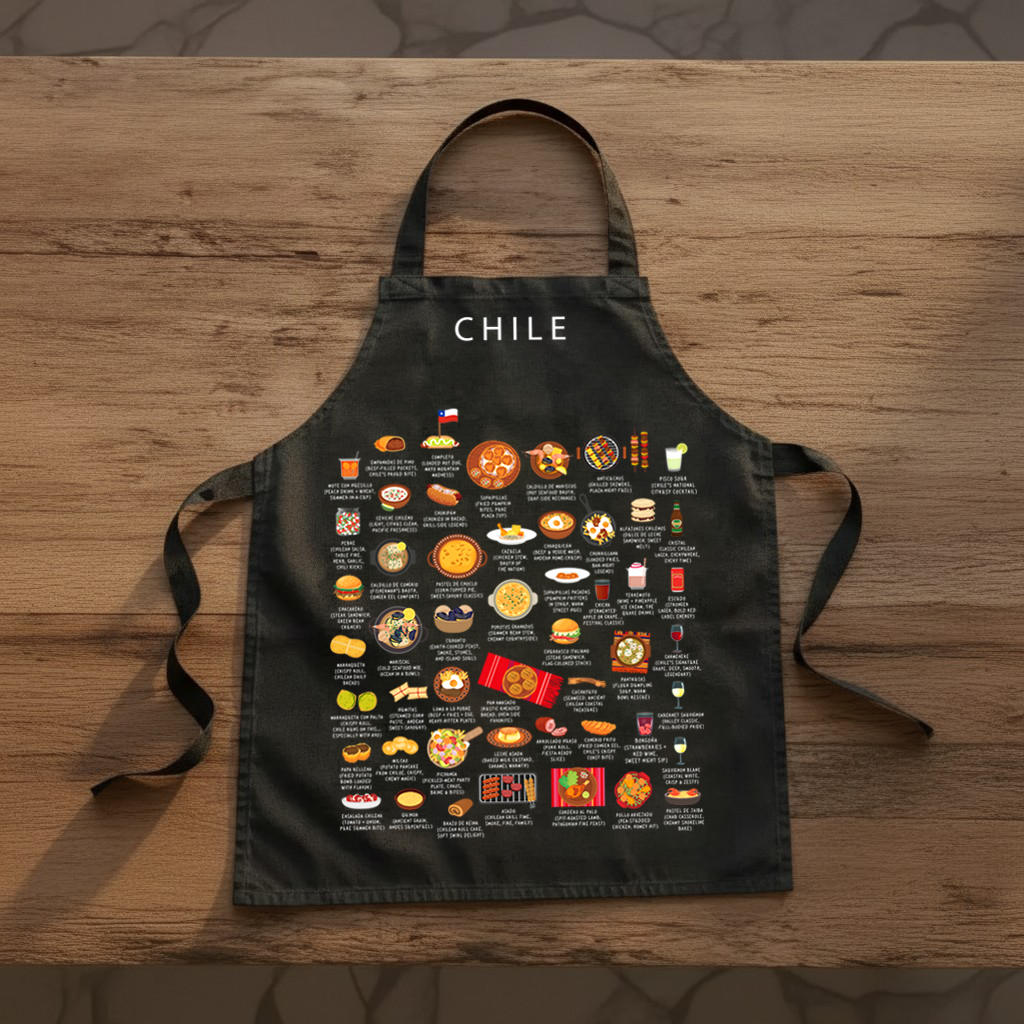
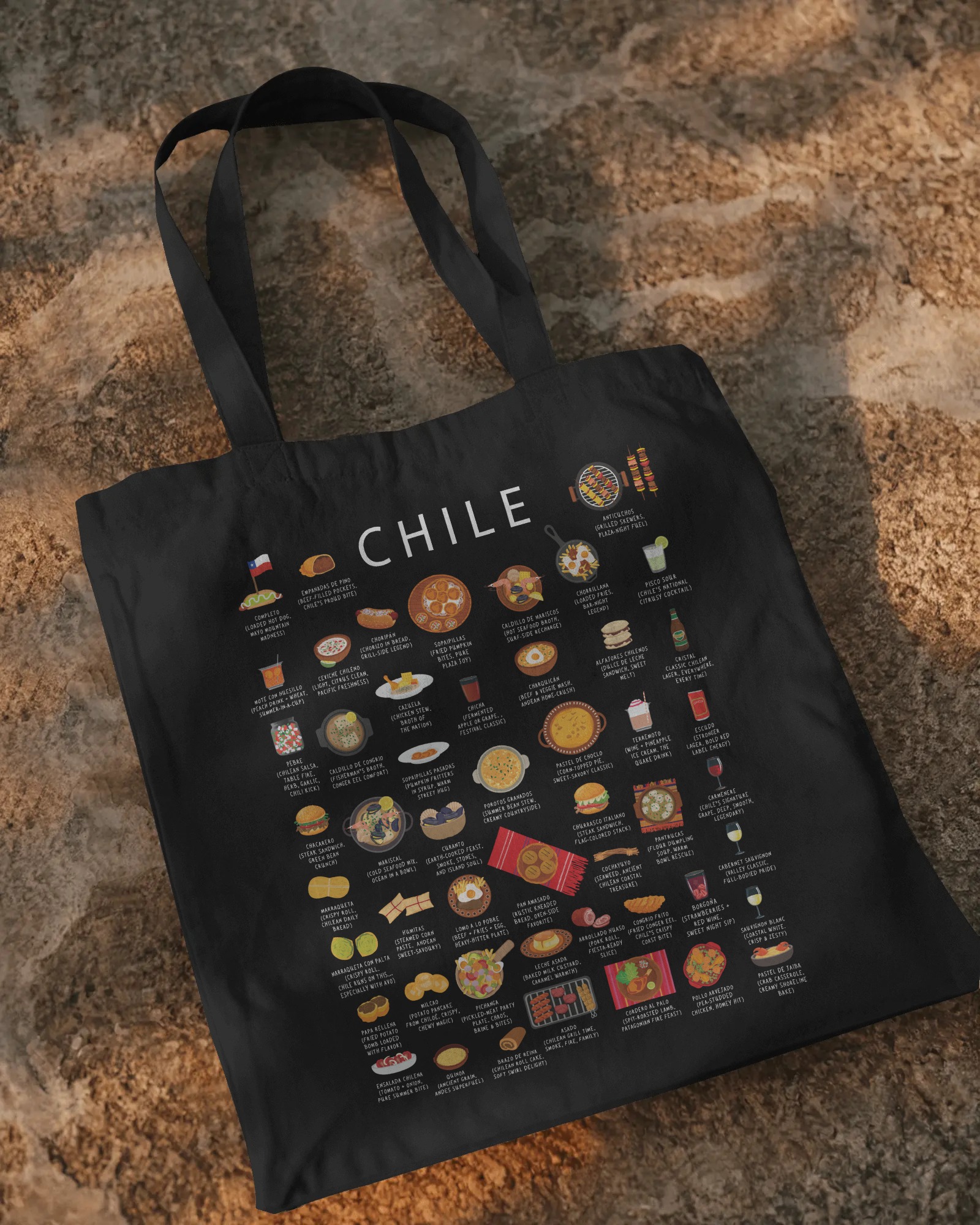
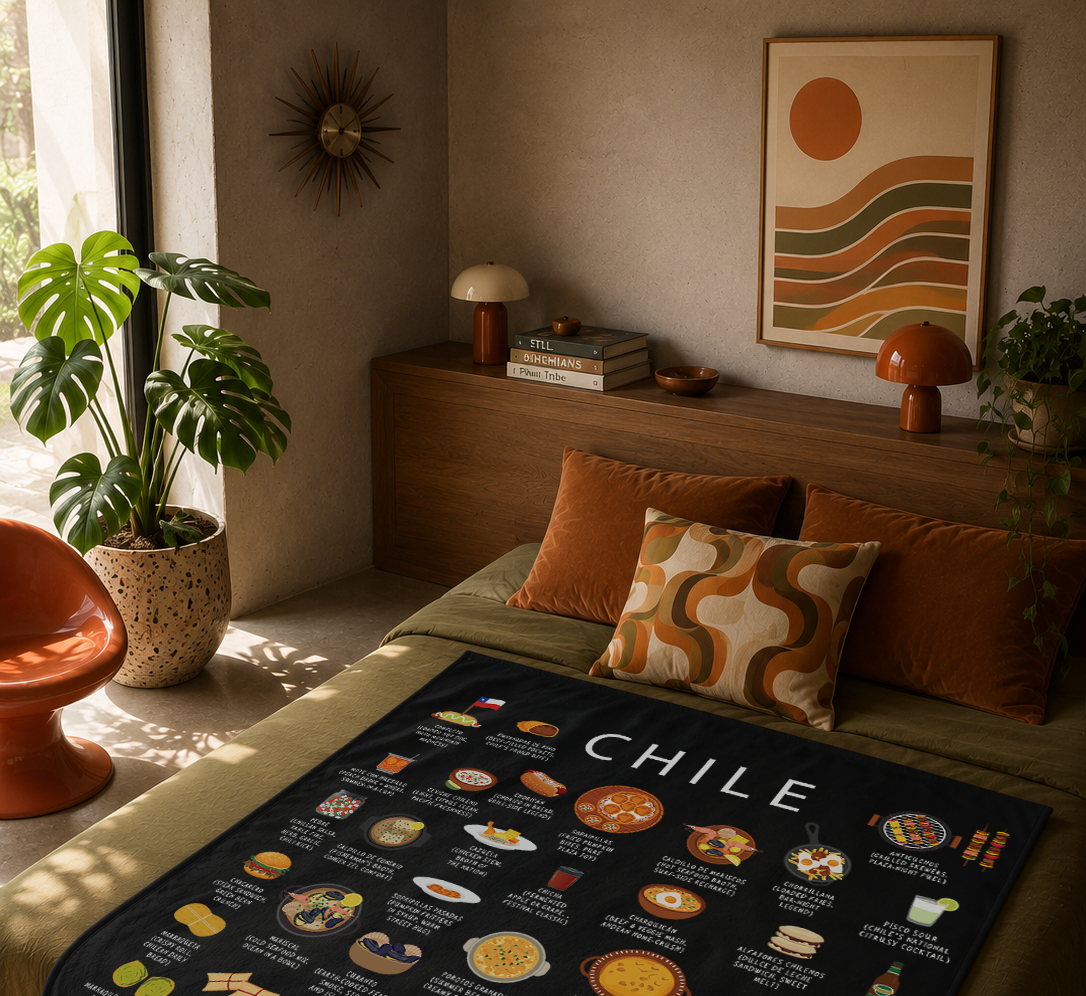
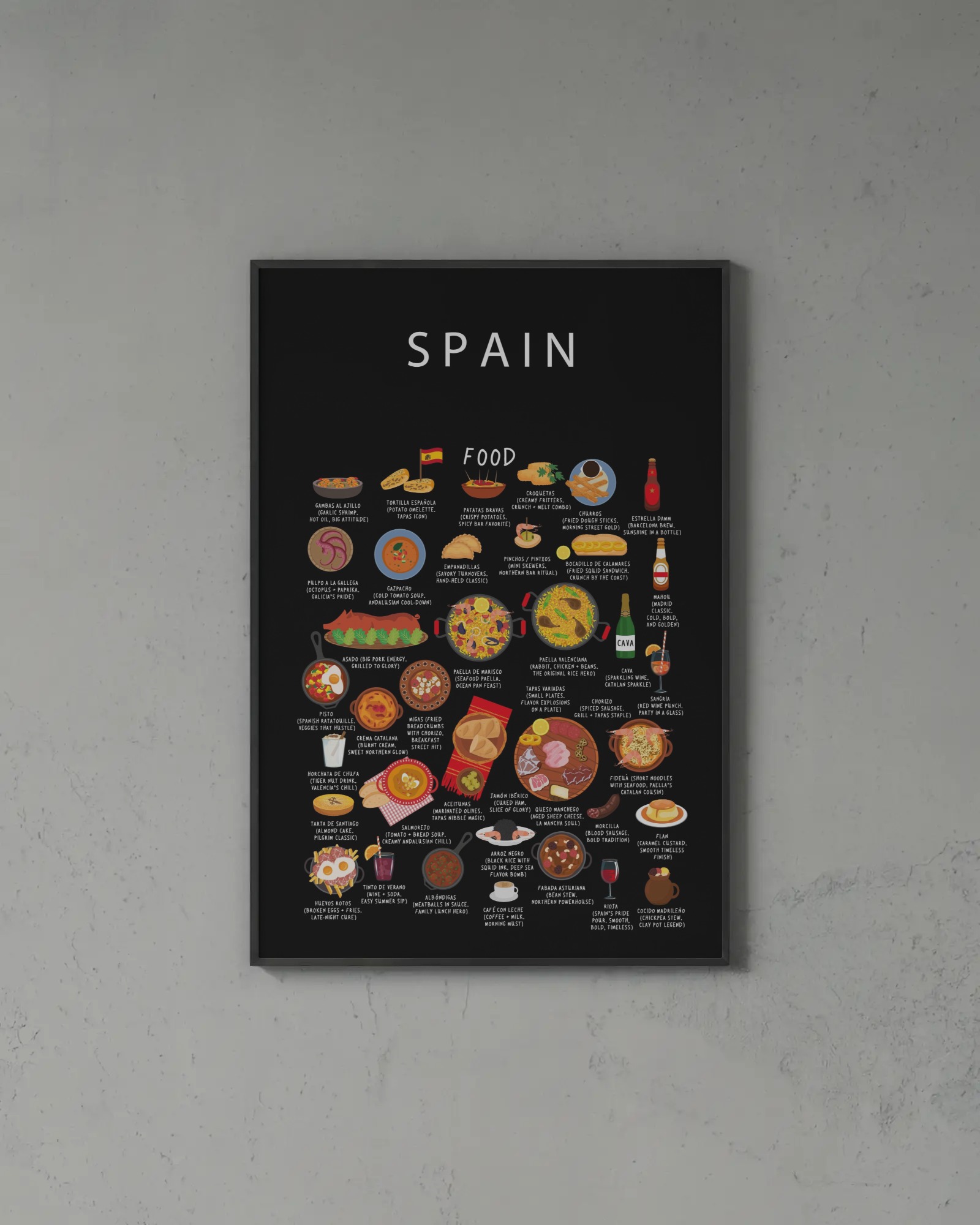
Our Chile collection gathers the country's most-loved flavours into a single illustrated composition — empanadas, completos, pastel de choclo, pisco sour, cazuela, humitas, mote con huesillos and the wines that anchor the table. It is a love letter to a long, narrow country where the ocean meets the mountains at almost every meal.
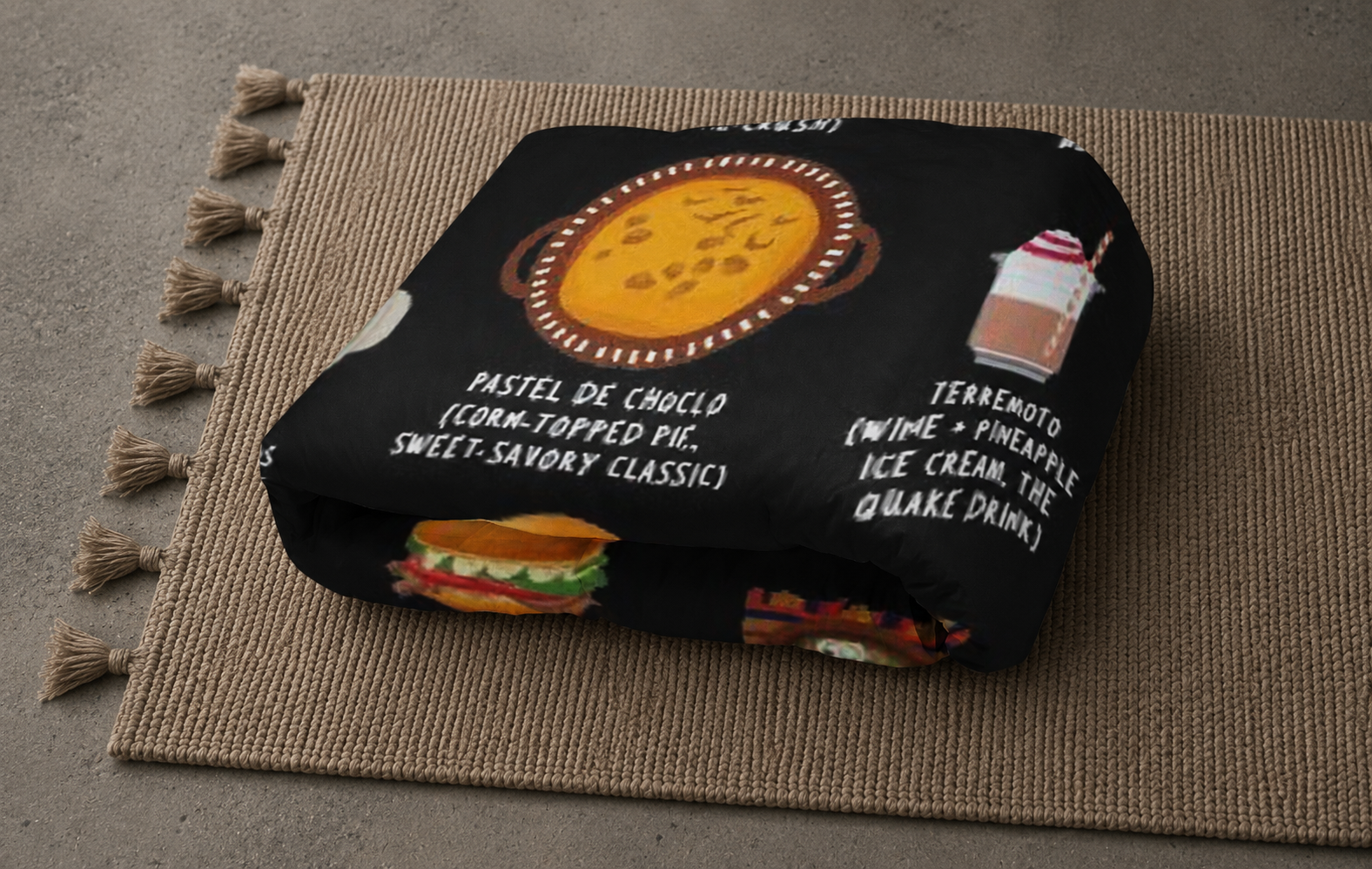
Every Chile piece is printed and shipped through our Etsy shop — posters, blankets, aprons, tote bags and baby onesies for anyone who has watched the Pacific from Valparaíso, walked the vineyards of the Colchagua Valley, or simply wants a little of Chile's warm, unhurried rhythm at home.
Ready to bring the Chile kitchen home?
Shop the Chile collection →