The Story
Pakistan Food Culture
Nihari Mornings and the Lahori Breakfast
Breakfast in Pakistan is rarely modest. Nihari has been on the stove since the night before, its beef falling apart into a dark, spiced gravy that is scooped up with naan and finished with lemon, ginger and green chilli. Beside it sit halwa puri, paya for the weekend, and chai poured strong with milk into small glasses.
This is a kitchen built on patience. Onions are browned slowly, whole spices bloom in ghee, and stews are left long enough that the cook can walk away. The result tastes layered rather than loud, and the eating is the only part of the process anyone hurries.
Biryani, Pulao and the Shared Pot
Rice carries the celebrations. Biryani is layered with saffron, fried onions and marinated meat, sealed and steamed until every grain is separate; Karachi has its own fiery version, Lahore its own preferences, and every family its own non-negotiable method. Pulao is the quieter cousin, subtler and made for ordinary evenings.
Haleem belongs to the same generous logic: wheat, lentils and meat stirred for hours into a smooth mash, topped with crisp onions and coriander. These are dishes cooked for a crowd, ladled from one pot into many bowls.
Charcoal Streets: Kebabs, Bun Kebab and Chaat
As the day cools, the grills start. Seekh kebab is pressed onto skewers over charcoal, chapli kebab is flattened wide in Peshawar style, and chicken malai tikka arrives creamy from its yoghurt marinade. Bun kebab is handed over wrapped in paper, eaten standing at the roadside.
Alongside them come the sharp, cold and crunchy: chana chaat, gol gappay filled with tangy water, aloo samosa, and paratha rolls folded tight for a late-night walk home. Street food here is not a novelty — it is dinner.
Chai, Kheer and Sweet Endings
Chai is the national constant, poured at every hour, in offices, homes and shops, boiled with milk until it turns the colour of caramel. Lassi answers the heat, sweet or salty, thick from the churn; sugarcane juice is pressed at the corner and drunk immediately.
Dessert is unashamed. Kheer thickens slowly with cardamom, gulab jamun sits in syrup, shahi tukda turns bread into something royal, and gajar halwa belongs to winter afternoons. Falooda arrives layered in a glass, half drink and half pudding.
Why Maison Maps Celebrates Pakistan
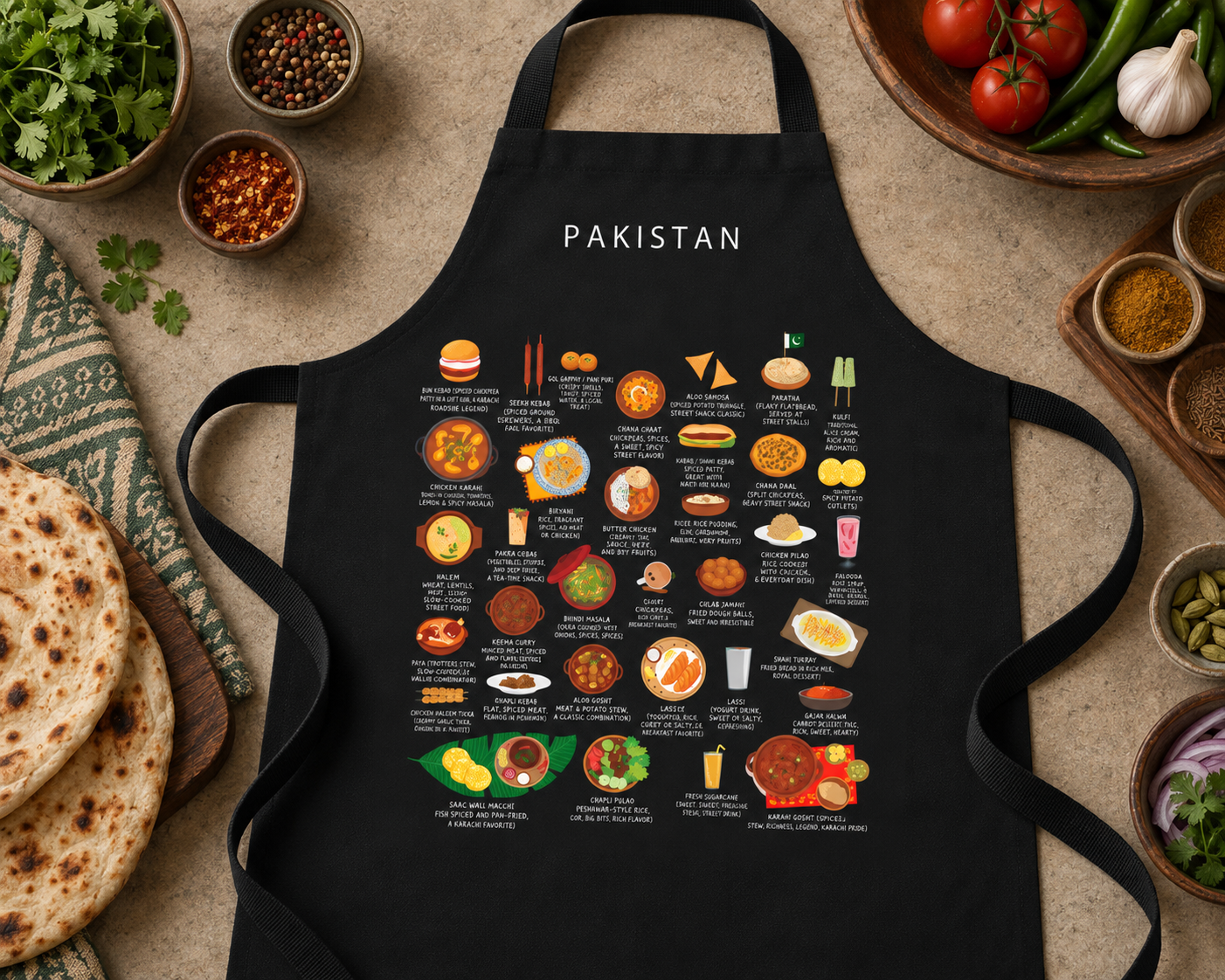
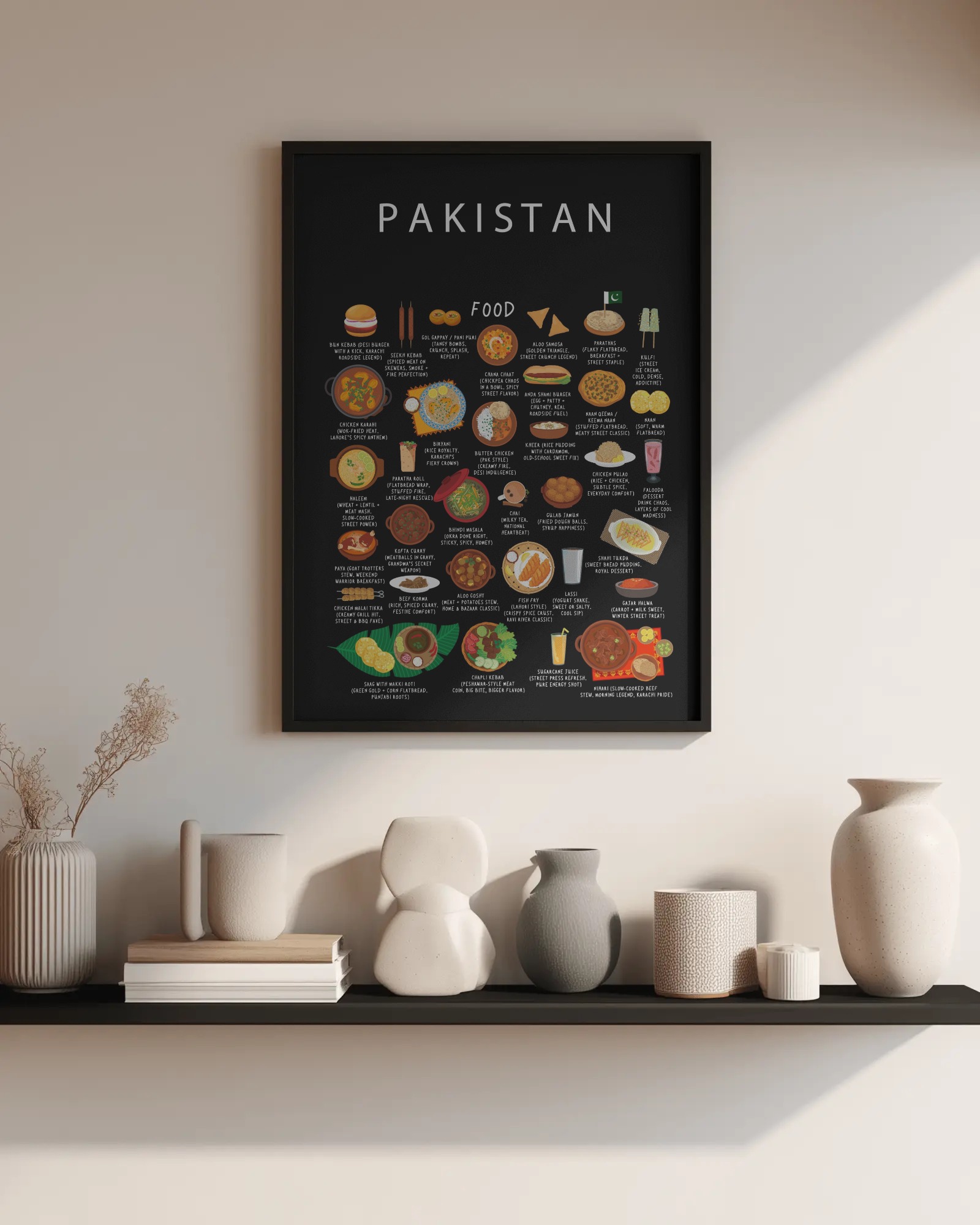
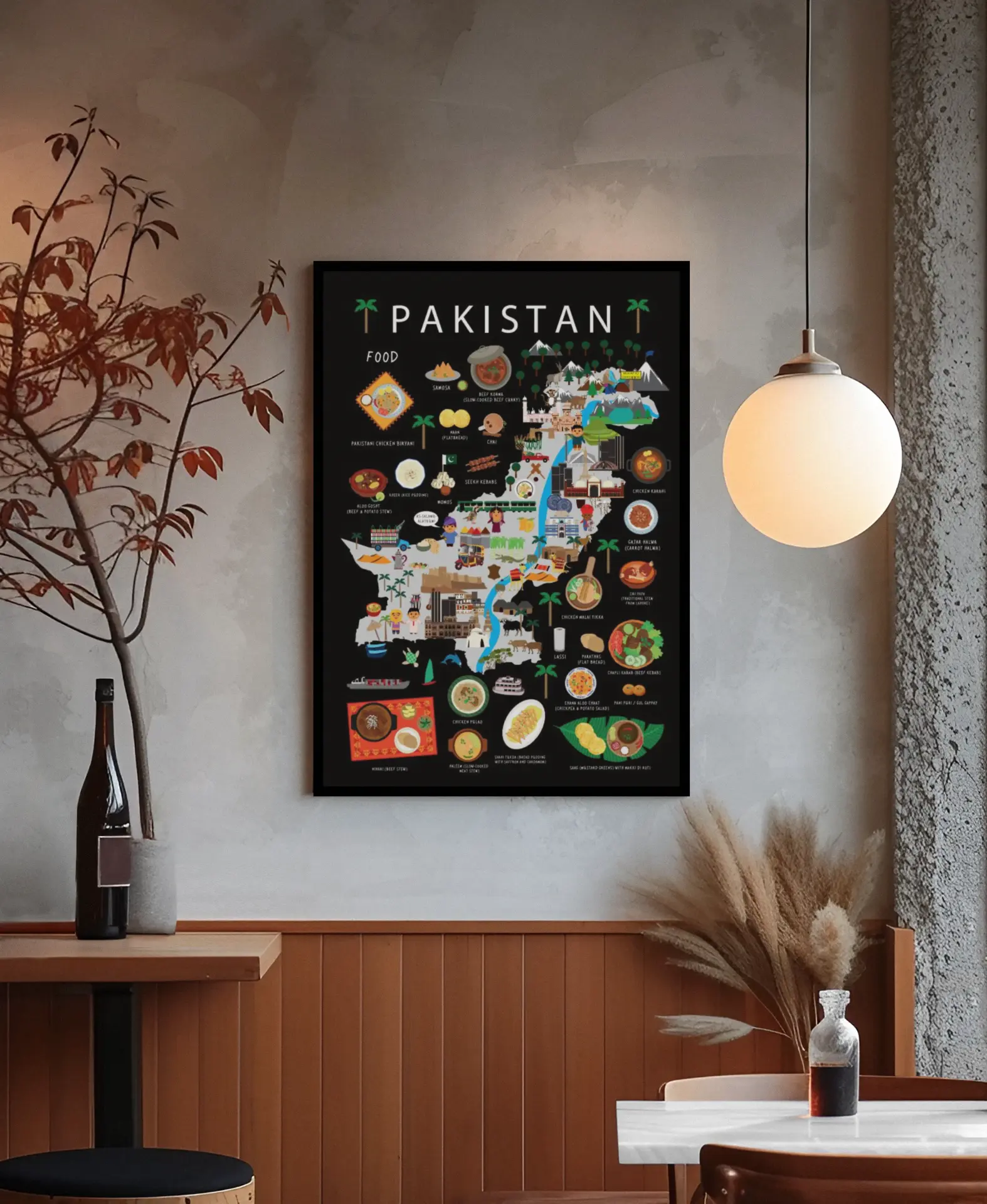
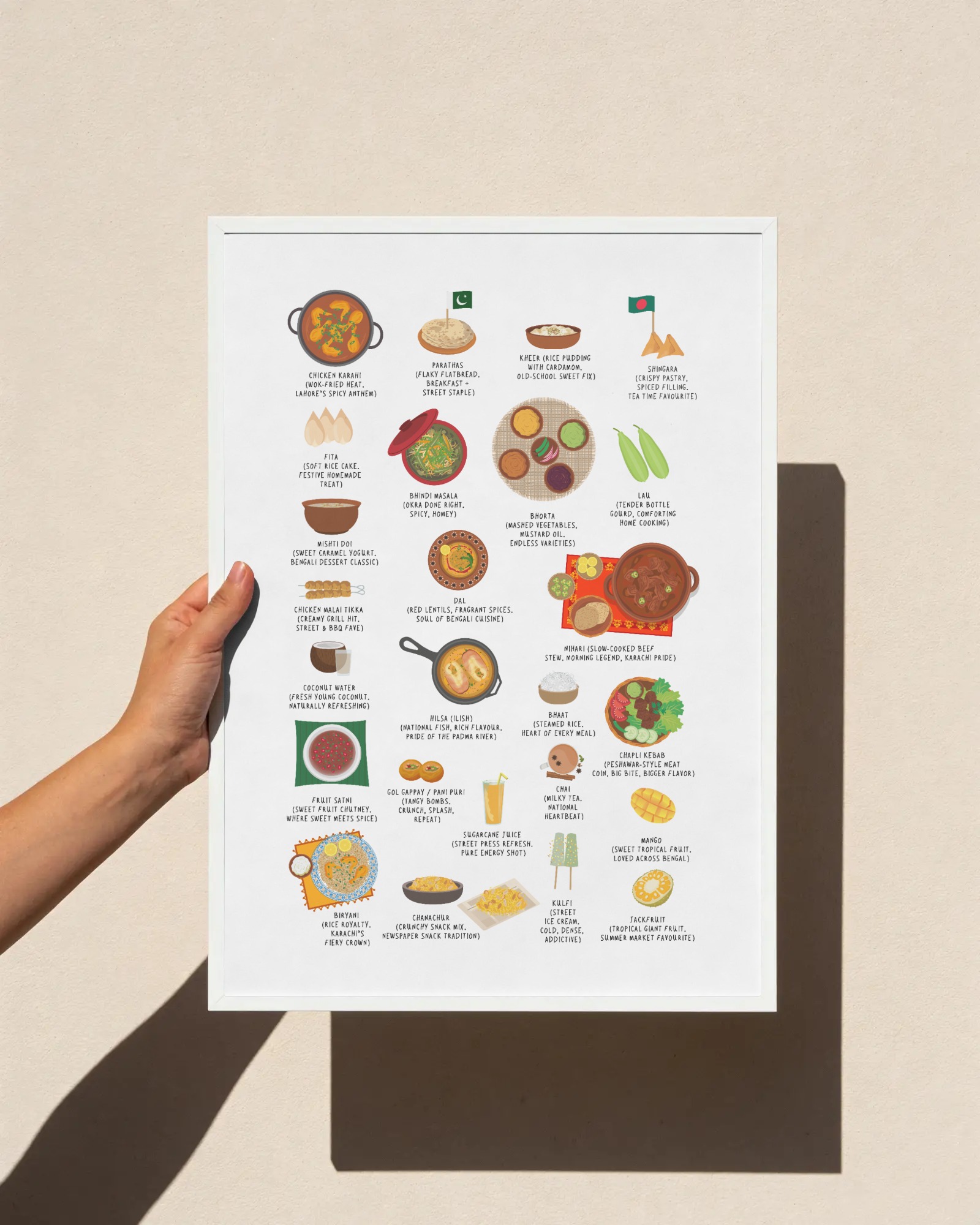
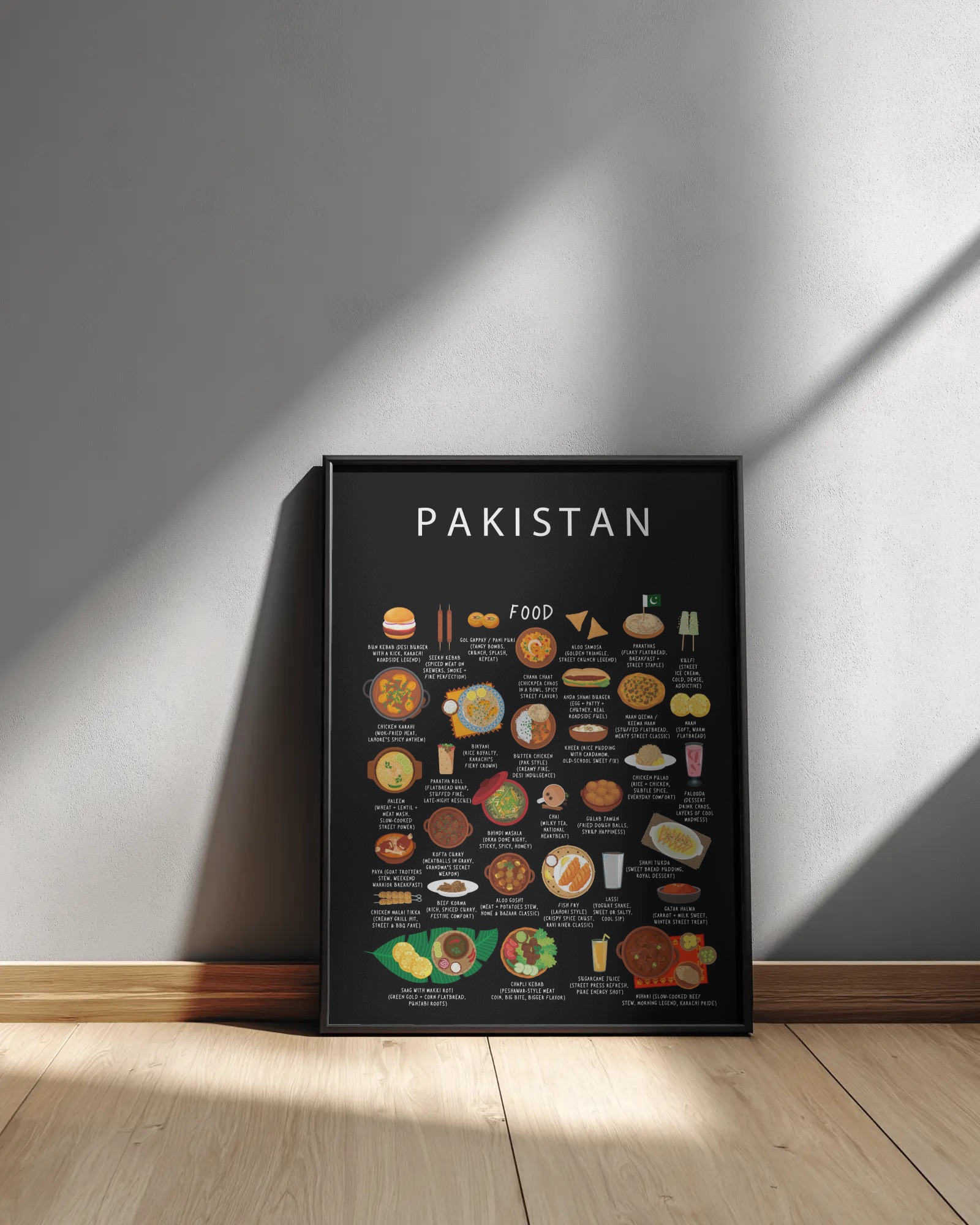
The Pakistan collection gathers nihari, biryani, haleem, chapli kebab, chana chaat, kheer, gulab jamun and chai into one illustrated composition. Each dish is named and drawn as part of a working kitchen rather than a travel checklist.
The posters and aprons are made for people who know the smell of onions browning, the sound of a pressure cooker and the sight of a pot too big for the number of guests expected. They keep Pakistan close through its most ordinary rituals.
Ready to bring the Pakistan kitchen home?
Shop the Pakistan collection →