The Story
Kenya Food Culture
A Kitchen Shaped by Swahili Coast, Highland Farm and Nairobi Grill
Kenyan food culture stretches from the Indian Ocean coast up to the highland tea farms and down into the Rift Valley, and the plate changes with every altitude. What holds it together is the smell of nyama choma on the grill, the soft warmth of chapati straight off the pan, and a big pot of ugali on the middle of the table for everyone to scoop from. From Mombasa's Swahili kitchens to Nairobi's roadside butcheries and Kikuyu family homes, Kenyan cooking is smoky, communal and generous.
What makes the Kenyan kitchen so distinctive is its everyday rhythm. Maize, beans, greens, goat, chicken and fish move through the week in a hundred small variations — githeri on a Monday, chapati and beans midweek, nyama choma at the weekend, and coconut-scented Swahili dishes whenever family visits from the coast. Food here is celebration, comfort and shared work all at once.
Signature Dishes and the Stories Behind Them
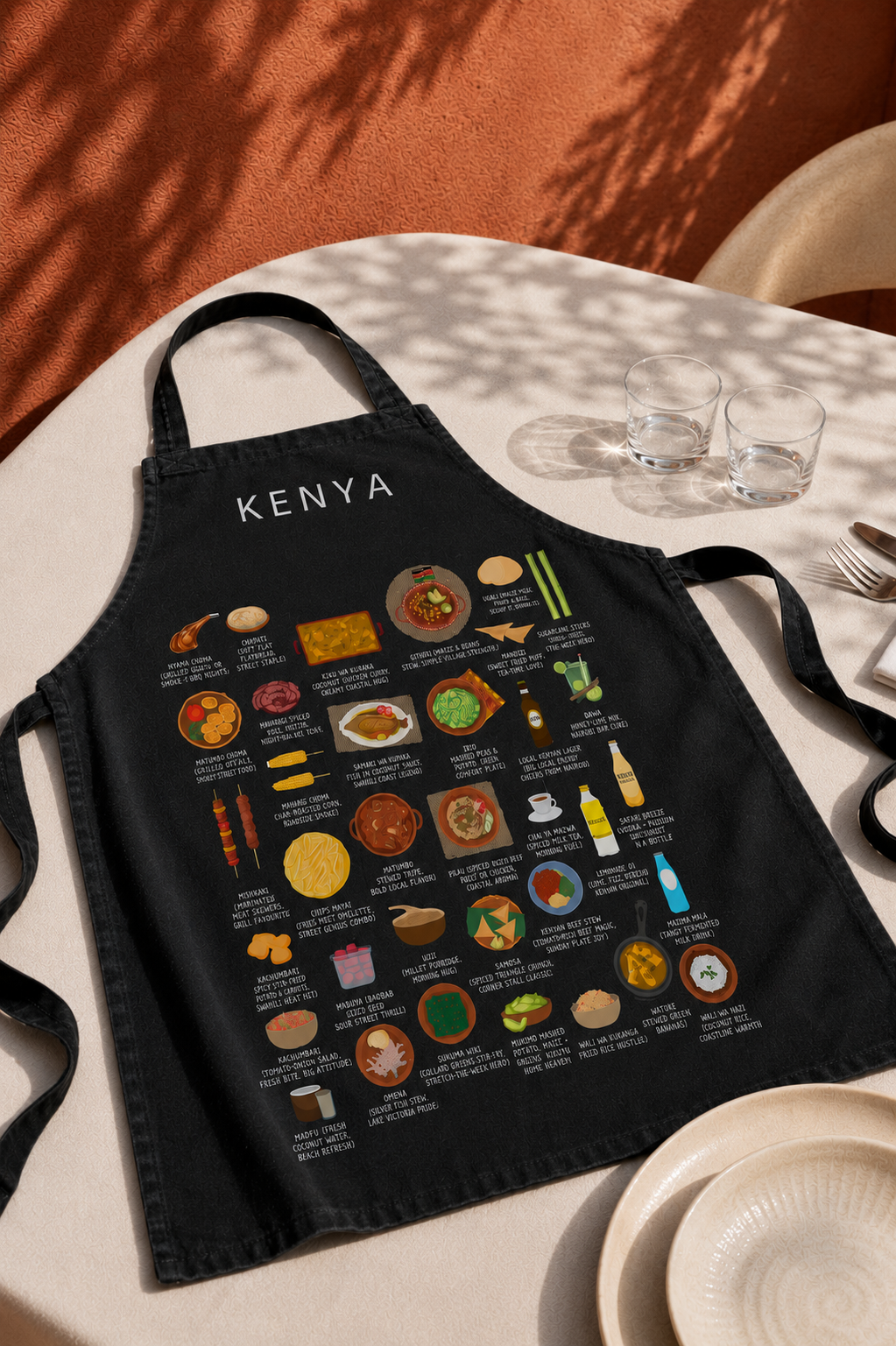
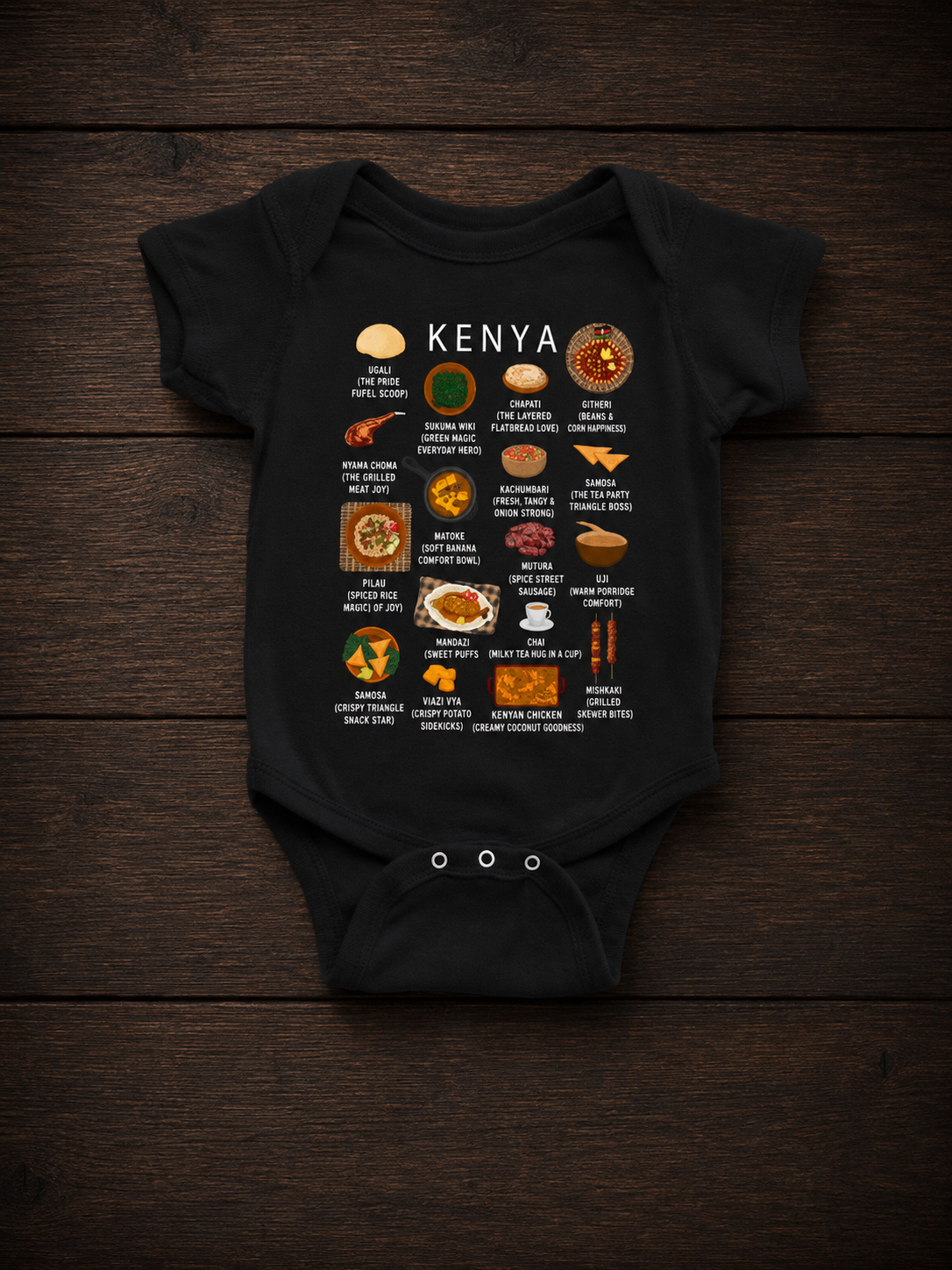
Nyama choma — goat or beef slow-grilled over charcoal until the edges char and the fat crisps, then chopped on a wooden board and eaten with the fingers — is Kenya's most famous ambassador and the ritual of every good weekend. Ugali, the firm maize meal loaf, is the daily anchor, torn by hand and used to scoop up sukuma wiki (stir-fried collard greens) or a rich stew. Chapati, soft and layered, is the crowd favourite that turns any meal into a celebration.
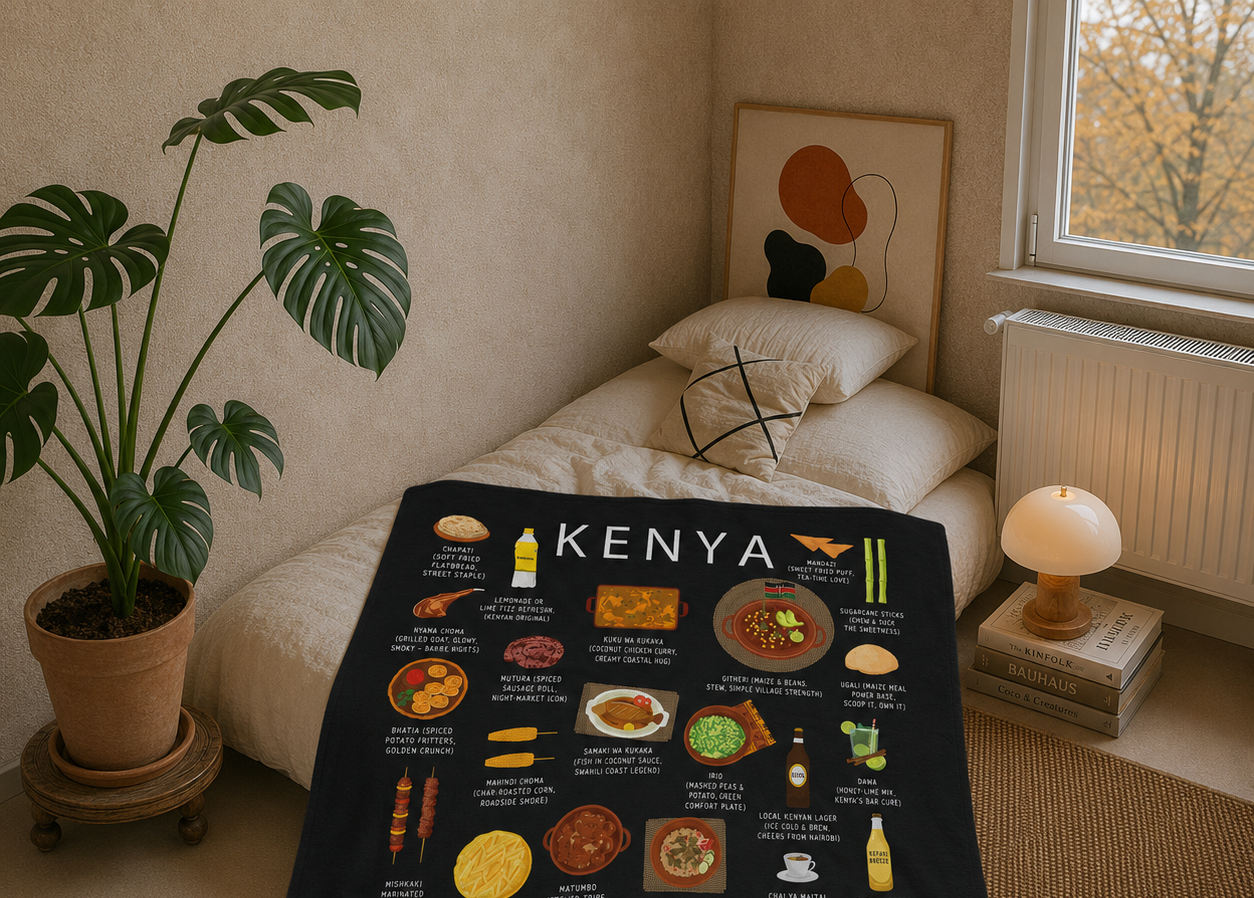
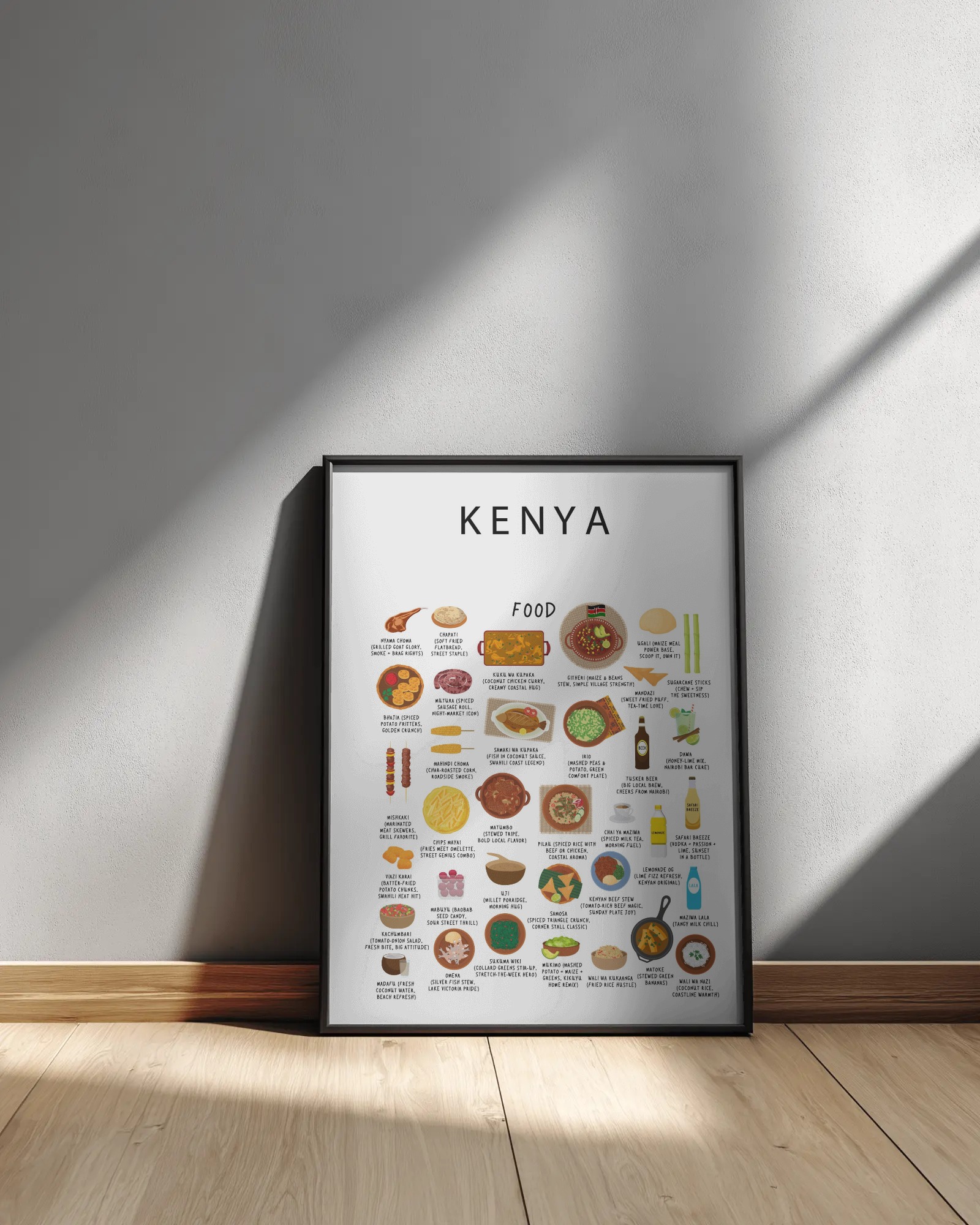
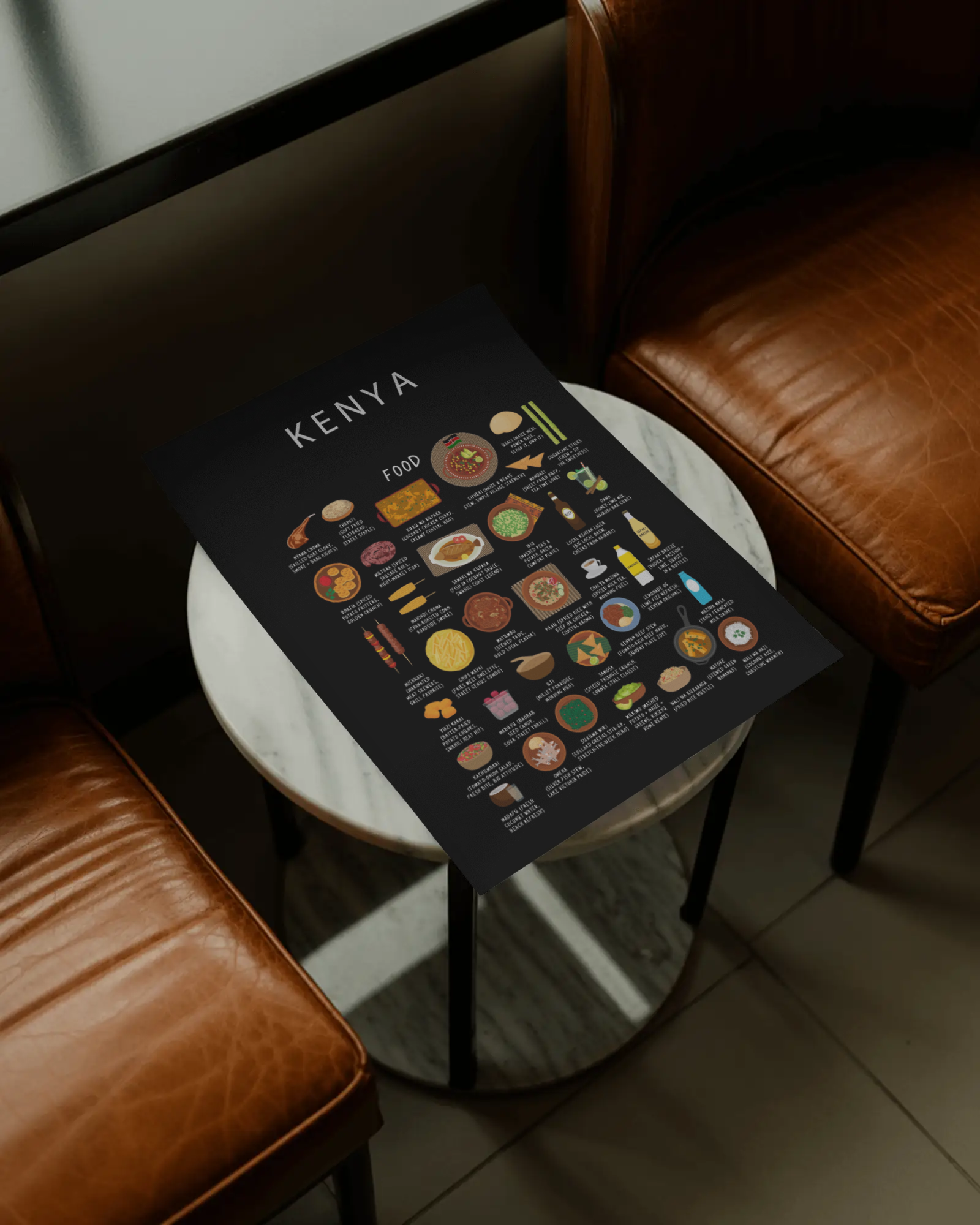
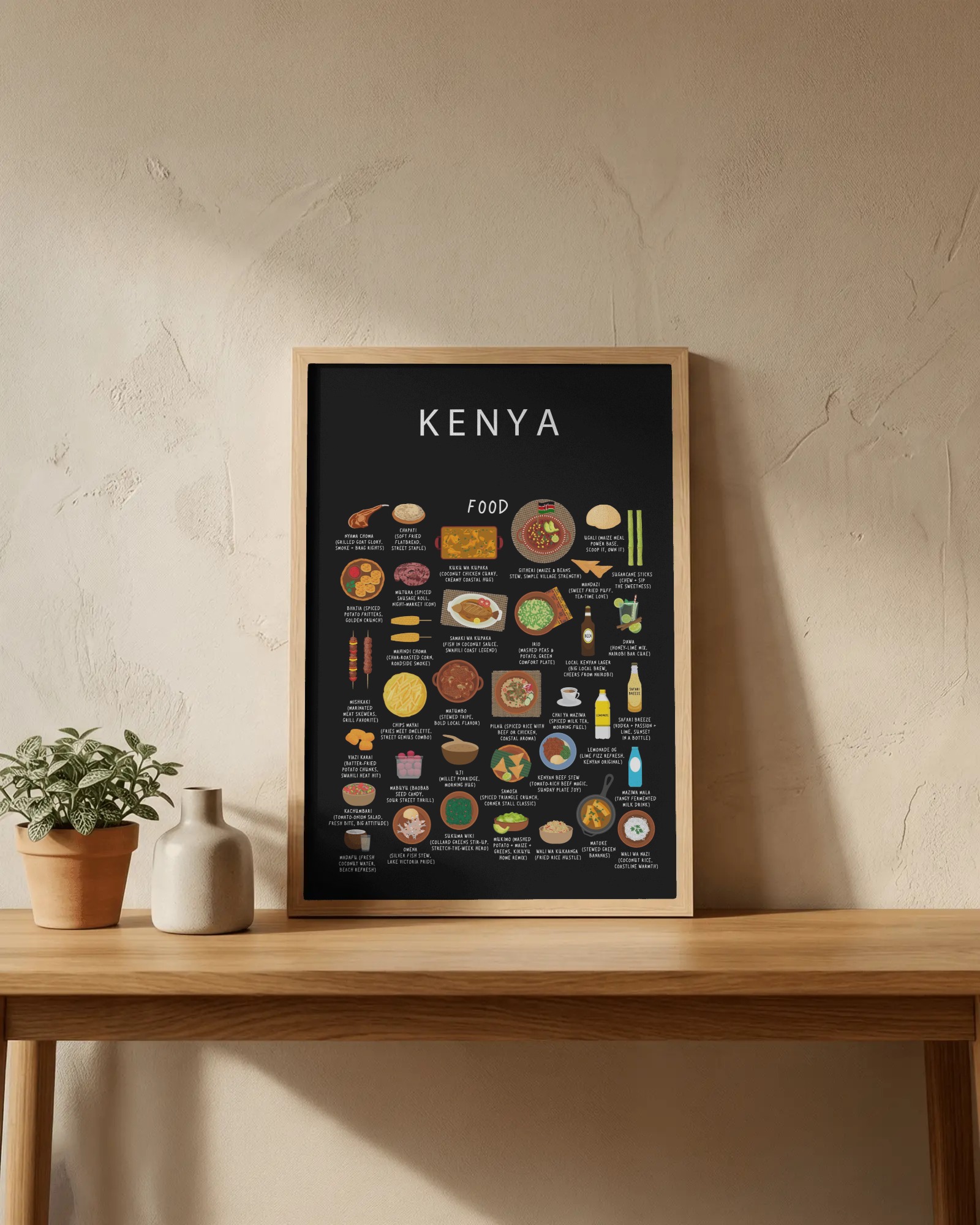
Around those anchors sit the deep classics: githeri, the maize-and-beans stew that raised generations; kuku wa kupaka, the coastal chicken bathed in coconut curry; samaki wa kupaka, its fish sibling from the Swahili coast; irio, the mashed peas, potato and maize plate of the Kikuyu highlands; mukimo, its greener cousin; pilau spiced with cardamom, cumin and cinnamon; mahindi choma from the roadside; mishkaki skewers over open flame; mandazi and mabuyu for a sweet break; and mursik or maziwa lala for the highland tang. Every dish carries a piece of the country's landscape with it.
Chai, Tusker and the Long Kenyan Table
Kenya's drinks map is as iconic as its plates. Chai ya maziwa — strong black tea simmered with milk, sugar and sometimes cardamom or ginger — is the daily heartbeat, taken at breakfast, mid-morning and after every meal. Kenyan coffee, grown on the slopes around Nyeri and Kiambu, is one of the world's most celebrated. Tusker beer, cold from the fridge, anchors every nyama choma afternoon, and dawa — the honey-lime-vodka Nairobi cure — has become a small national handshake.
Evenings soften into charcoal smoke and long tables. A goat on the grill, ugali and kachumbari on the side, chai still on the stove for anyone who drops by. The Kenyan meal is rarely rushed — it is generous, loud and built to last well into the night.
Why Maison Maps Celebrates Kenya
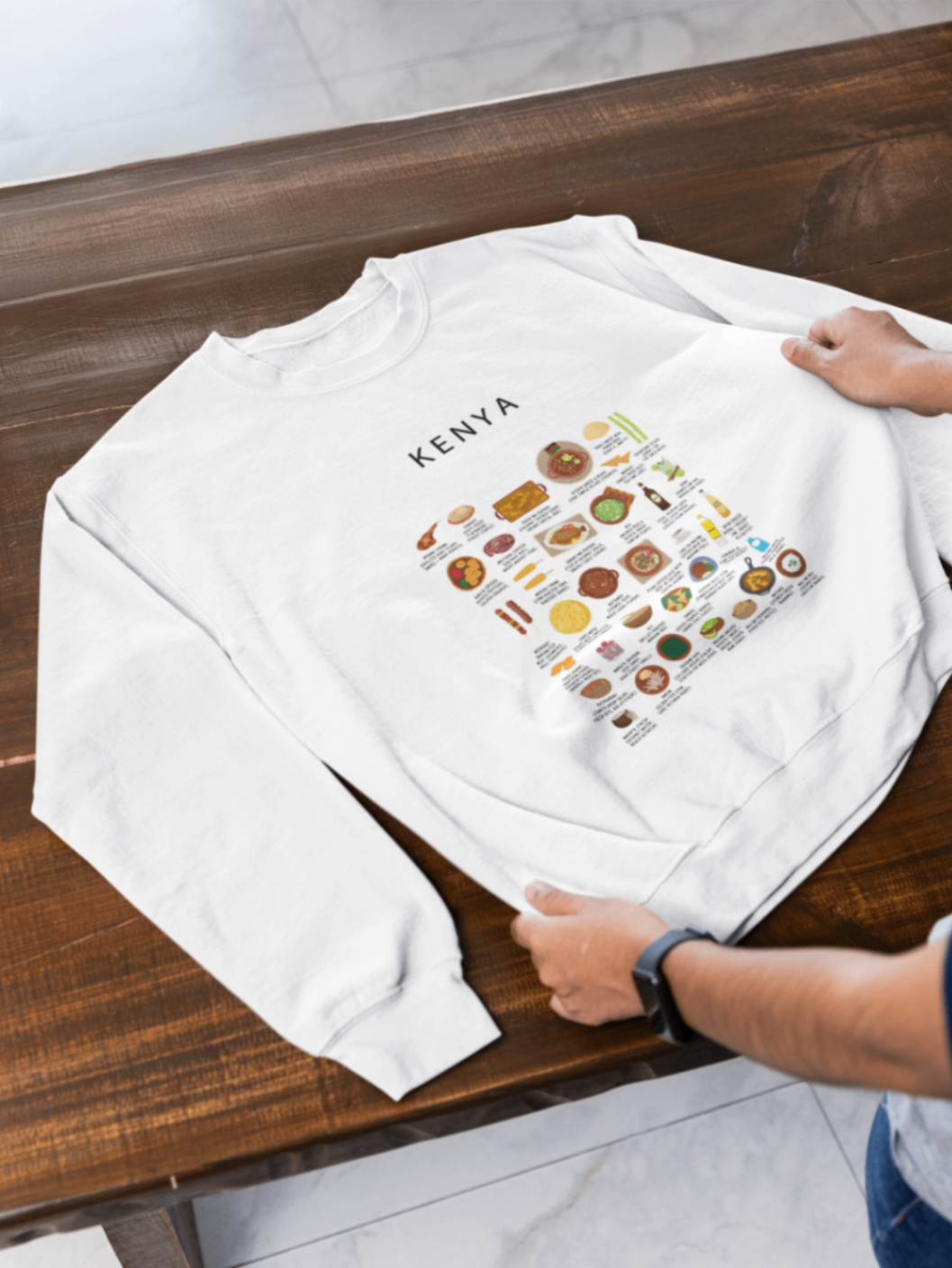
Kenya's food story is one of the most visually rich in East Africa — nyama choma, ugali, chapati, githeri, kuku wa kupaka, pilau, irio, mandazi, chai and Tusker, all set against the country's warm highland-to-coast palette. Our Kenya collection turns that whole world into a single illustrated composition, celebrating the dishes that define the country's smoky, communal, tea-scented kitchen.
Every Kenya piece is printed and shipped through our Etsy shop — posters, blankets and aprons for anyone who grew up on Sunday nyama choma, ugali with sukuma and chai ya maziwa and wants to keep a little of the Kenyan table on the wall and in the kitchen.
Ready to bring the Kenya kitchen home?
Shop the Kenya collection on Etsy →