The Story
Ethiopia Food Culture
A Kitchen Built on Injera, Spice and Shared Plates
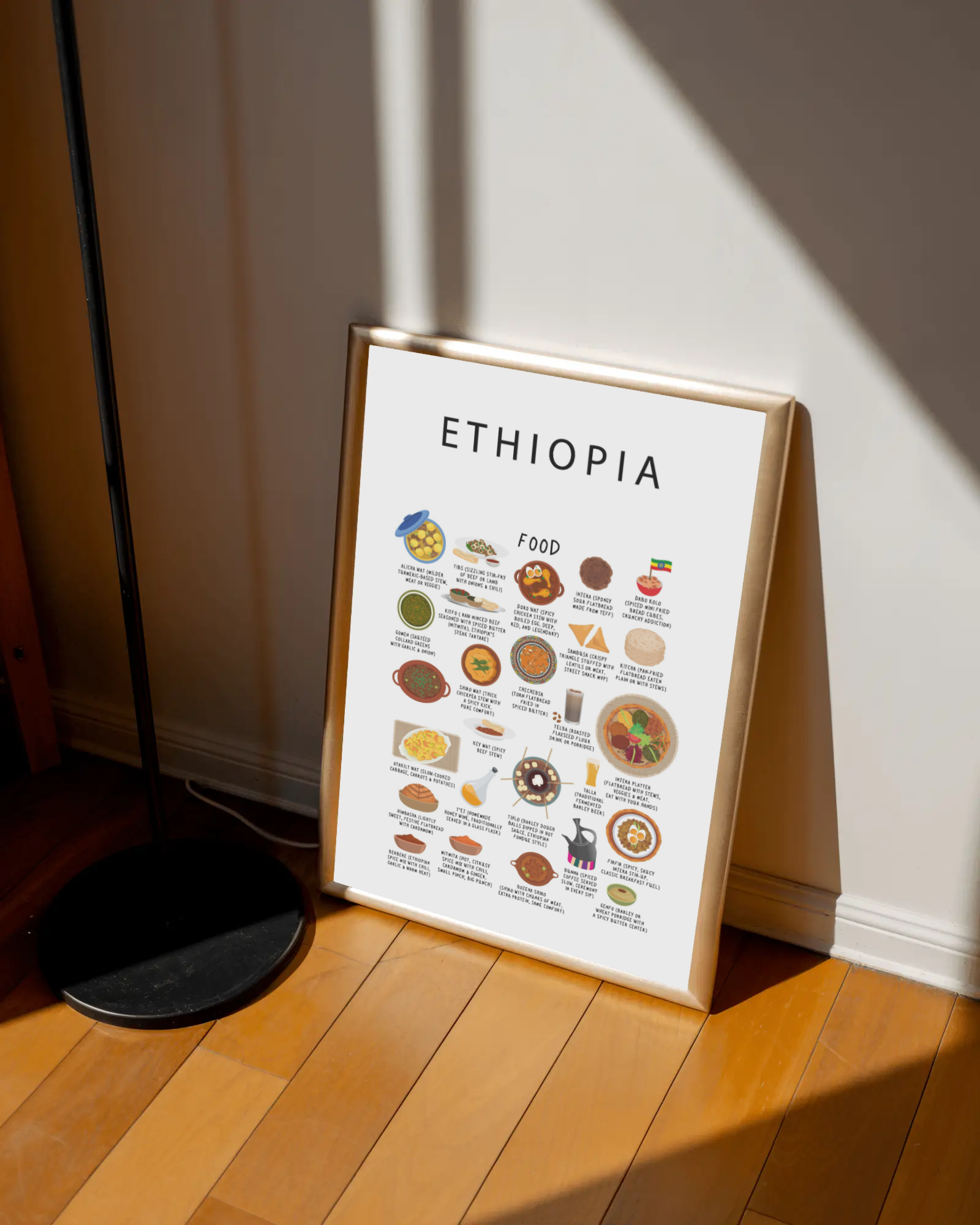
Ethiopian food culture begins with togetherness. Meals arrive on a single wide platter lined with injera — the soft, tangy flatbread made from teff — and stews are spooned across it in vivid circles of red, green and gold. There is no private plate and little distance between diners. You tear, scoop, pass and eat with your hands, the meal becoming conversation as much as nourishment.
What makes the Ethiopian table so distinctive is how completely it holds history. Indigenous grains, Orthodox fasting traditions, regional spice blends and the country's famously ancient coffee culture all shape what is cooked and how it is shared. The result is one of the world's most recognisable food identities: earthy, fragrant, communal and deeply ceremonial.
Signature Dishes and the Stories Behind Them
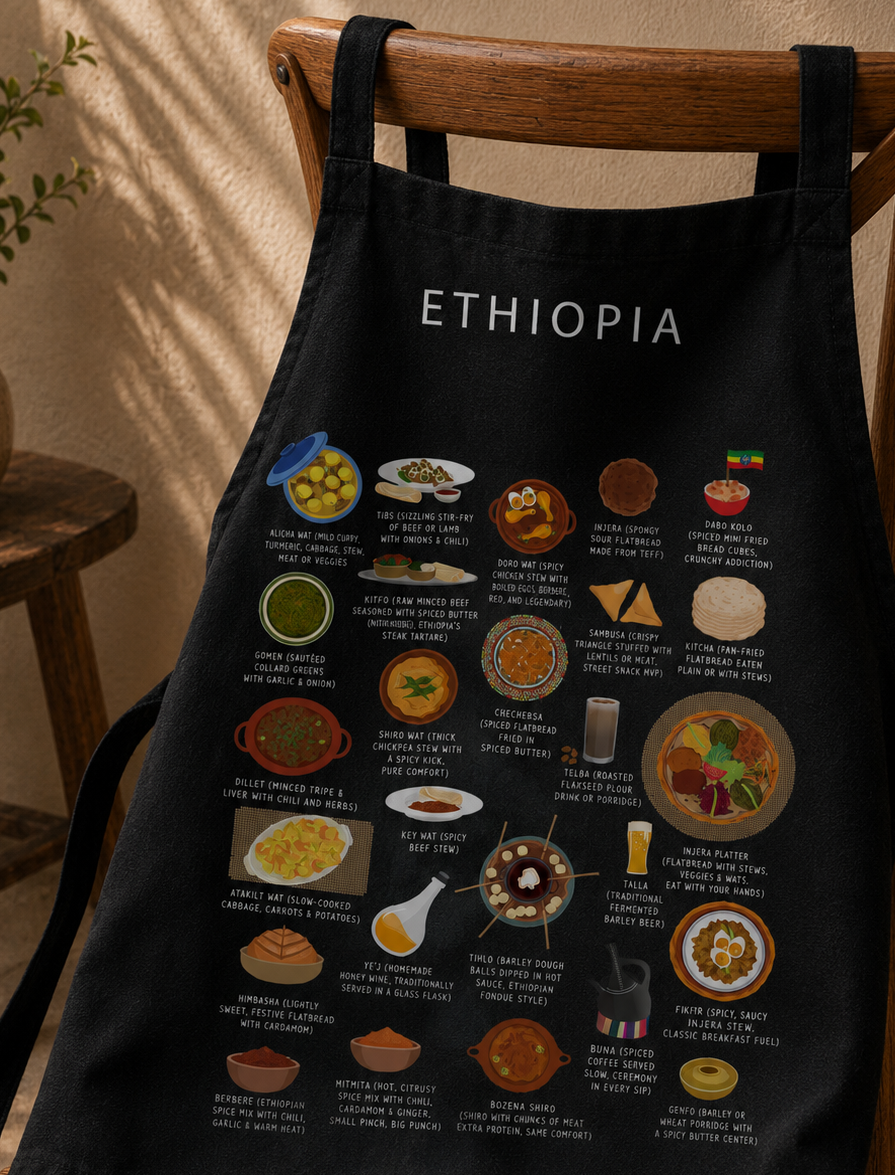
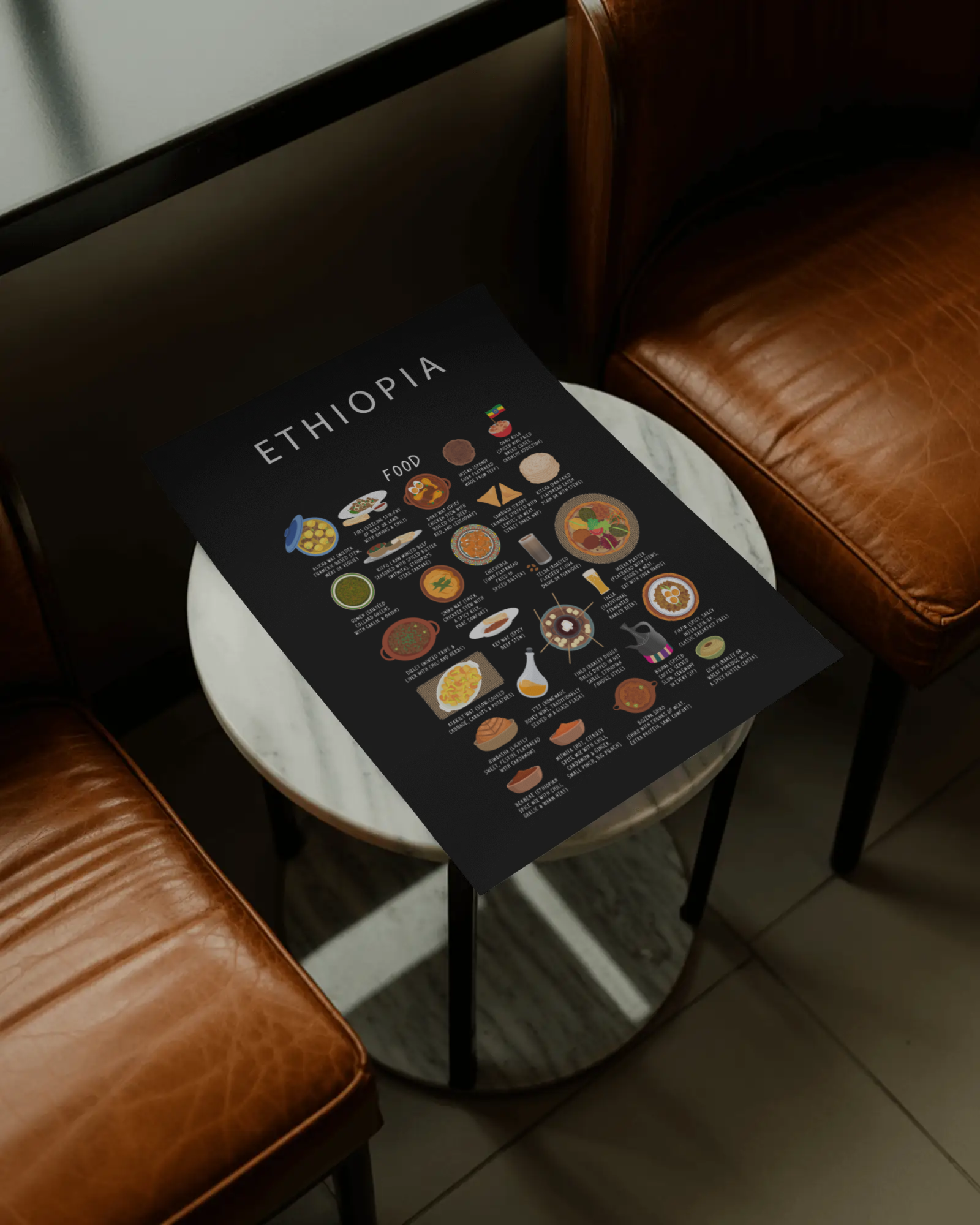
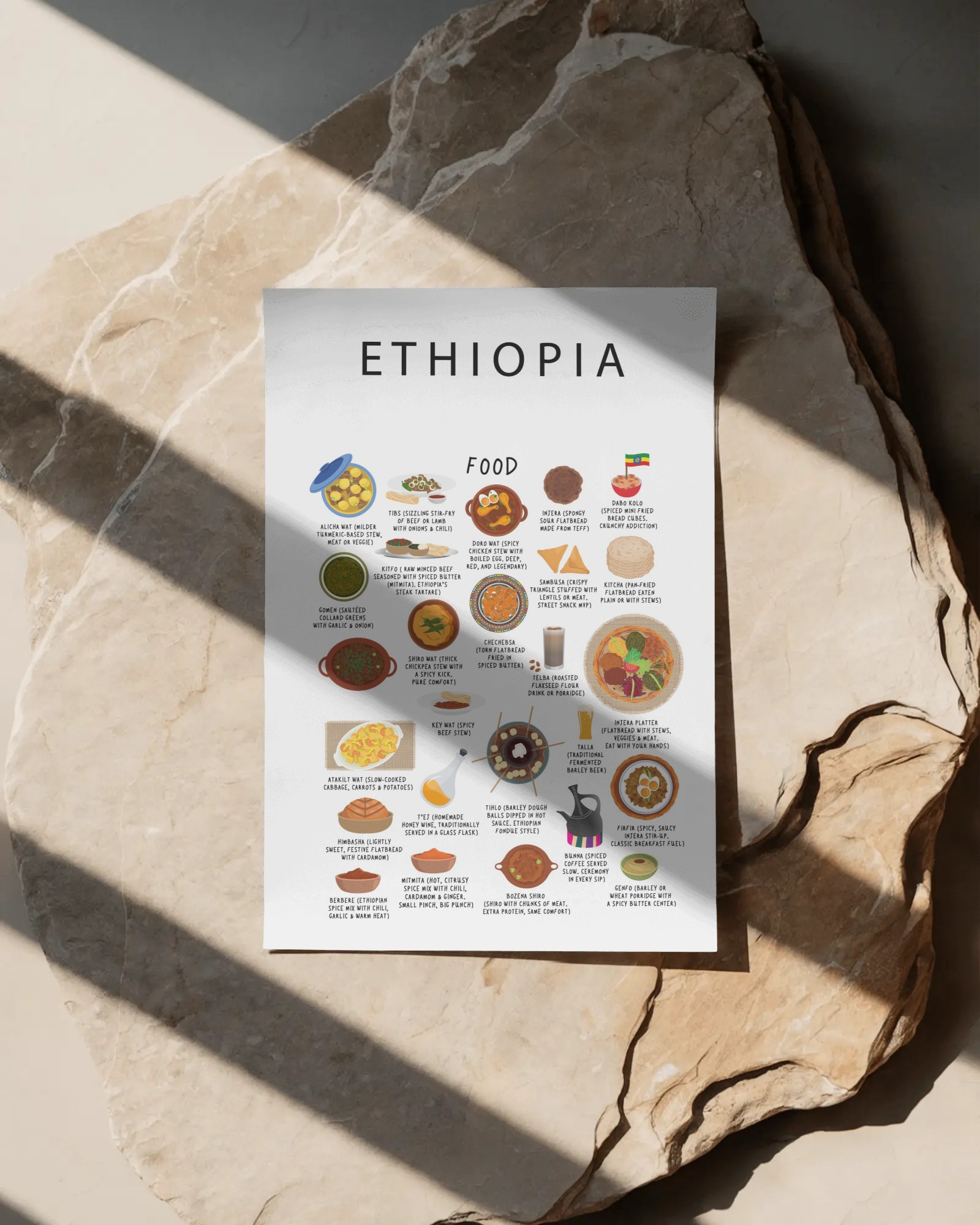
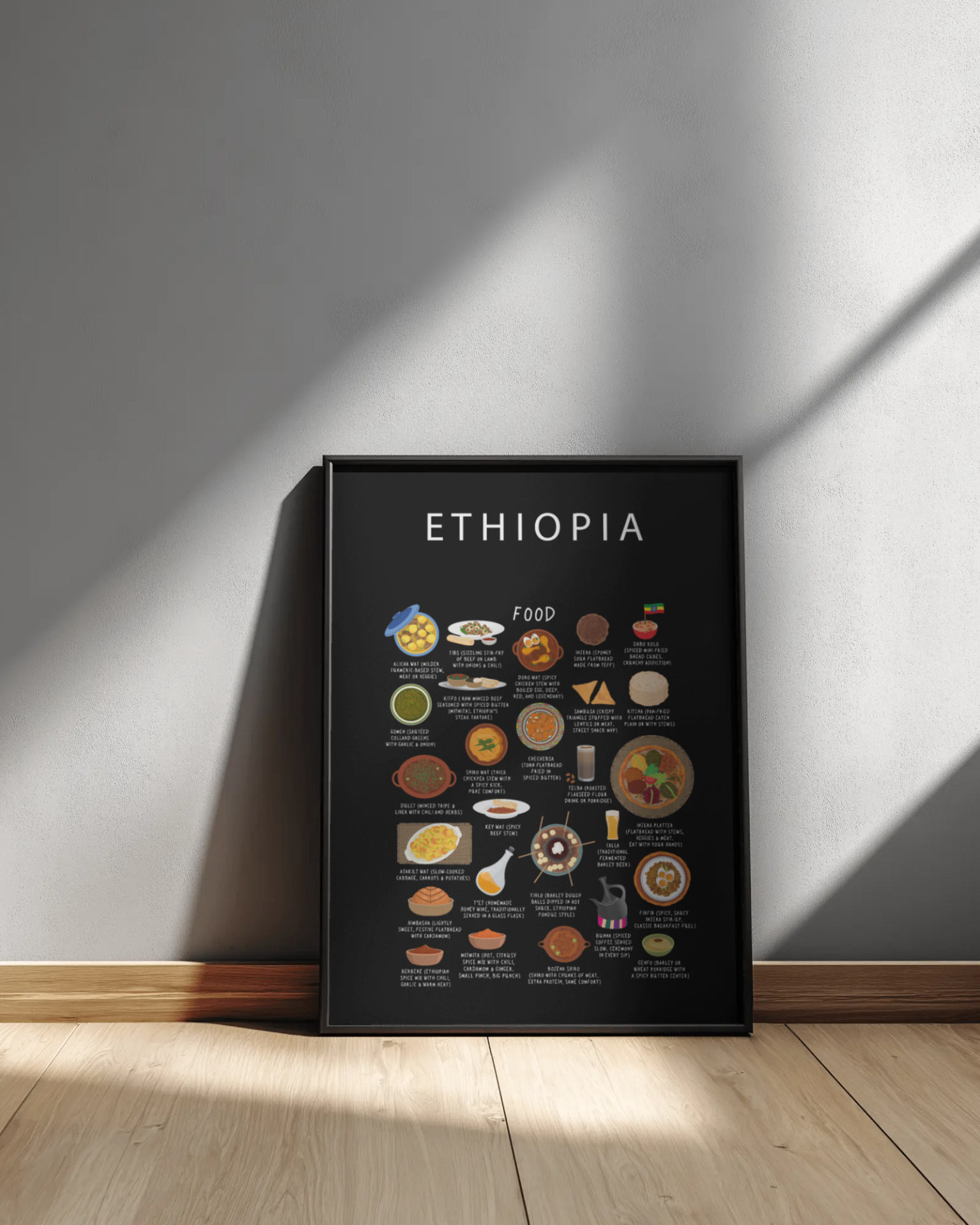
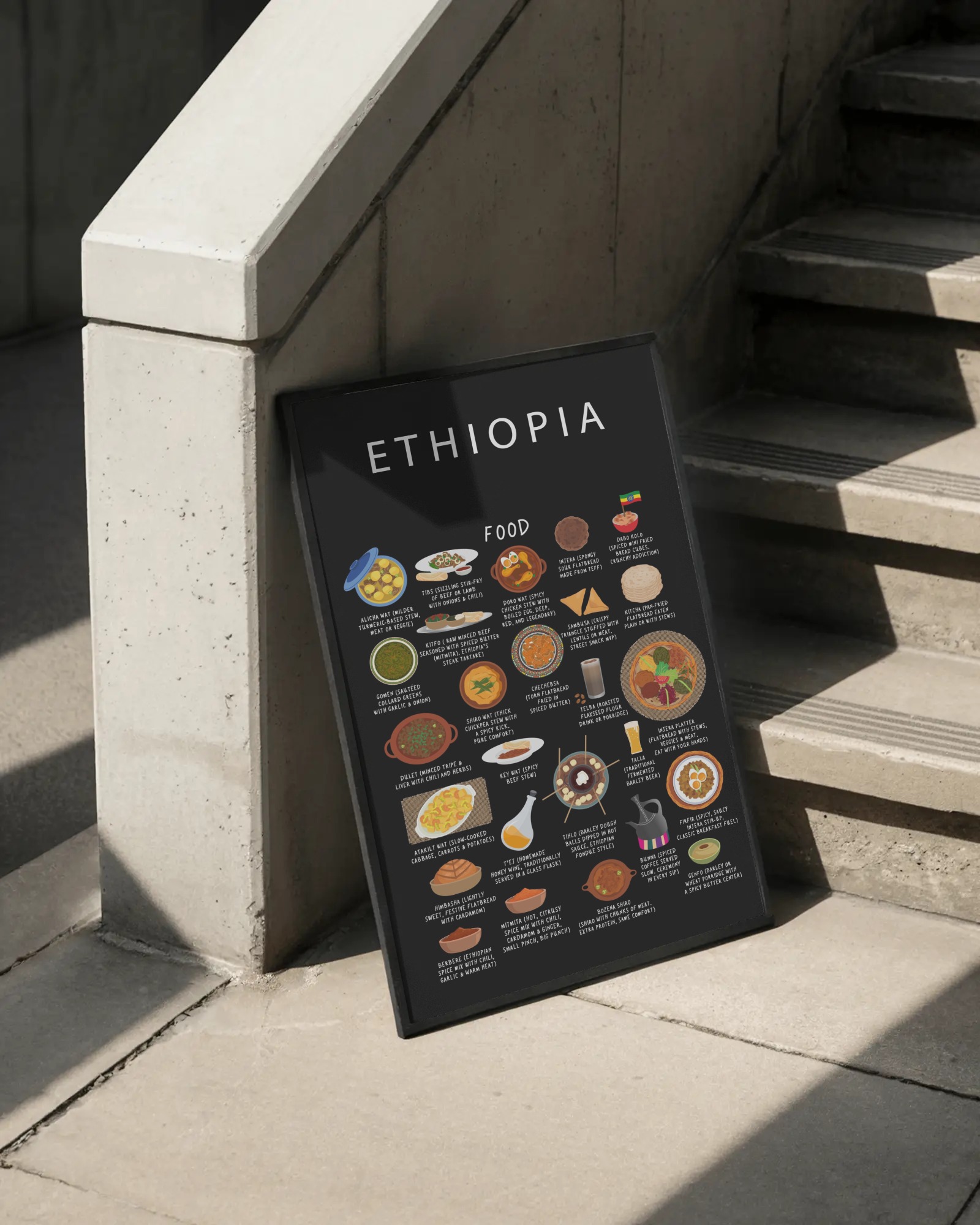
Injera is the foundation of the entire meal — spongy, slightly sour, and made to absorb sauces. Doro wat, the country's most iconic stew, simmers chicken in berbere, onion and niter kibbeh until it becomes rich, dark and almost sweet from the long-cooked base. Key wat gives the same slow heat to beef. Shiro wat, made from ground chickpeas, offers comfort and depth, especially during fasting days when animal products are avoided.
Around those anchors come the supporting dishes that make an Ethiopian spread feel complete: gomen, softly sautéed collard greens with garlic; atkilt wat, the gentle cabbage, carrot and potato stew; kitfo, minced beef seasoned with spiced butter; tibs, sizzling cubes of meat with onion and chilli; sambusa, crisp pastry triangles sold as snacks; and firfir, torn injera cooked into a saucy breakfast. Every dish is built for contrast — heat with tang, softness with bite, richness with brightness.
Coffee Ceremony, Tej and the Rhythm of Hospitality
Coffee is not an afterthought in Ethiopia — it is an institution. The buna ceremony roasts green beans over heat, grinds them fresh and pours the coffee slowly into small cups, often across three rounds shared with guests. Incense burns nearby. Conversation stretches. Time softens. To be offered coffee is to be welcomed fully.
Alongside coffee there is tej, the honey wine often served in glass flasks, and tella, a traditional fermented beer. Even when the table is simple, these rituals make the meal feel expansive. Ethiopian hospitality is not performative; it is structured into the sequence of the meal itself.
Why Maison Maps Celebrates Ethiopia
Ethiopia's food story is instantly visual — wide injera platters, jewel-toned wats, coffee pots, berbere, teff and the dishes that gather people shoulder to shoulder around the table. Our Ethiopia collection turns that rich culinary world into an illustrated composition that feels both informative and warm.
The Ethiopia collection is made for homes that love spice, ritual and shared meals — pieces that bring injera, doro wat, tibs, kitfo and the buna ceremony into the kitchen, dining room and daily routine through Etsy.
Ready to bring the Ethiopia kitchen home?
Shop the Ethiopia collection on Etsy →