Vol. 02 — Tea, Spice and Slow Hours
Morocco
From Marrakech to Fez
Standfirst
A conical tagine circling steam back onto tender lamb. Mint tea poured from a great height into small glass cups. A table built for hours, not minutes. Morocco cooks the way it welcomes — slowly, generously, and always with a second glass.
Chapter One
A kitchen built for time
The tagine gives Moroccan cooking its rhythm. A conical clay lid, low heat, a long afternoon — and lamb layered with prunes and almonds, chicken with preserved lemon and olives, or fish with tomato and chermoula. The steam circles back into the pot, keeping everything tender and deeply perfumed.
Friday means couscous. Golden semolina, hand-rolled and steamed three times, arrives piled with seven vegetables and broth for the whole family to gather around. It is less a meal than a weekly ritual.
Refusing a glass of mint tea is nearly impossible. A second and third are almost guaranteed.
— On Moroccan hospitality
Chapter Two
Djemaa el-Fna, after sundown
As the sun sets over Marrakech's Djemaa el-Fna, the square transforms into an open-air kitchen. Grilled brochettes, harira soup, snail broth, sardines fried with chermoula, and glasses of freshly squeezed orange juice line the stalls, lit by lanterns and clouds of smoke.
Street food across Morocco is fast, spiced, generous — msemen folded with honey, bocadillos stuffed with tortilla and harissa, maakouda potato patties, sfenj doughnuts pulled hot from the oil at dawn.
The Morocco sweatshirt — a quiet, wearable love letter to the medina.
Chapter Three
Kitchen, wardrobe, table
Pieces made to slot into the warm rhythm of a Moroccan home — for the cook, for the guest, and for the smallest member of the family.
Tee — Fez
Apron — Marrakech
Onesie — Chefchaouen
The Collection
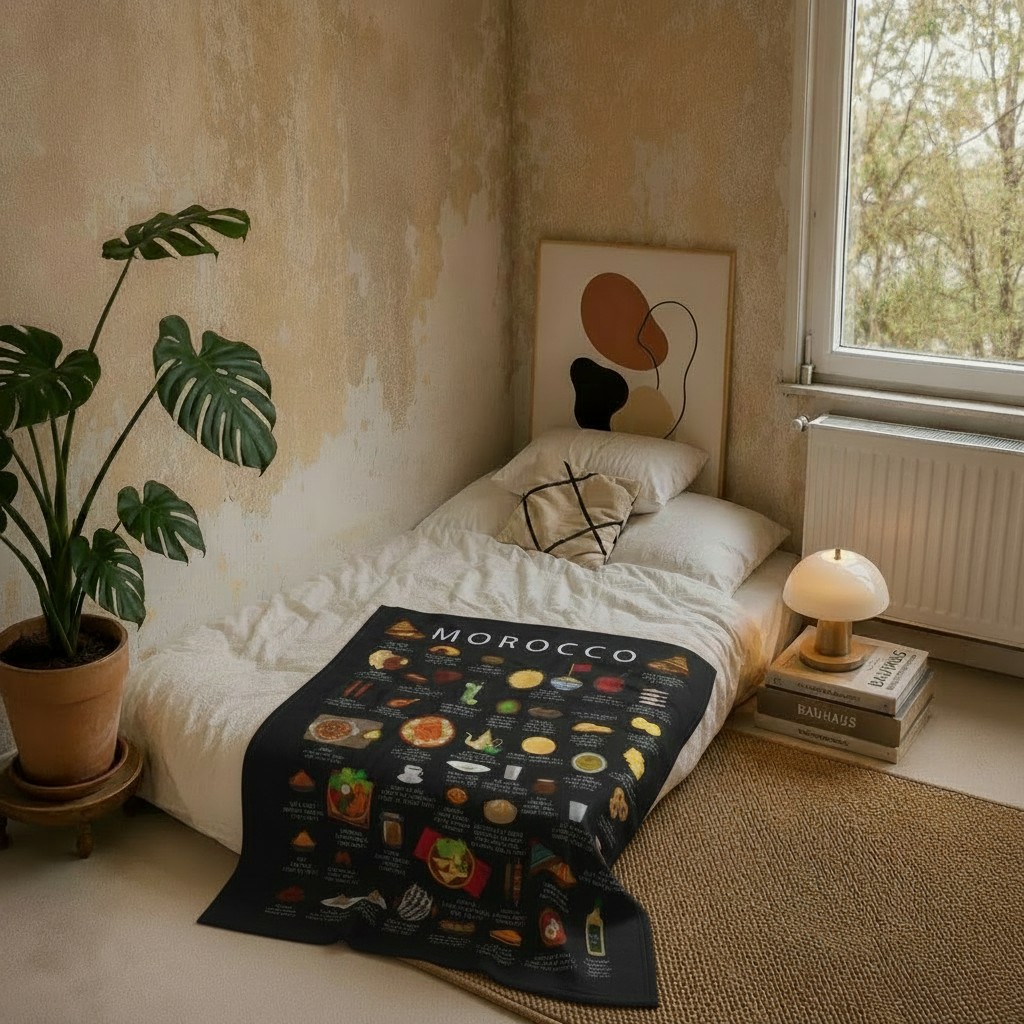
The Morocco Collection
Tagine, couscous, harira, mint tea and the whole spice-scented world of the medina — gathered into a single illustrated composition.