The Story
Portugal Food Culture
Lisbon Mornings, Pastelaria Light
Lisbon starts standing up. A bica — short, dark coffee — at the counter of a pastelaria, and a pastel de nata still warm, its custard blistered on top, cinnamon shaken over at the last moment. The tiled façades outside are already catching the Atlantic light.
Markets fill early: sardines stacked on ice, baskets of coriander and lemons, bread still warm. Portuguese cooking begins here, in what the season and the sea decide to offer.
Bacalhau, Sardines and the Neighbourhood Table
Bacalhau is the quiet backbone of the Portuguese kitchen — salted cod soaked back to life and cooked, the saying goes, a different way for every day of the year. In June the sardines take over: grilled on street corners for the saints' festivals, eaten on bread with your fingers, smoke drifting through the bairros.
These are neighbourhood dishes, served in small tascas where the menu is short and the soup of the day is caldo verde — potato, kale, a coin of chouriço.
Porto and the North
Porto eats heartily. The francesinha arrives under a blanket of melted cheese and beer sauce; the bifana — pork marinated in garlic and white wine — is tucked into a soft roll and eaten standing. Tripas à moda do Porto carries the city's old nickname for its people: the tripe-eaters, a title worn with pride.
Across the Douro, port wine ages in the lodges of Vila Nova de Gaia, and Sunday lunch stretches across the afternoon the way it always has.
Why Maison Maps Celebrates Portugal
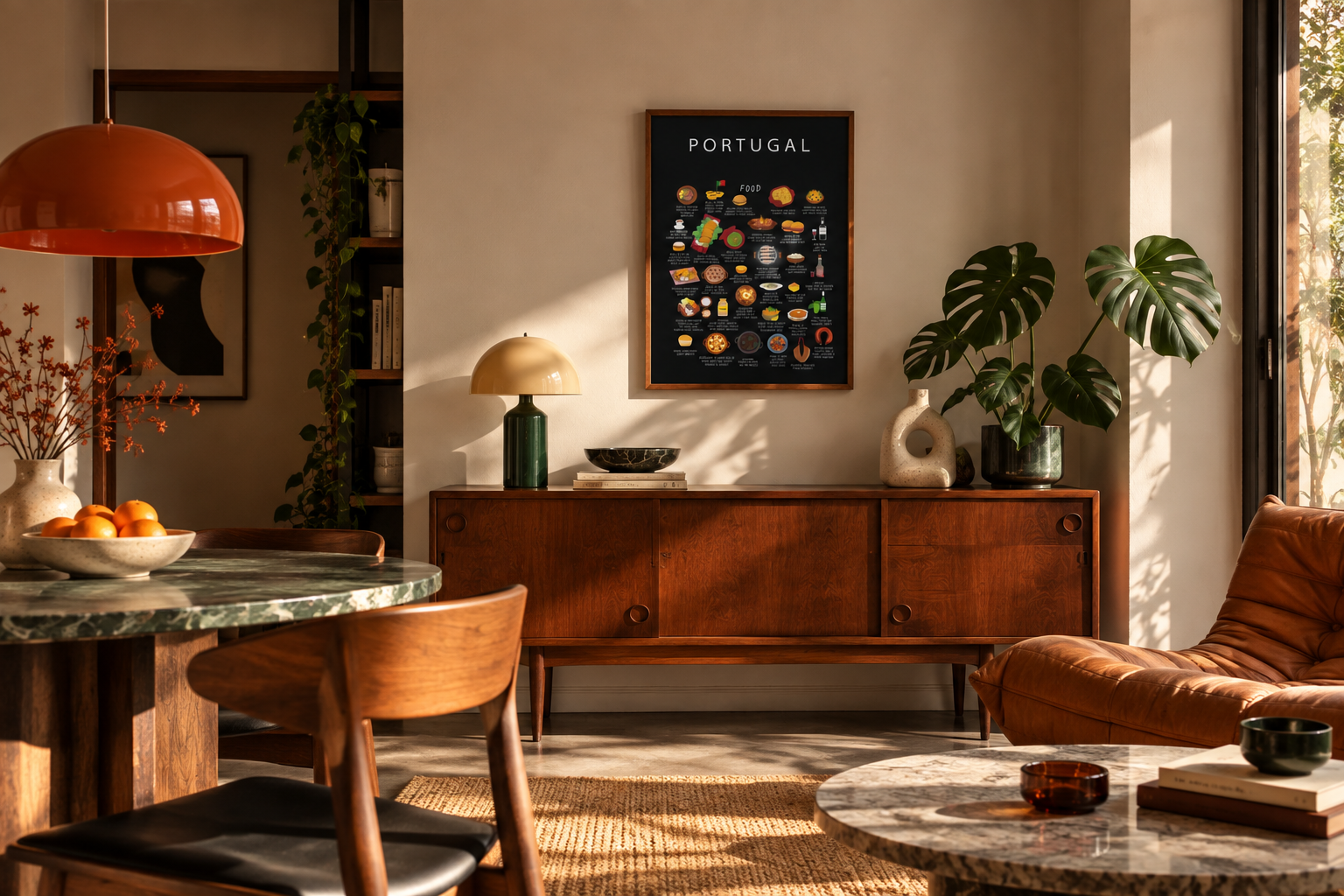
The Maison Maps Portugal collection gathers pastéis de nata, bacalhau, sardines, bifanas, caldo verde and the pastelaria counter into illustrated Portugal food posters, aprons, blankets and kids prints. They are made for kitchens that remember the Portuguese table — in Lisbon, in Porto, and in every home where those recipes travelled and stayed.
Ready to bring the Portugal kitchen home?
Shop the Portugal collection →