The Story
Italy Food Culture
An Italian Table, Always Set for Someone
Italian food culture is less a set of recipes than a way of moving through the day. Mornings begin standing at a bar with a small cup of espresso and a pastry taken in three bites. Lunch stretches longer than the clock suggests, punctuated by wine glasses raised without ceremony. And dinner, especially on weekends, has a way of turning strangers into cousins by the second course. To sit at an Italian table is to be reminded, gently and repeatedly, that food is the country's most fluent language.
What makes the Italian kitchen so quietly powerful is its restraint. A good tomato needs almost nothing. A hand-rolled orecchiette wants only olive oil, garlic and a scatter of turnip tops. This is a cuisine built on trust — trust in the ingredient, trust in the season, trust in the hands that have made this dish a thousand times before.
A Cuisine Shaped by Region, Not by Nation
There is no single Italian food. There are twenty regional kitchens, each with its own grammar. In the north, butter, rice and slow-cooked meats speak of Alpine winters — think risotto alla milanese golden with saffron, or brasato al Barolo left to melt for hours. In Emilia-Romagna, the fresh egg pasta of Bologna gives us tagliatelle al ragù, tortellini in brodo, and the aged Parmigiano-Reggiano that anchors half the country's kitchens.
Move south and the light changes, and so does the plate. Rome cooks with offal and pecorino, turning humble scraps into cacio e pepe, carbonara and amatriciana. Naples gave the world pizza, blistered and soft, and a coffee culture so specific it has its own rules. Puglia leans into vegetables, wheat and the sea. Sicily, with its Arab and Norman past, is where cannoli, arancini and blood-orange granita were born.
Signature Dishes and the Stories Behind Them
Pasta is Italy's calling card, but every shape tells a different story. Long strands catch light sauces; short shapes hold heavier ones; stuffed pastas carry the memory of a grandmother's Sunday. Pizza margherita, folded and eaten by hand in Naples, remains one of the country's proudest inventions. Osso buco, risotto, ribollita, panzanella, saltimbocca — each dish belongs to a specific place, a specific season, a specific way of thinking about hospitality.
Sweets are equally regional. Tiramisù from the Veneto, panna cotta from Piedmont, sfogliatelle from Naples, torta della nonna from Tuscany. Even gelato, that most universal of Italian pleasures, changes character from city to city.
Espresso, Aperitivo and the Small Rituals of the Day
Coffee is a punctuation mark in Italian life. It marks the start of the morning, the end of a meal, the reason to pause between errands. The rules are quiet but firm: cappuccino before eleven, espresso after eating, never a to-go cup. Aperitivo — the pre-dinner hour of spritz, olives and salted almonds — is a national wind-down, a chance for the day to soften into evening.
And then there is wine, treated as food rather than an occasion. A carafe of the house red, a glass of Vermentino with grilled fish, a bottle of Chianti at Sunday lunch — always present, rarely fussed over.
Why Maison Maps Celebrates Italy
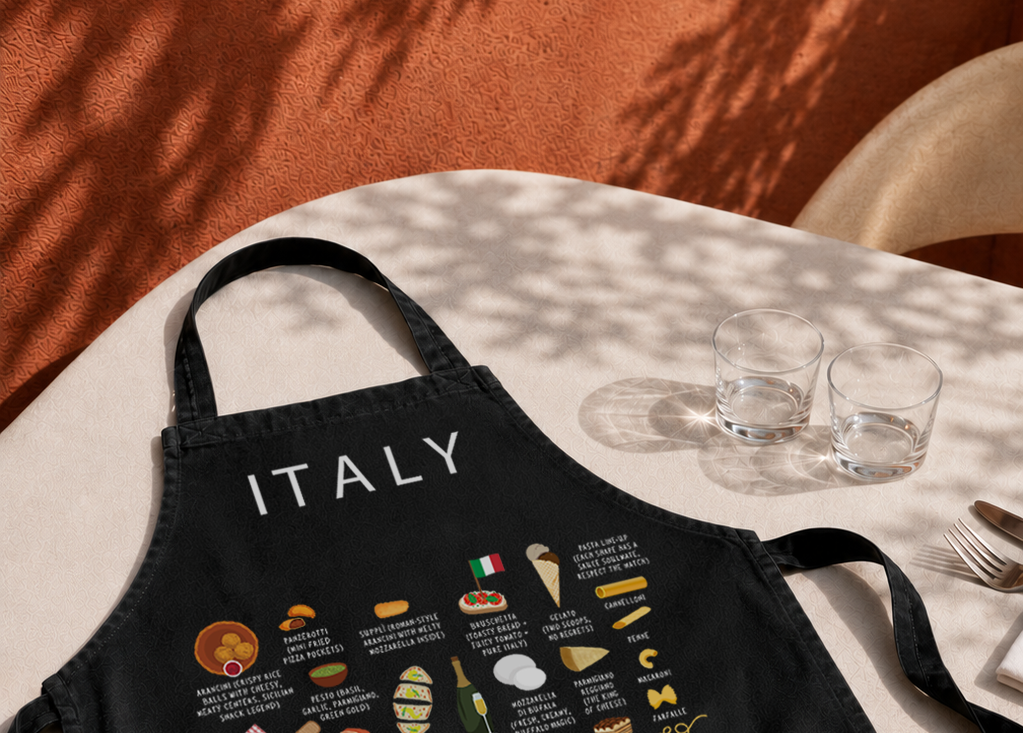
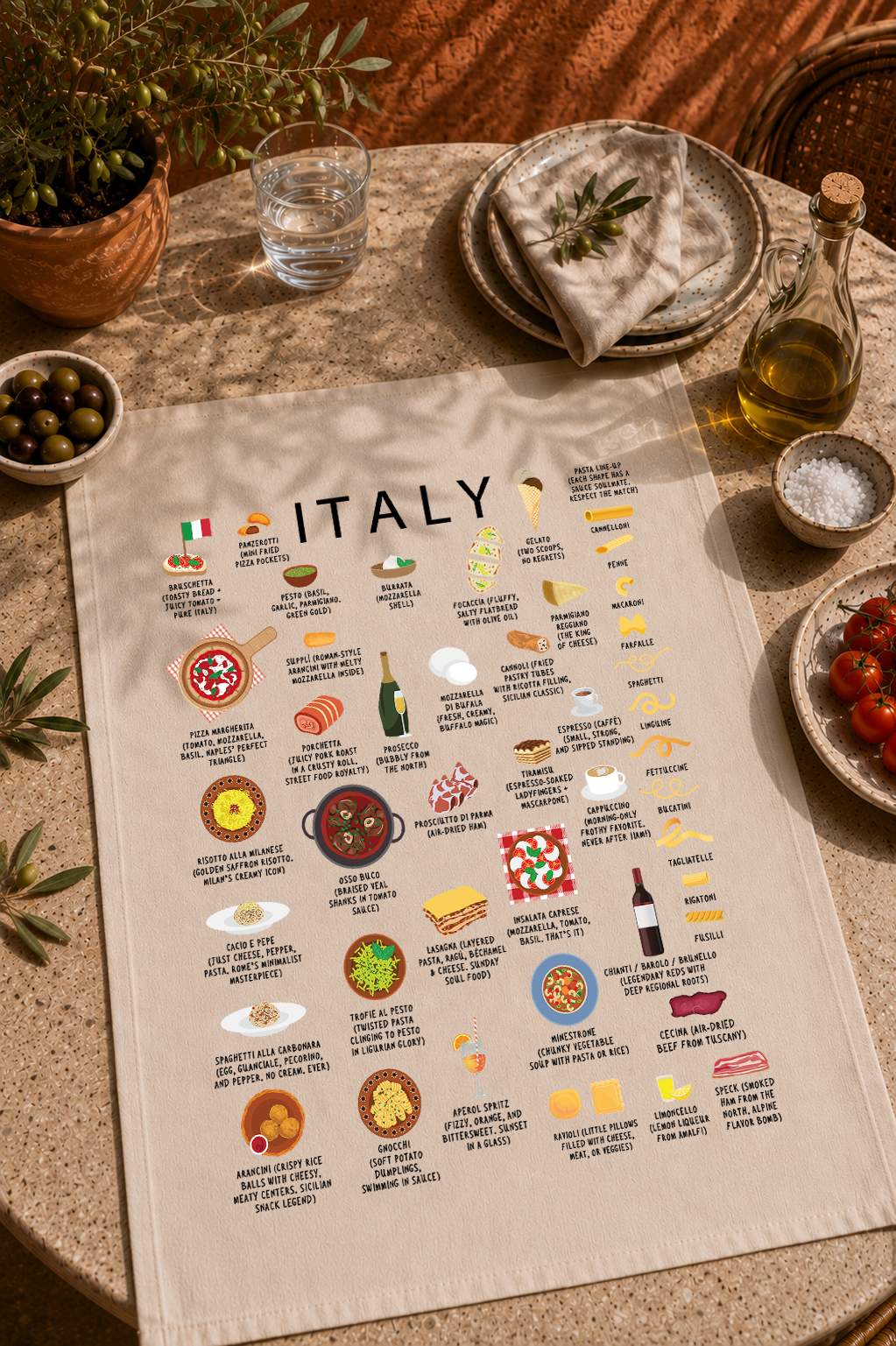
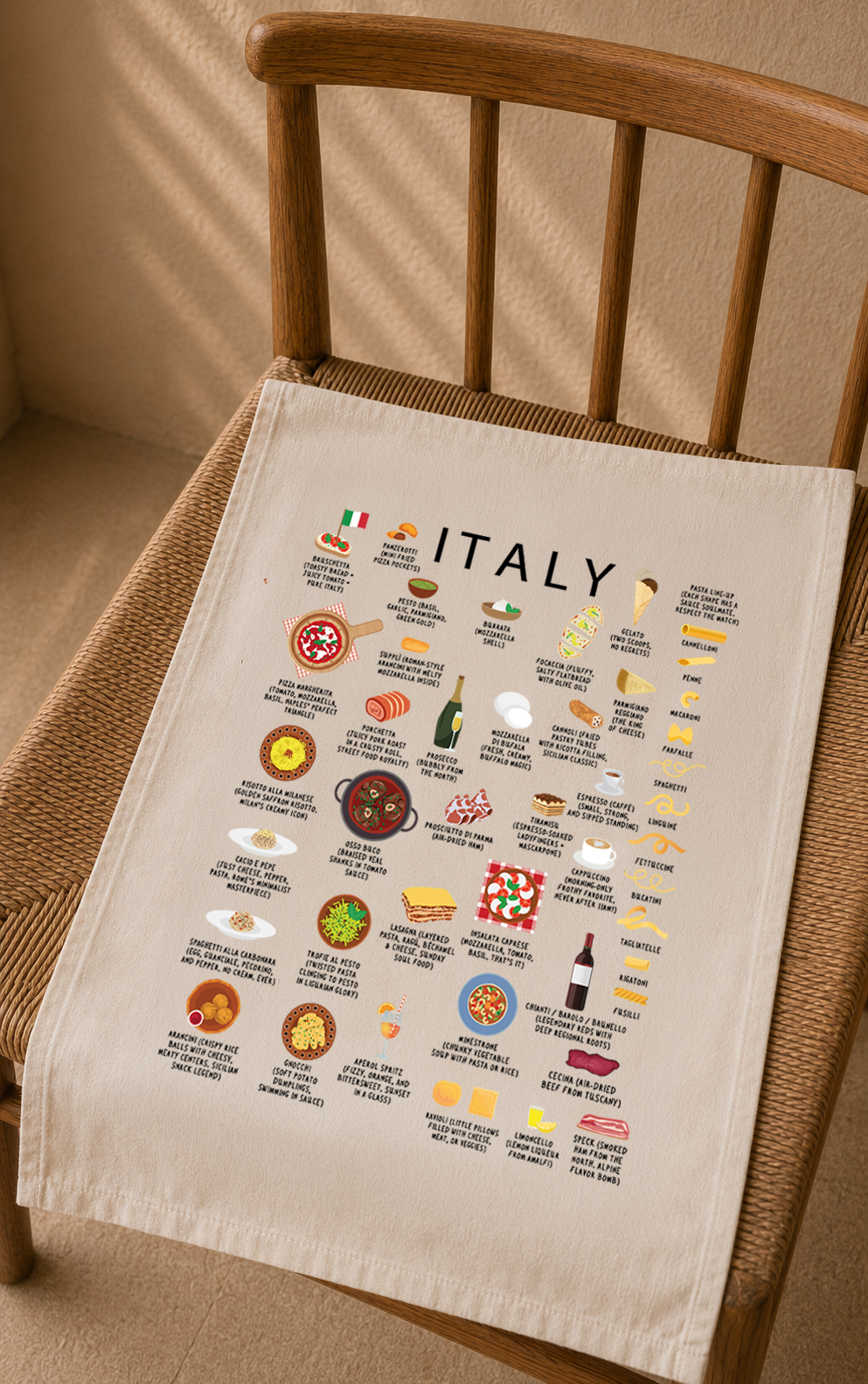
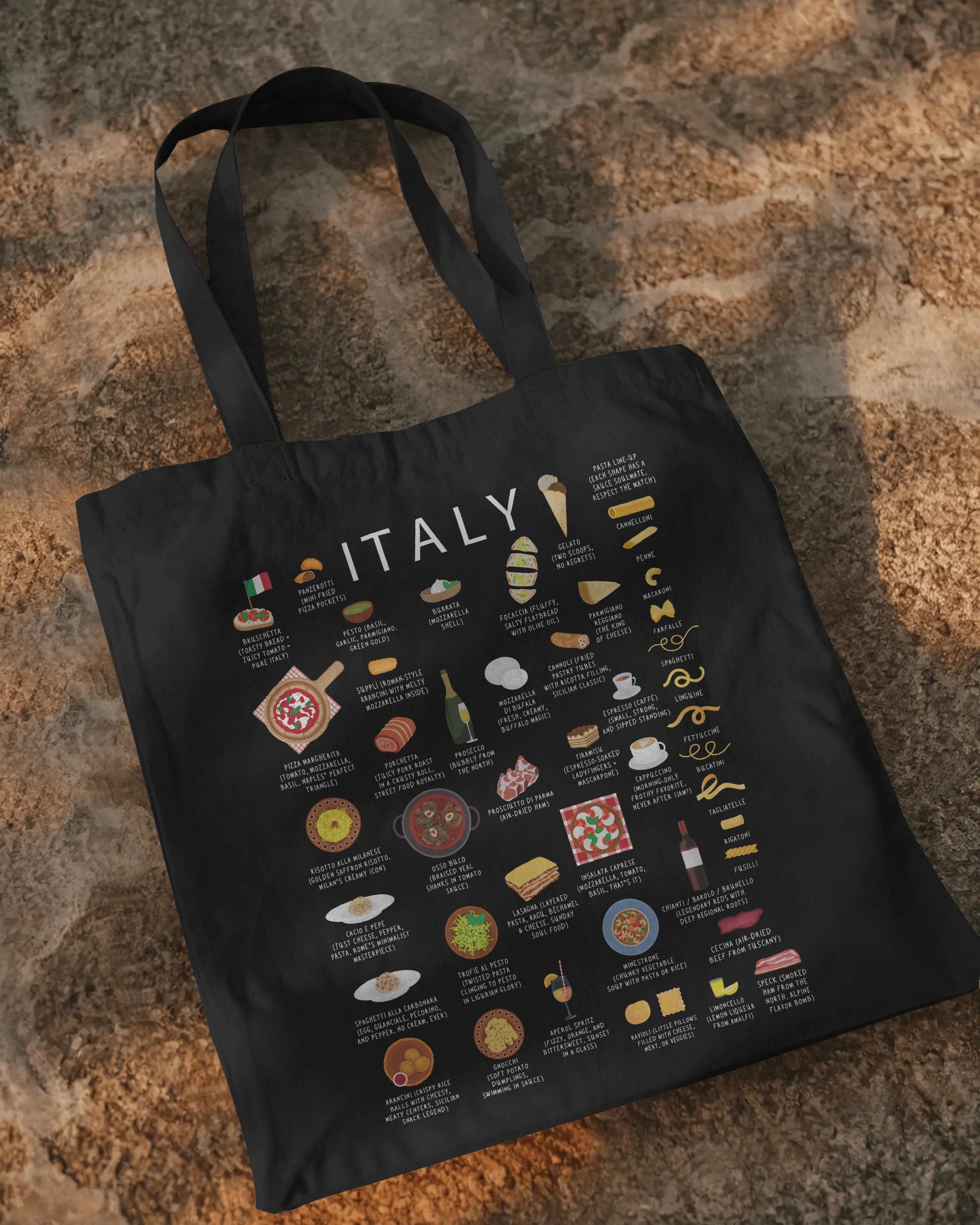
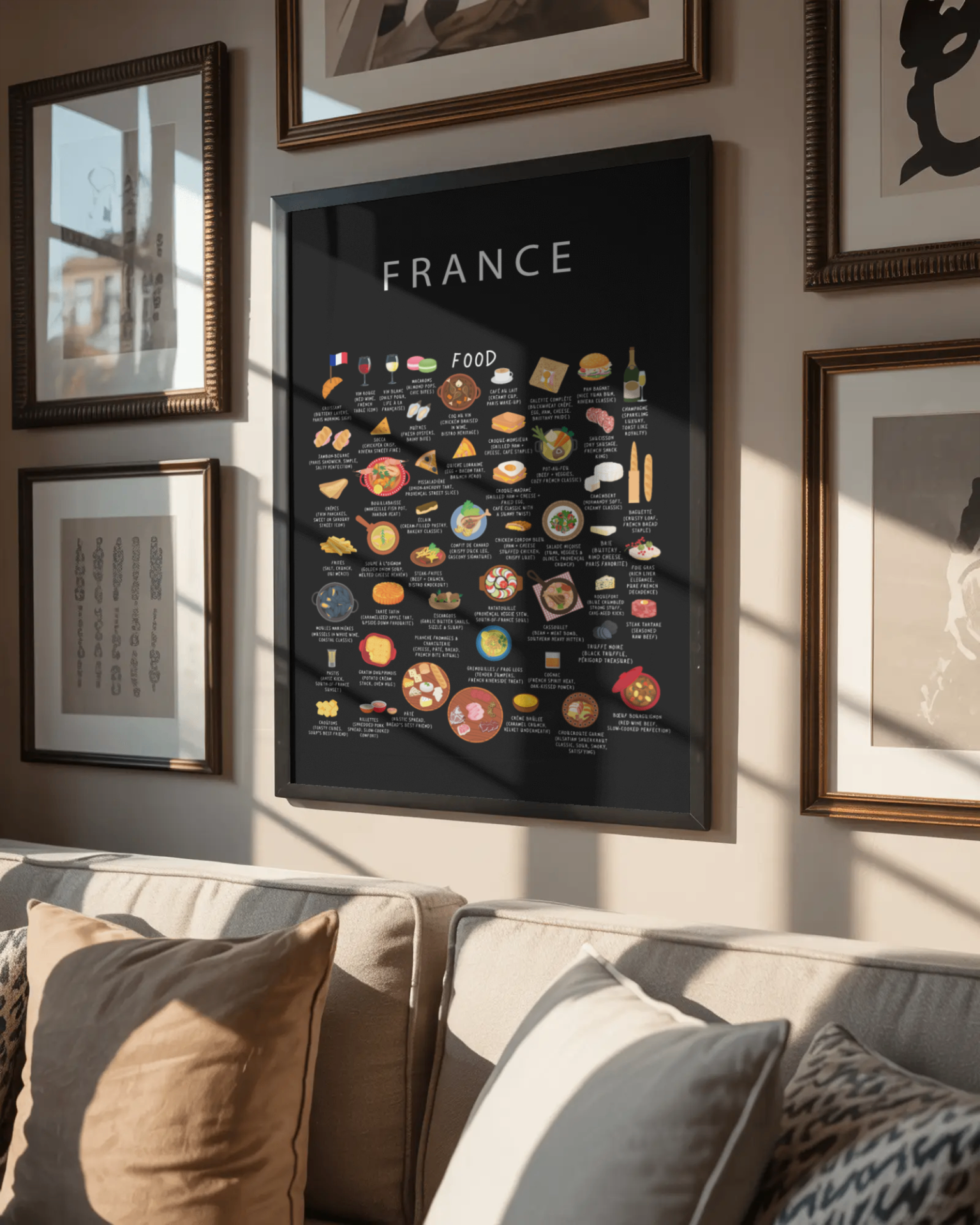
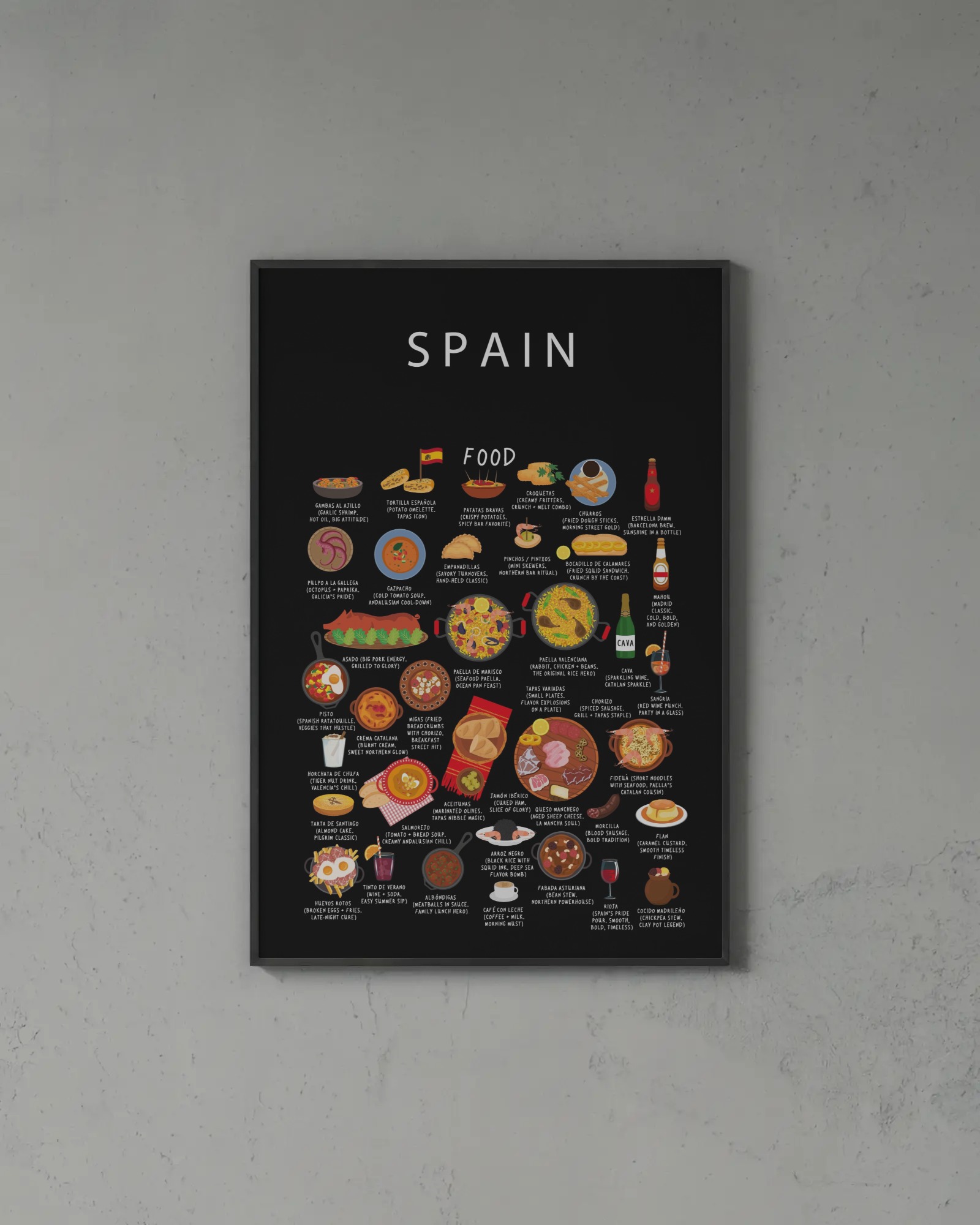
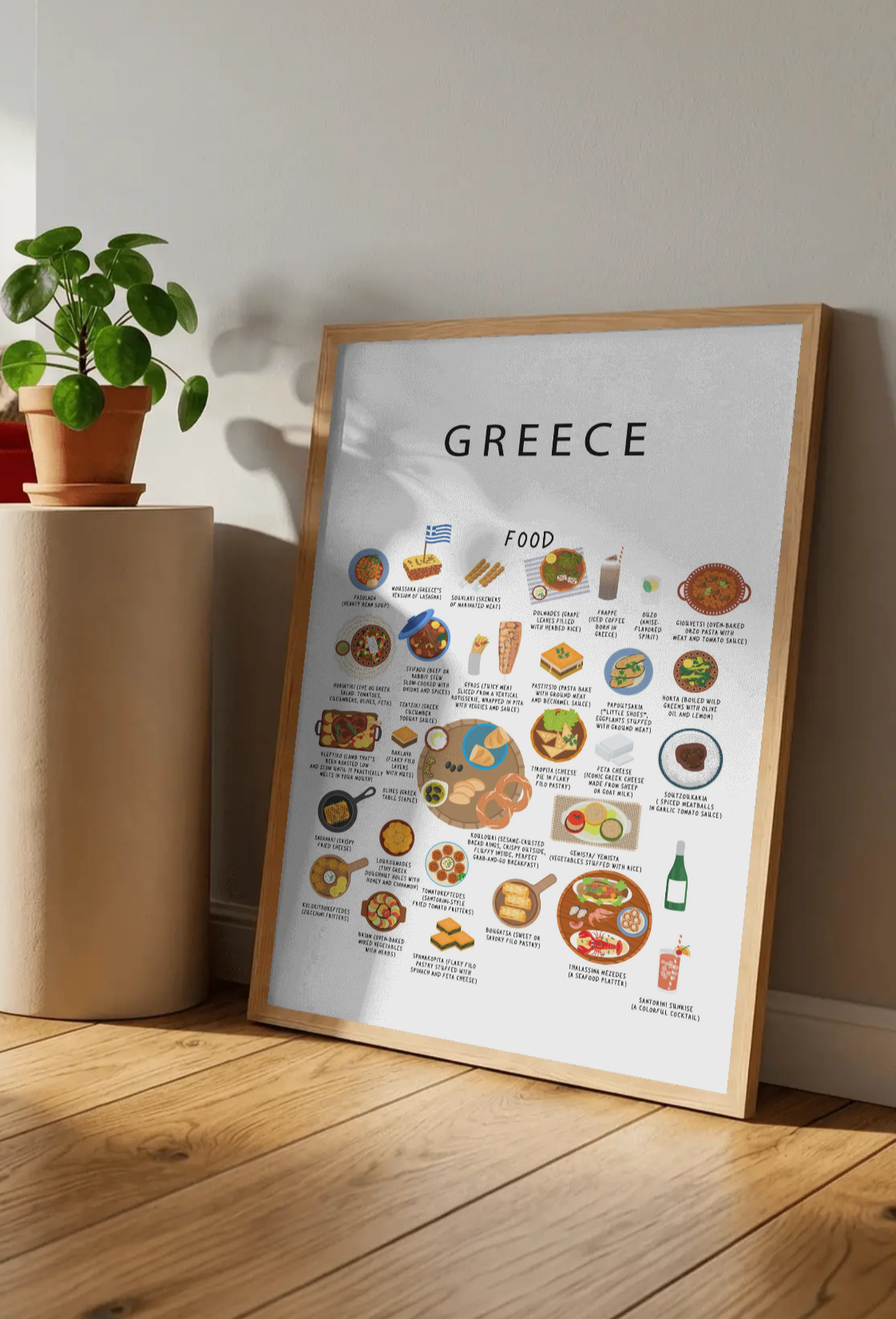
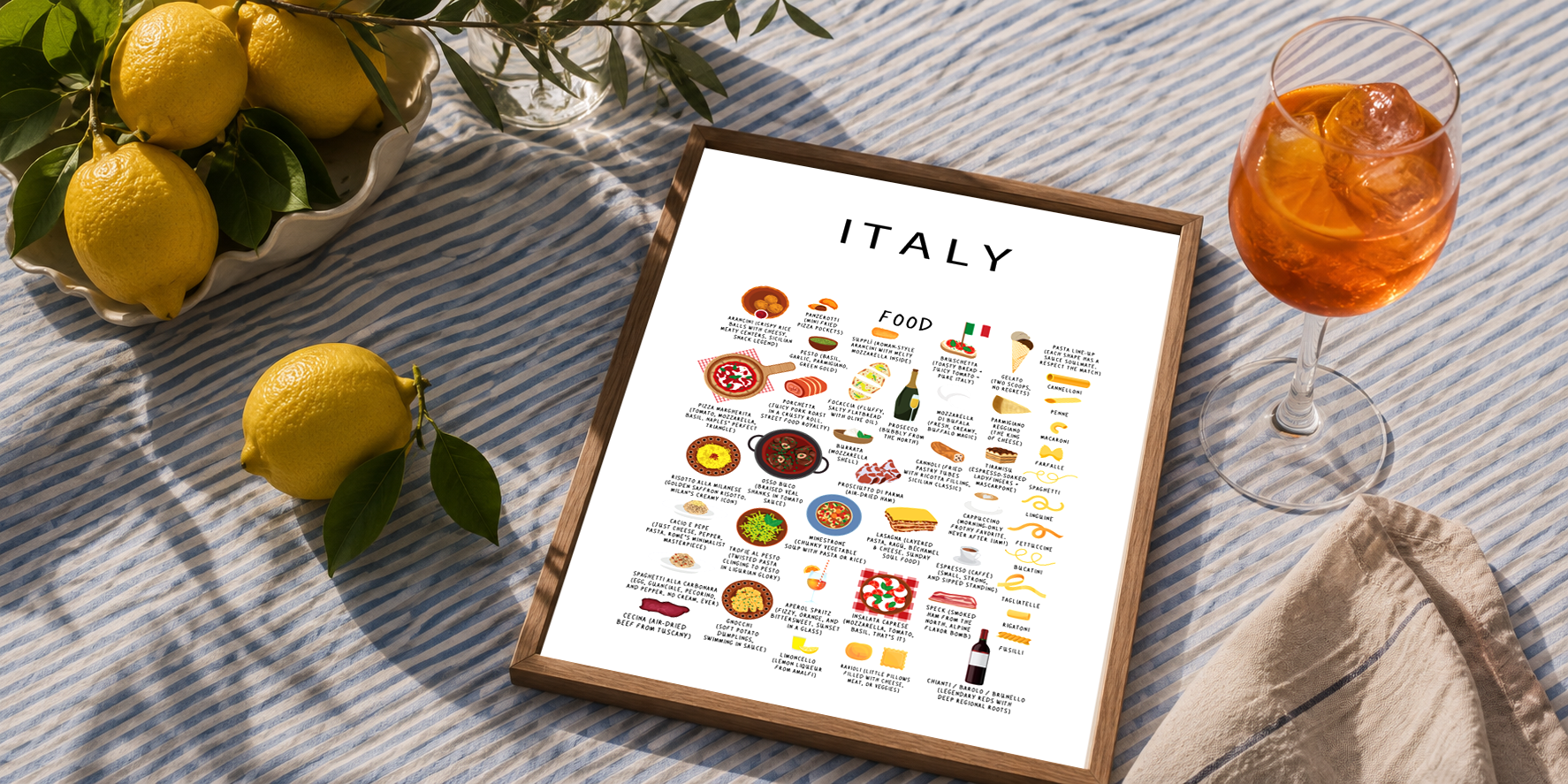
Our Italy collection was designed to feel like a slow morning in a sunlit kitchen. Illustrated pasta shapes, espresso cups, lemons and pizza slices arranged with the same care an Italian cook brings to a summer table. The Italy food poster gathers these icons into a piece of wall art that reads like a love letter to the country's most familiar flavours.
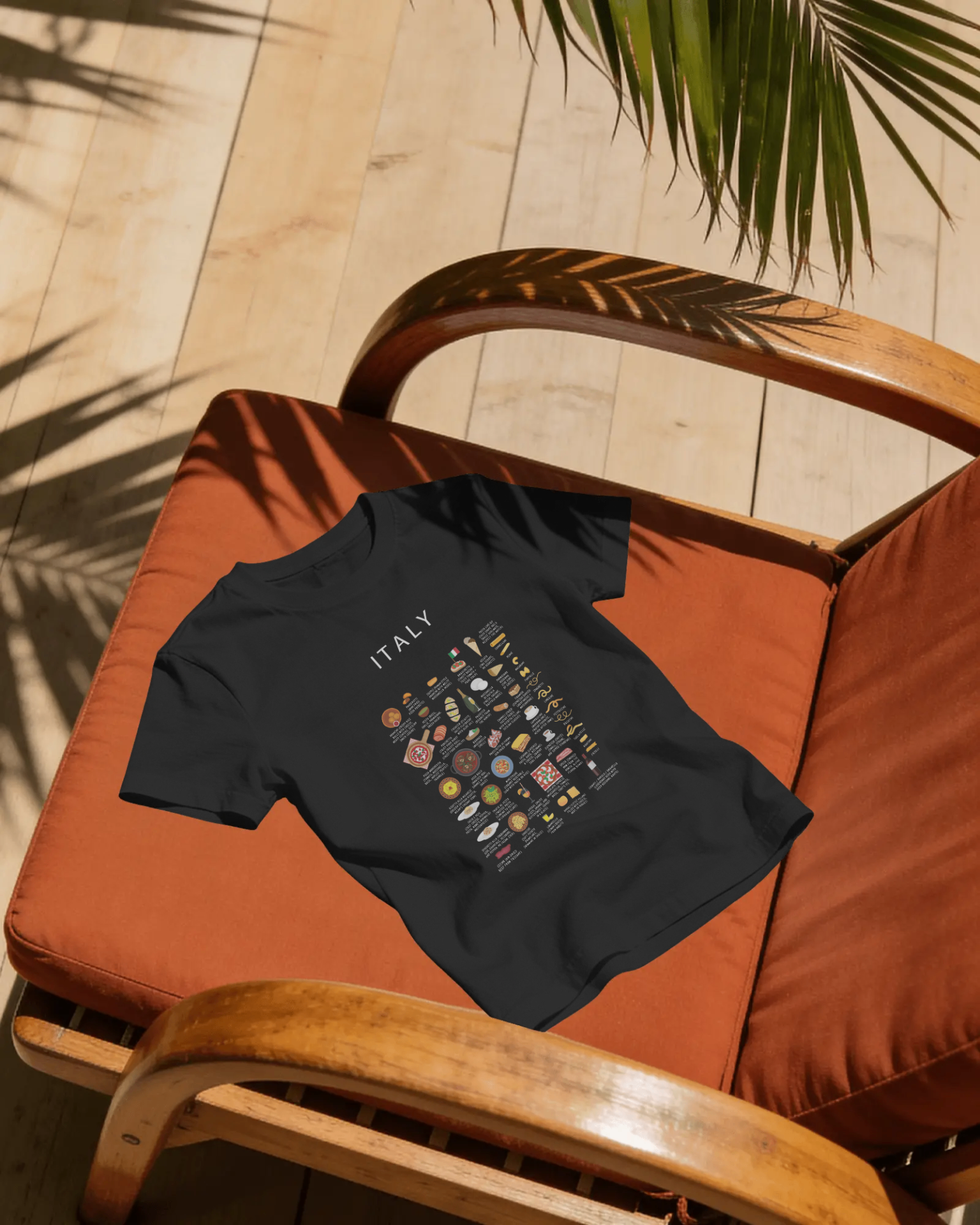
Alongside the posters, the collection extends to tea towels, aprons, T-shirts and tote bags — kitchen and lifestyle pieces made for people who cook with the windows open and eat with the people they love. Explore the full Italy collection on Etsy and bring a little of that unhurried Italian rhythm into your own home.
Ready to bring the Italy kitchen home?
Shop the Italy collection on Etsy →