The Story
Philippines Food Culture
A Table Built for the Whole Family
Filipino food culture is loud, warm, and unapologetically generous. Meals are not portioned — they are laid out. A single lunch can carry rice, a soup, a stew, a grilled dish, a vegetable side and something sweet, all landing at the table at once and staying there long after everyone has eaten. It is a cuisine designed for sharing, and for saying, without words, that there is always room for one more.
This generosity reflects the country itself: 7,000-plus islands stitched together by rice, coconut, vinegar and fire, layered with centuries of Malay, Chinese, Spanish and American influence. The result is a kitchen unlike any other in Asia — sweet and salty in the same bite, sour and rich in the same spoonful, deeply local and quietly global at once.
Adobo, Sinigang and the Classics That Anchor Every Kitchen
If Filipino food has a national dish, adobo is it — chicken or pork simmered in vinegar, soy, garlic, bay and black pepper until the sauce turns into something almost sweet. Every household cooks it slightly differently, and every version is somehow the correct one. Sinigang, the sour tamarind soup, is its counterpart: bright, comforting, and served at any temperature the weather demands.
Kare-kare, the peanut and oxtail stew served with bagoong; menudo and caldereta, the Spanish-rooted tomato stews of every fiesta; sisig, the sizzling chopped-pork plate born in Pampanga bars — these are the dishes that anchor a Filipino week. And rice, cooked simply and eaten with everything, is the quiet centre of every plate.
Street Food, Tusok-Tusok and the Filipino Sweet Tooth
Filipino street food is a world of its own. Kwek-kwek, the neon-orange battered quail eggs; fish balls and squid balls speared onto bamboo and dipped into sweet-sour sauces; isaw, the char-grilled chicken intestines that anyone who grew up in Manila will defend for life; betamax, the little cubes of grilled chicken blood named after the old cassette tapes. This is food eaten standing up, on corners, after school, before dinner.
The sweet side is equally beloved. Halo-halo — literally 'mix-mix' — is the country's most photographed dessert: shaved ice, sweet beans, jellies, ube, leche flan and evaporated milk stacked into a single glass and stirred into cheerful chaos. Turon, bibingka, biko, leche flan and taho carry Filipino sweetness through the day, from morning tofu-and-syrup cups to warm rice-cake evenings.
Fiesta Food, Lechon and the Long Filipino Table
No cuisine celebrates like the Philippines. Every town has its patron-saint fiesta, and every fiesta has its lechon — a whole pig roasted slowly over coals until the skin cracks like glass. Around it: pancit for long life, lumpia by the tray, embutido, kare-kare, and enough rice to justify all of it. San Miguel beer moves through the crowd, mango shakes appear from nowhere, and someone always brings a karaoke machine.
This is food as memory-making. It is why Filipino families abroad still cook adobo on ordinary Tuesdays and lechon on birthdays — not out of nostalgia alone, but because these dishes carry the sound of a full house.
Why Maison Maps Celebrates the Philippines
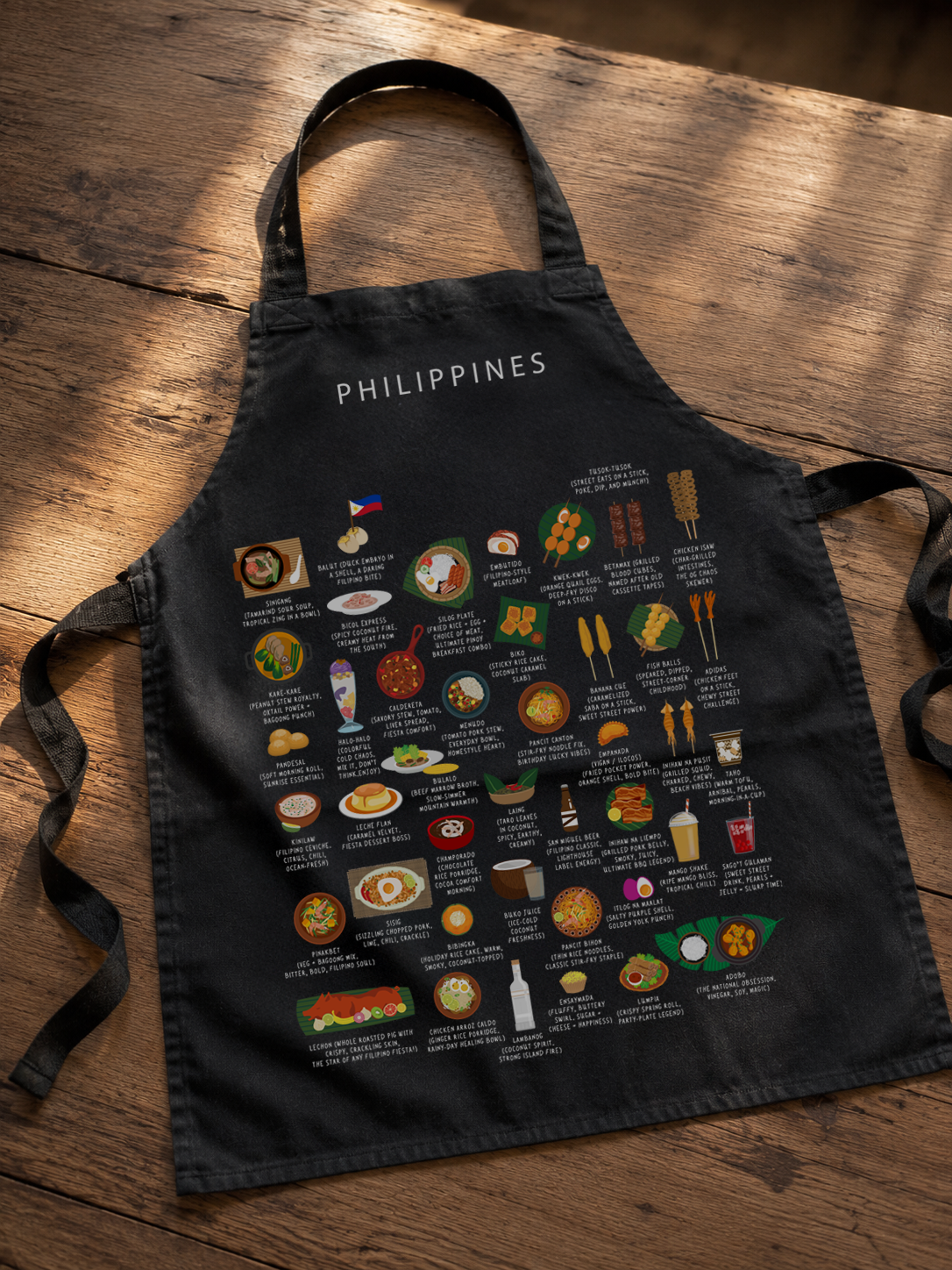
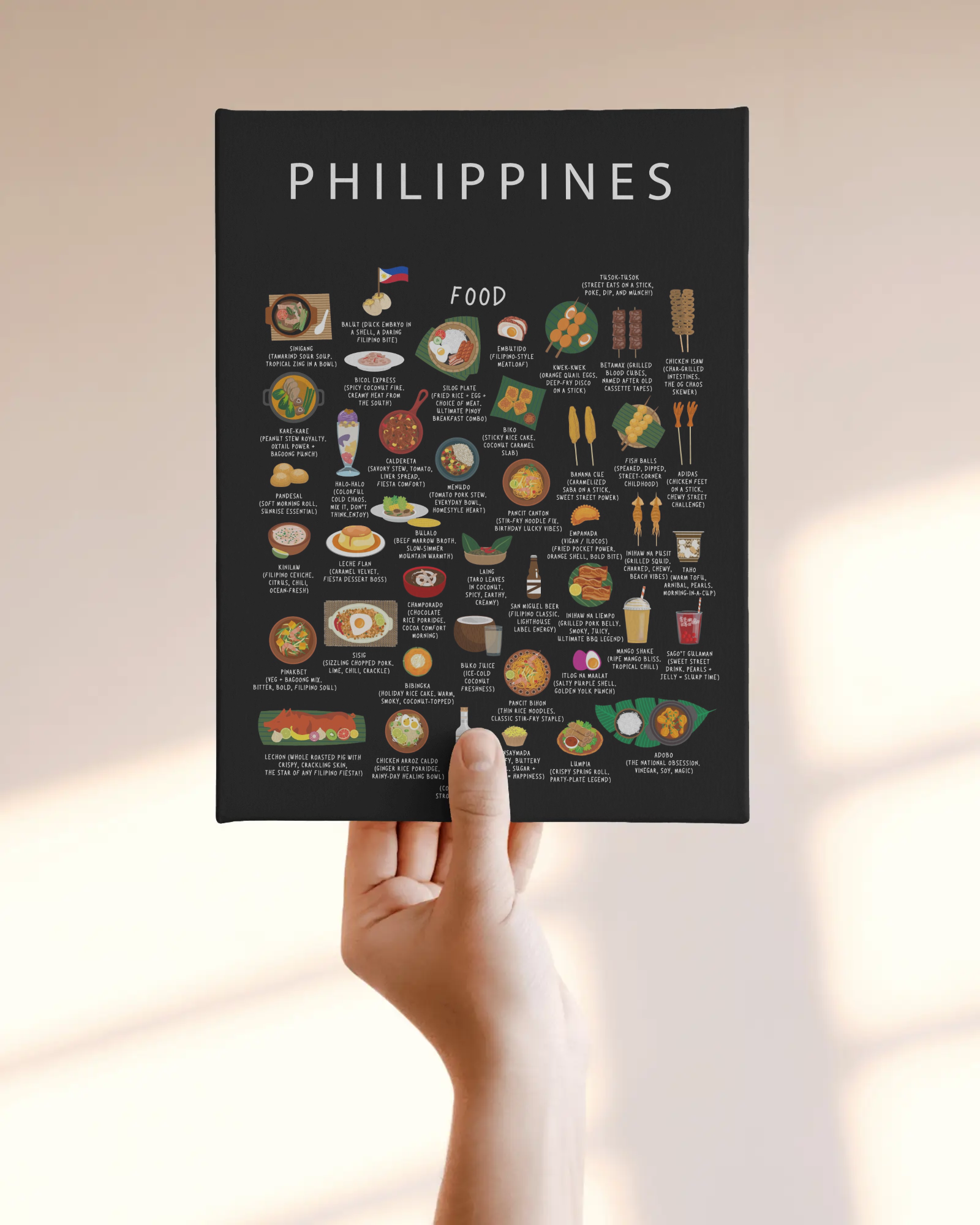
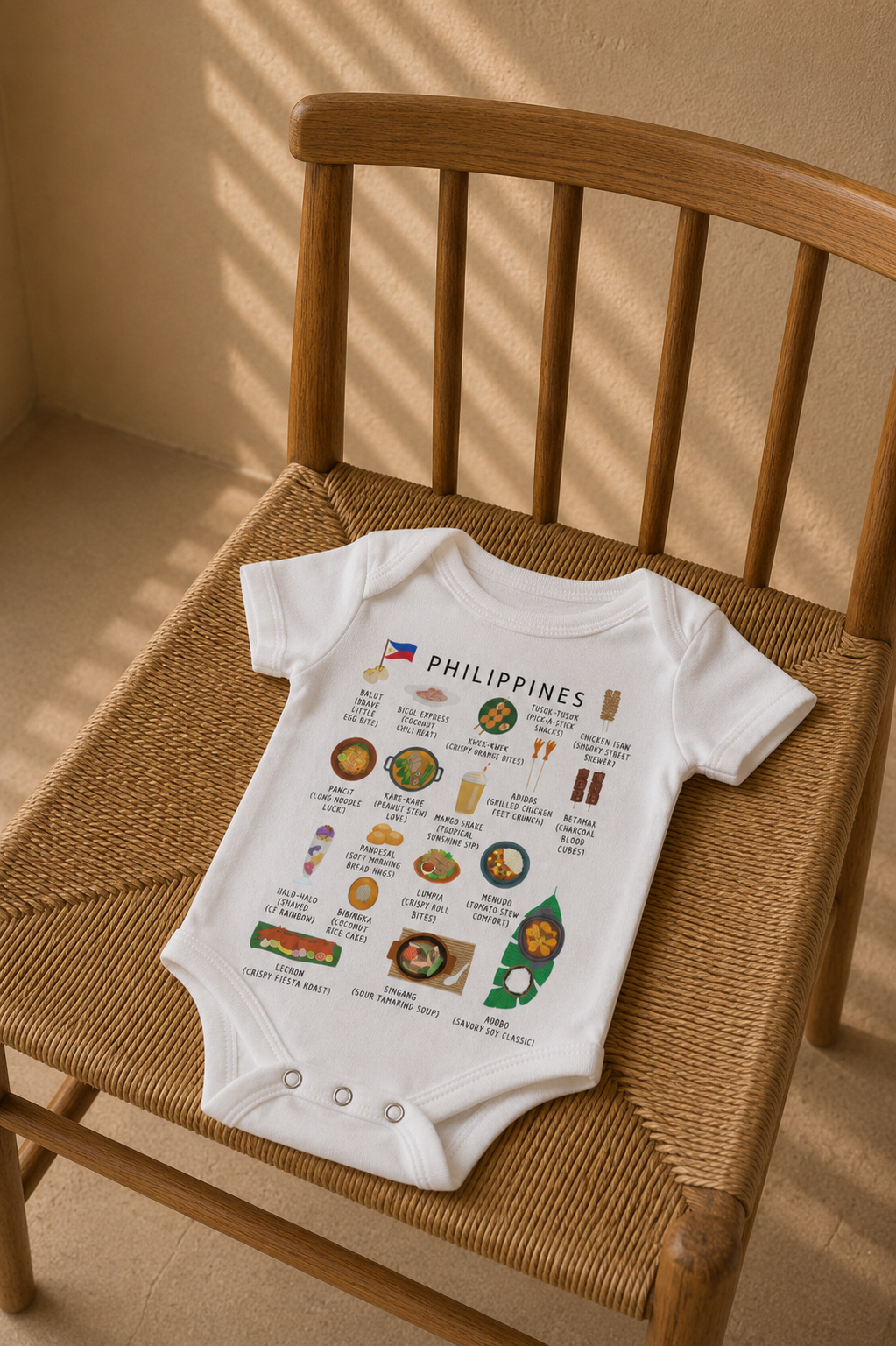
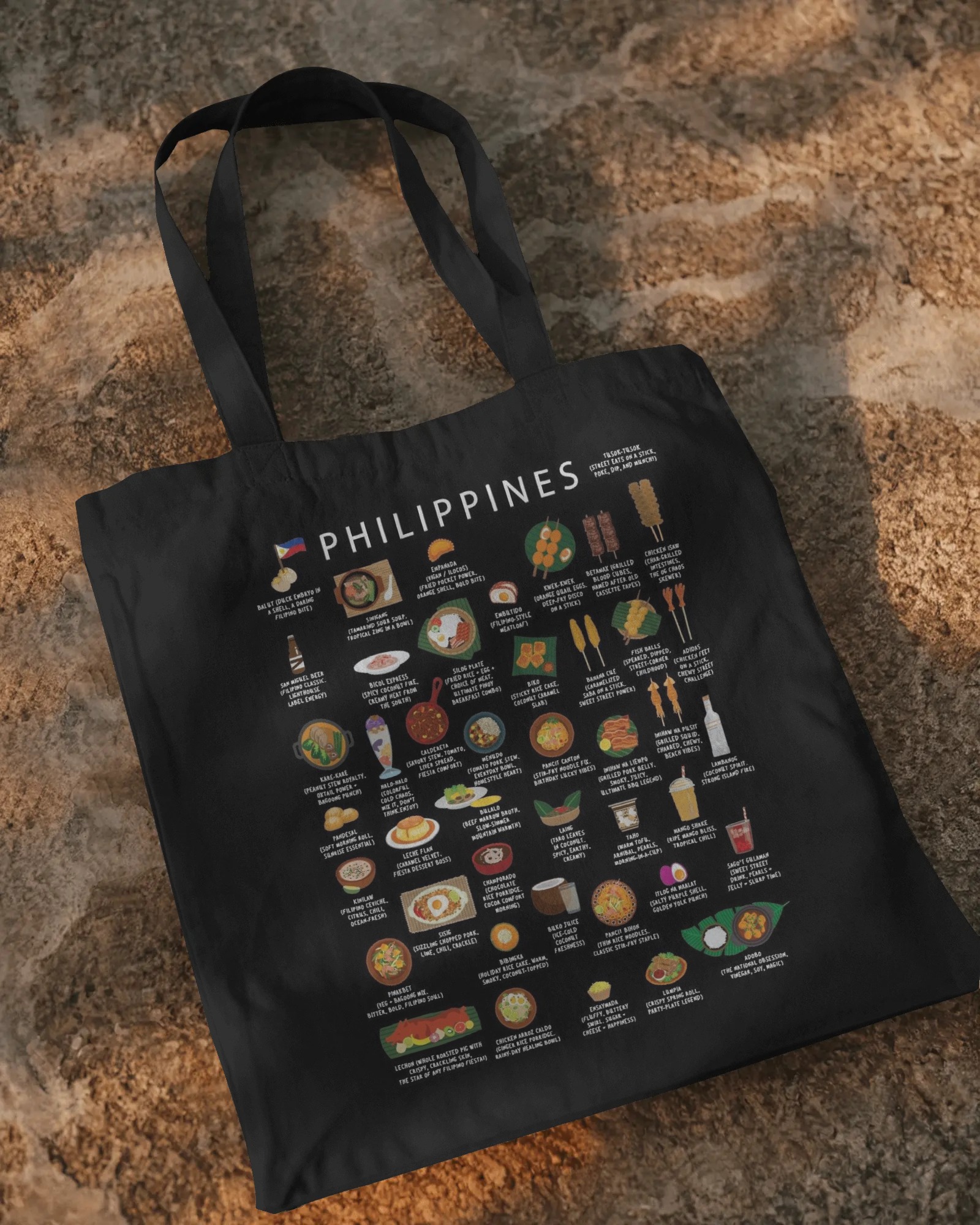
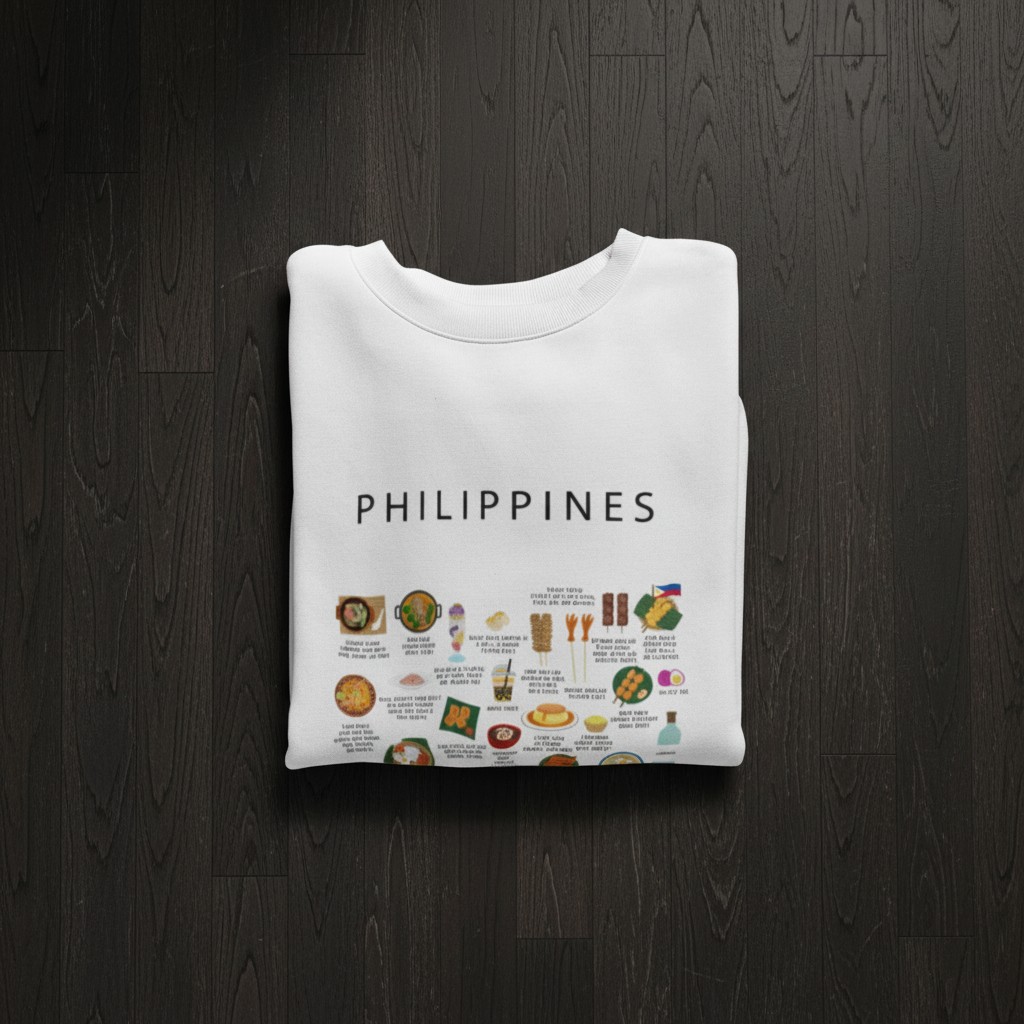
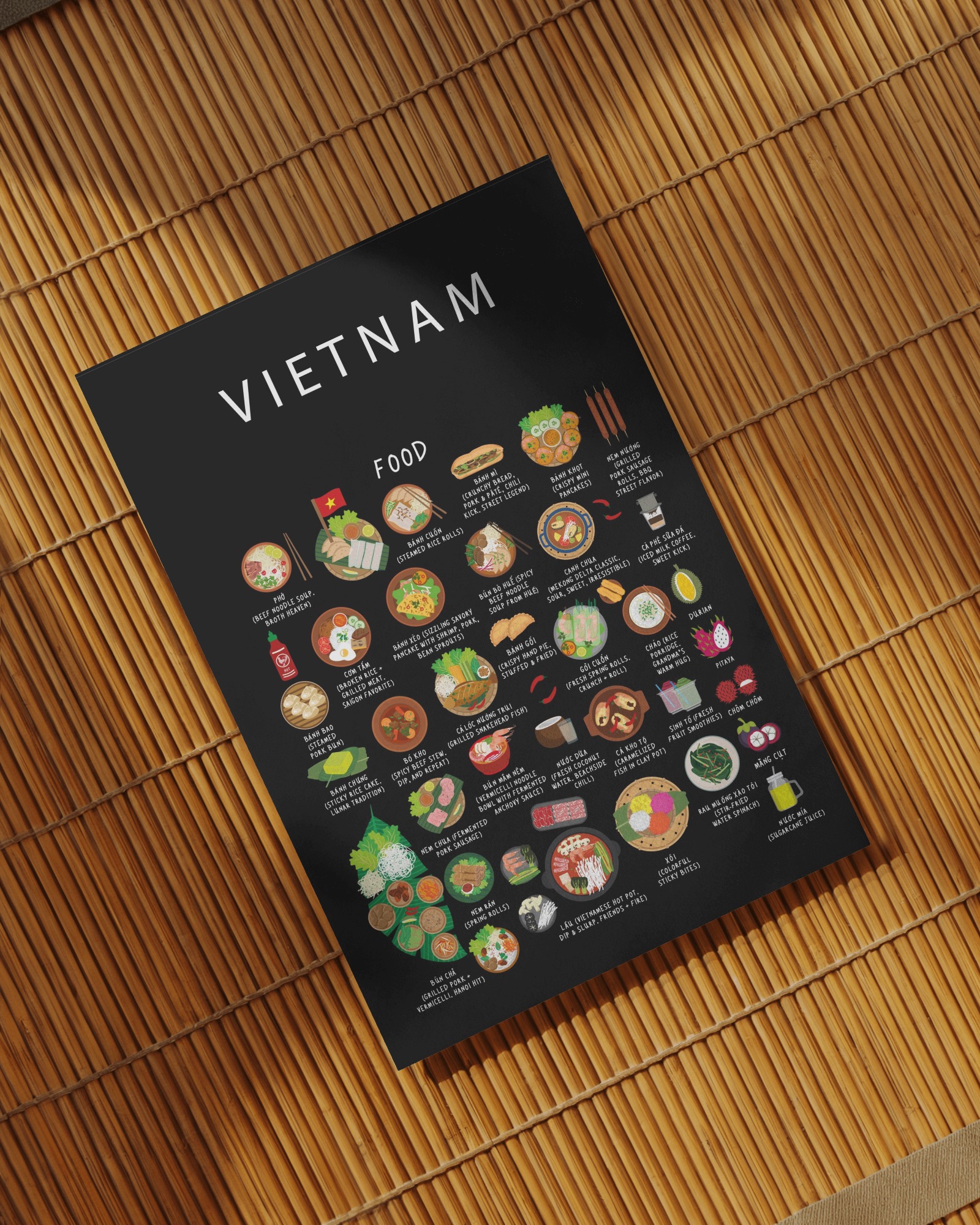
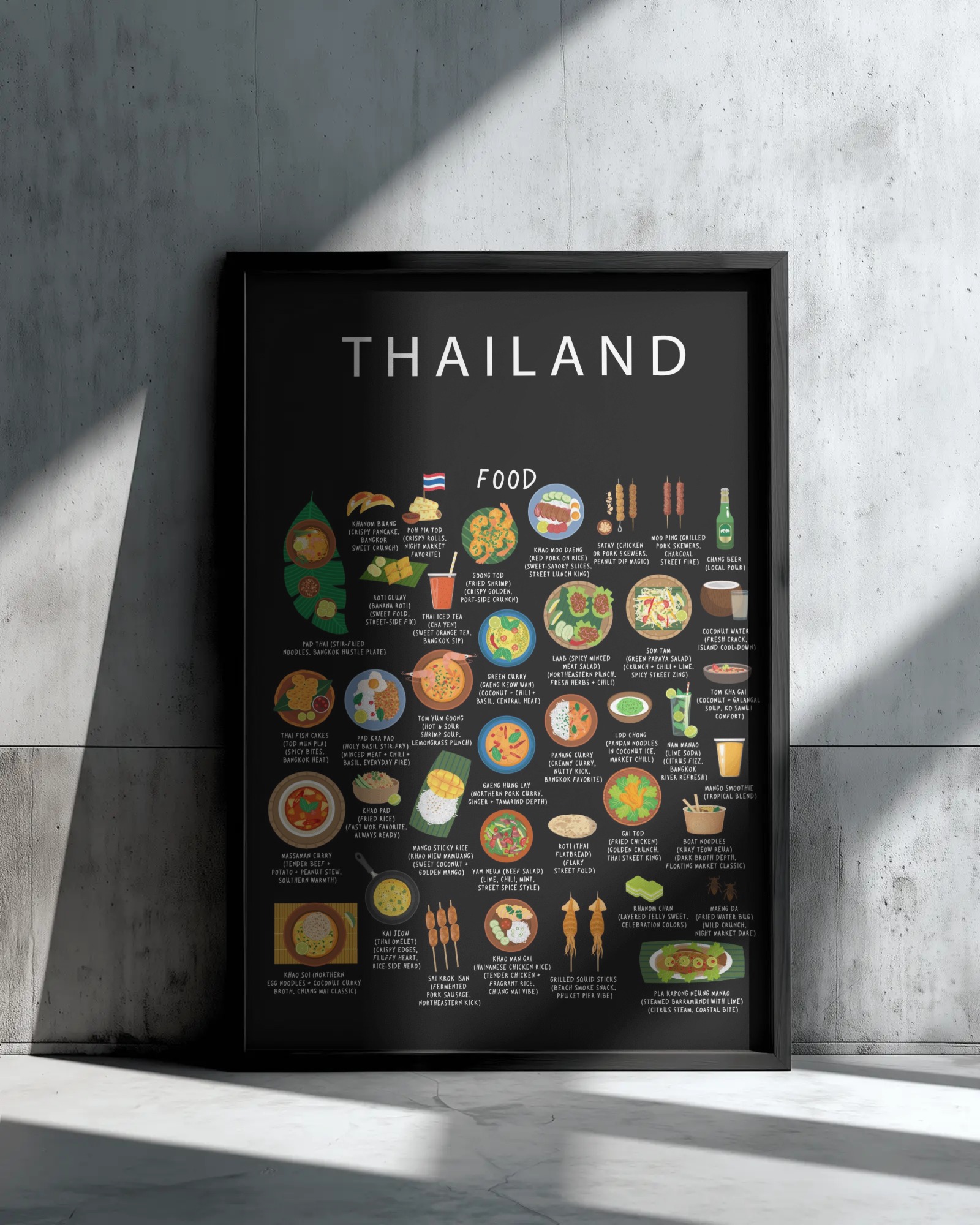
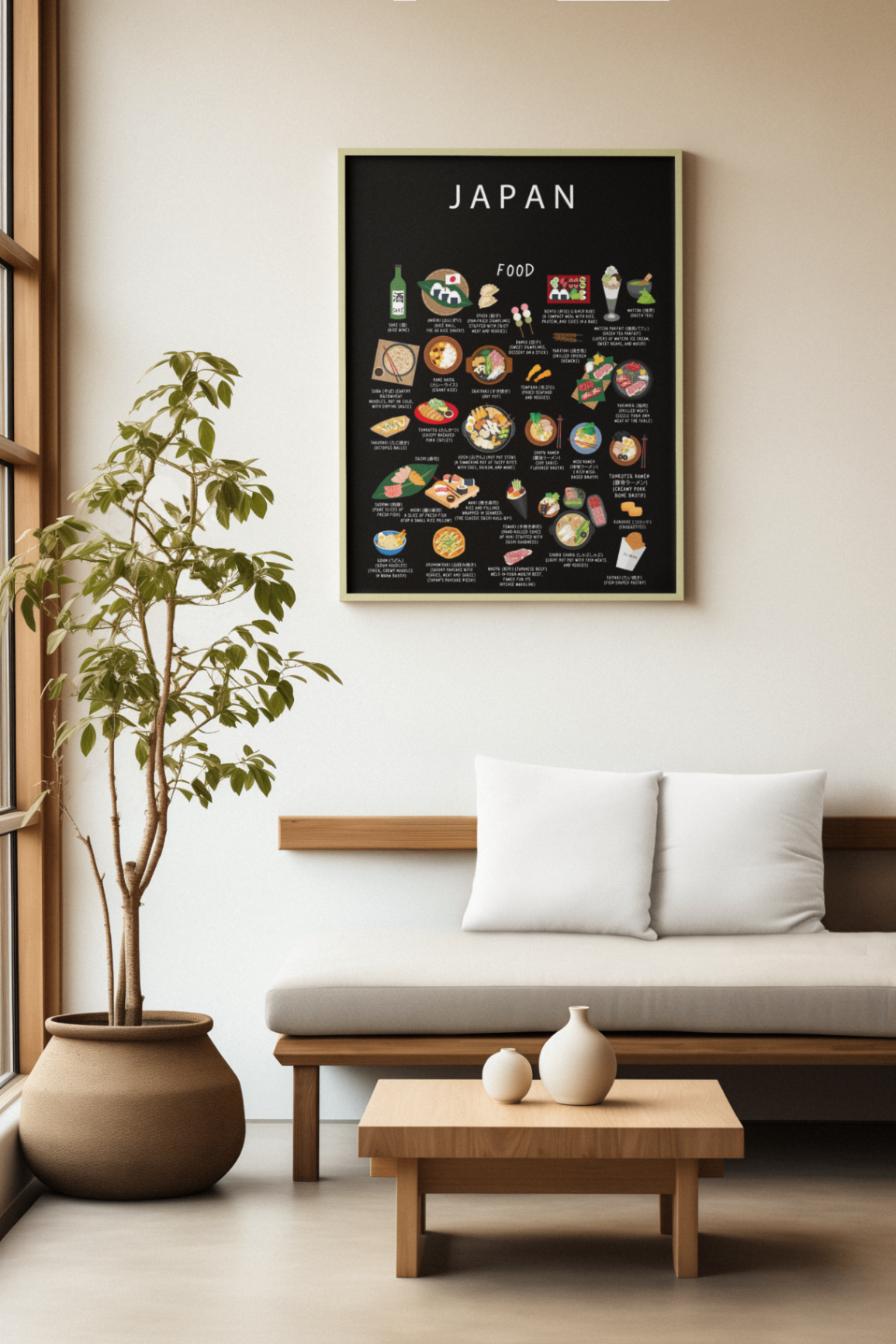
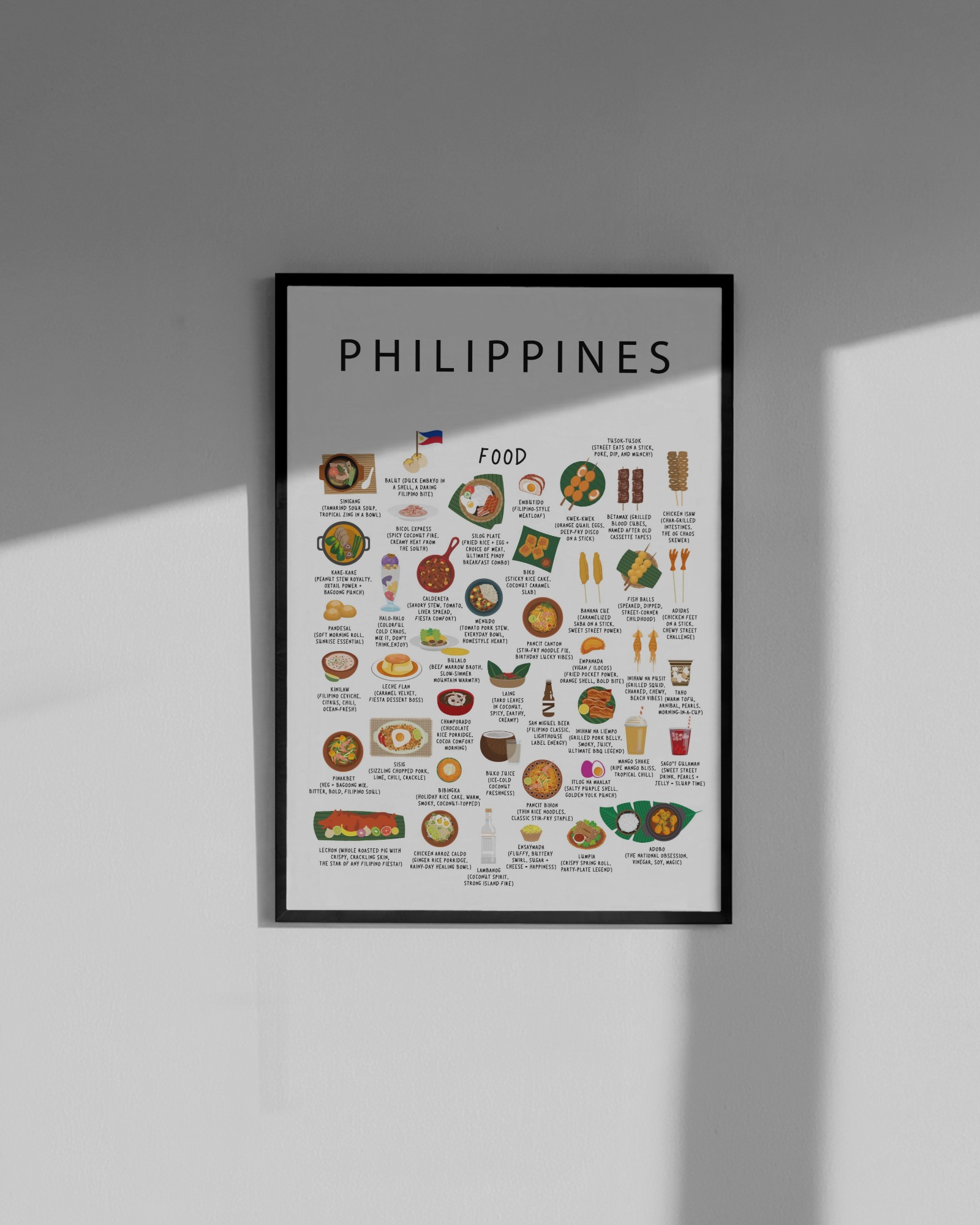
Our Philippines collection was designed to feel like the moment the lechon is carried in — warm, celebratory, and full of colour. Illustrated adobo, halo-halo, lumpia, pancit, tusok-tusok skewers and the little glass of sago't gulaman gathered onto a single Philippines food poster, framed with the same generous spirit Filipino kitchens are known for.
The Philippines collection extends into aprons, tote bags, sweatshirts and baby rompers — pieces made for the cook who feeds a crowd and the family that eats together, wherever in the world they are. Explore the full Philippines collection on Etsy and bring a little of that fiesta warmth into your own home.
Ready to bring the Philippines kitchen home?
Shop the Philippines collection on Etsy →