The Story
Vietnam Food Culture
Phở at First Light
In Hanoi, the day often begins with steam rising from a bowl of phở. Broth has been tended overnight with charred ginger, onion and warm spices; rice noodles, herbs and slices of meat are added only when someone sits down. The result is both breakfast and orientation — a familiar corner, a trusted cook, a low stool pulled close to the pavement.
Vietnamese cuisine works through balance rather than excess. Lime sharpens, chilli warms, herbs lift and fish sauce deepens. Each element remains distinct, yet the bowl makes sense only when they meet.
Bánh Mì, Markets and Food in Motion
Bánh mì carries history in a paper wrapper: a crisp baguette filled with pâté or grilled meat, pickled carrot and daikon, cucumber, herbs and chilli. It is assembled quickly and eaten on the move, but its contrasts are exact — hot and cool, rich and bright, soft and sharply crisp.
Across Vietnam, markets set the colour of the day. Baskets hold green mango, pomelo, aubergines, chillies and armfuls of herbs. Breakfast gives way to bún bowls, bánh xèo crackling from the pan and gỏi cuốn rolled fresh for the table.
Saigon Coffee and the Afternoon Pause
Ho Chi Minh City — Saigon in the intimate vocabulary of daily life — moves quickly around a remarkable café culture. Cà phê sữa đá is made slowly: dark robusta coffee drips through a phin onto condensed milk, then is stirred over ice. It is sweet, strong and designed for the heat.
Cafés occupy old apartments, shaded courtyards and bright modern rooms, but the ritual remains recognisable. Friends lean across small tables, scooters collect outside, and for a few minutes the city waits for the last drop to fall.
Family Tables, Shared Plates
At home, a Vietnamese meal gathers around rice and several shared dishes: a clear soup, greens, fish or pork, something pickled and a small bowl of nước chấm that pulls everything together. Nobody owns one plate. Hands move between bowls, portions are offered, and care is expressed by placing the best piece in someone else's rice bowl.
That daily generosity matters more than spectacle. Vietnamese food culture lives in repetition — washing herbs, tasting broth, cutting fruit, setting out chopsticks — and in the confidence that there is room for one more person.
Why Maison Maps Celebrates Vietnam
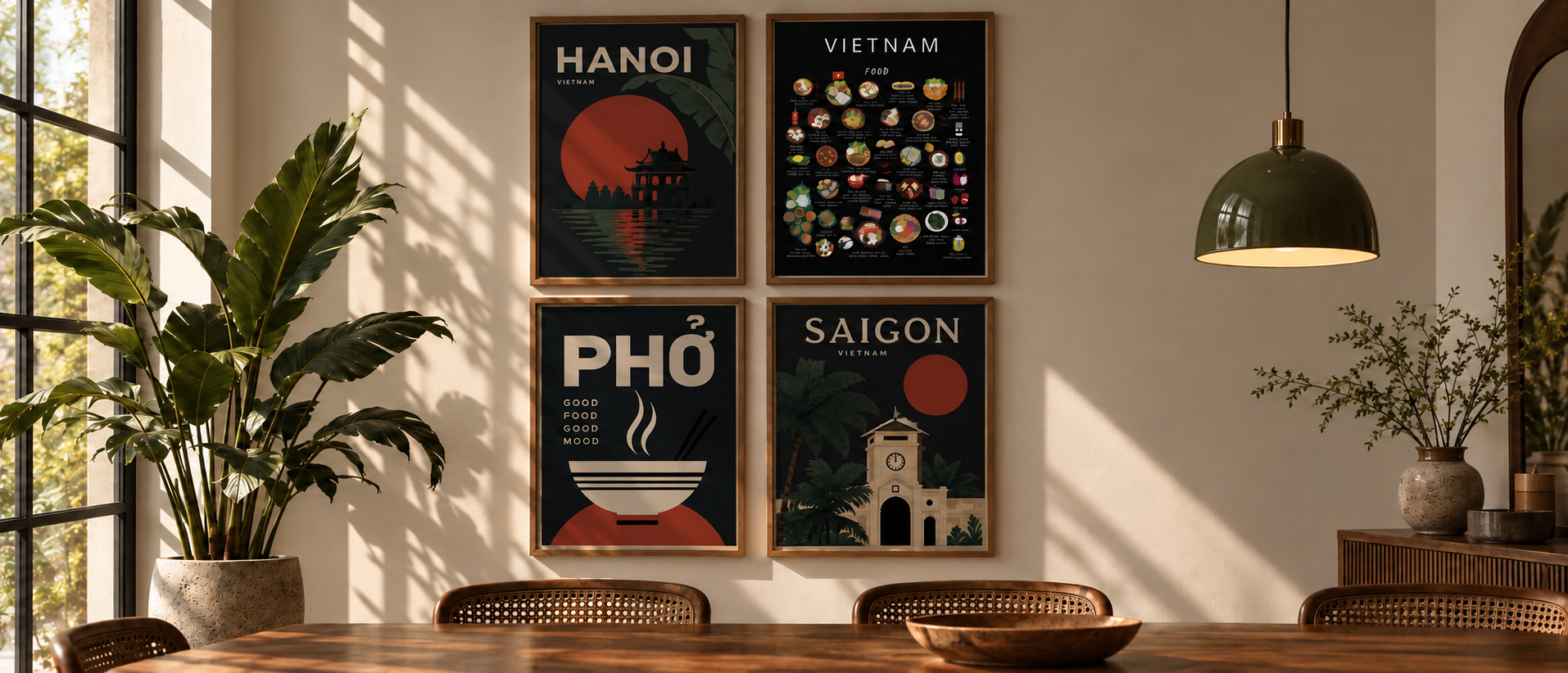
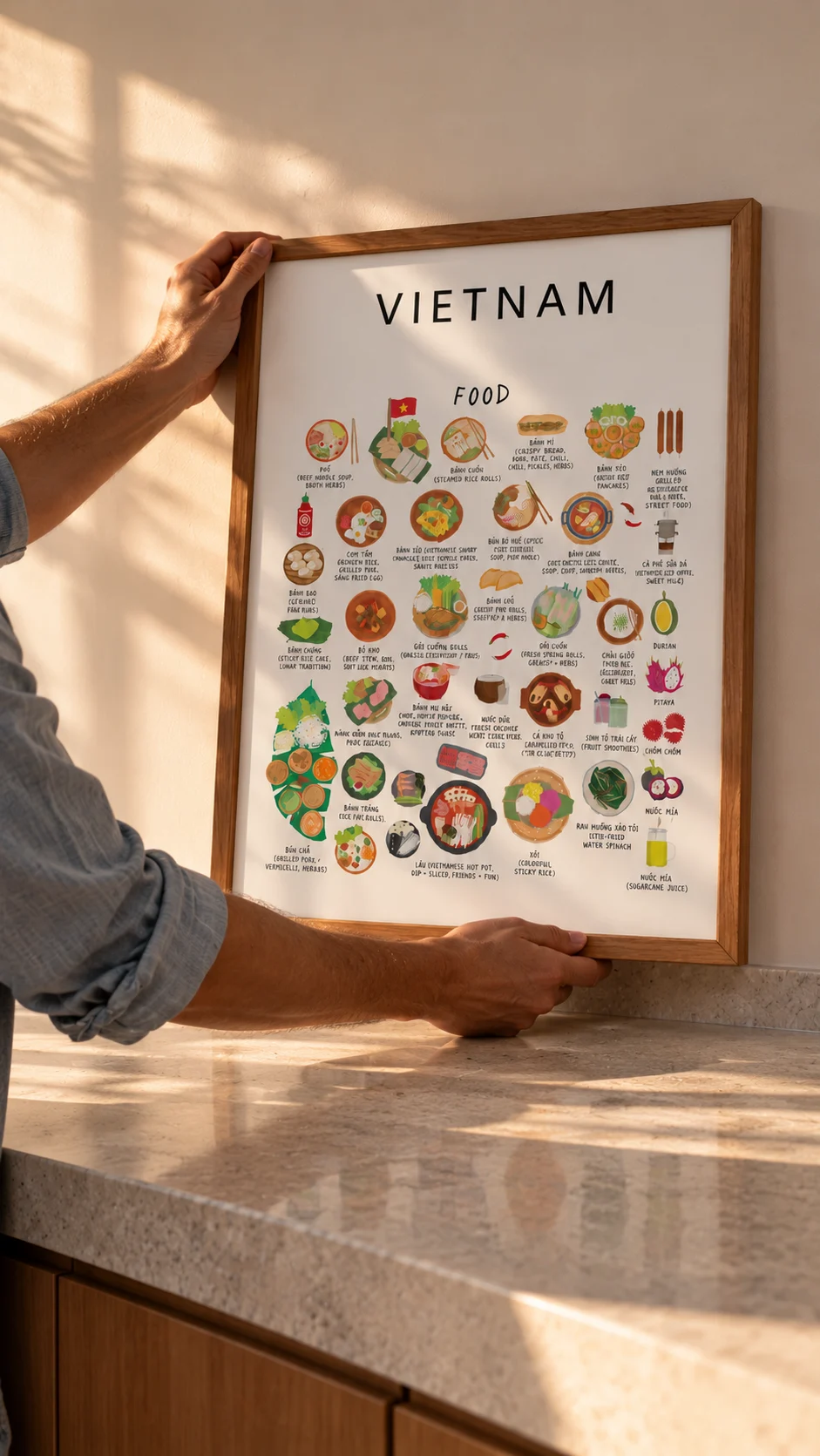
The Maison Maps Vietnam collection brings phở, bánh mì, gỏi cuốn, bún chả, bánh xèo and cà phê sữa đá together in illustrated Vietnam posters, food posters, kitchen décor and gifts. Each drawing is rooted in the tastes and everyday objects that make the country immediately recognisable.
These pieces are for people who remember Hanoi mornings, Saigon cafés, family tables and market colour — or who want their home to hold a thoughtful piece of Vietnamese culture. Vietnam is not reduced to a postcard; it is kept close through the food people return to.
Ready to bring the Vietnam kitchen home?
Shop the Vietnam collection →