The Story
New Zealand Food Culture
Aotearoa Cooks Close to the Ground
New Zealand food begins with what the land gives. Kūmara is roasted until its edges caramelise, lamb is cooked slowly with herbs, and a hāngī is lowered into an earth oven where heated stones do the work for hours. Lifting it is the meal's real ceremony: steam, patience and food shared straight from the basket.
Māori kitchens set the country's oldest rhythms — boil-up with pork bones, kūmara and greens; rēwena bread risen with a potato bug; pūhā gathered fresh. Around that centre sits an island practicality: baking that fills the tin, fruit picked in season, and nothing dressed up for show.
Kūtai, Pāua and the Coast
The sea supplies generously. Kūtai — green-lipped mussels the size of a palm — are steamed open and eaten with the broth. Pāua is minced into fritters, crayfish is split and buttered, and whitebait is bound with barely any egg and fried for seconds so the delicate fish stays intact.
Fish and chips remain a national ritual, wrapped and eaten by the water while it is still too hot. Tuna patties and smoked fish belong to the same coastal habit: cook what came in, keep it simple, eat it outside.
The Pie, the Sausage Roll and the Flat White
New Zealand's everyday food is portable and unpretentious. The mince and cheese pie is defended with genuine seriousness; the sausage roll is always warm; afghan biscuits sit under café glass with a walnut pressed into the chocolate icing.
And then there is coffee. The flat white was born here — espresso and steamed milk in exact balance, poured without theatre and drunk several times a day. New Zealand café culture is quiet, precise and one of the country's least advertised exports.
Pavlova, Hokey Pokey and the Argument at the End
Dessert is where the country gets competitive. Pavlova — crisp shell, soft centre, cream and fruit — is claimed with real conviction, usually alongside kiwifruit or summer berries. Hokey pokey ice cream, studded with honeycomb toffee, is the flavour most Kiwis abroad miss first.
Feijoas arrive in autumn and disappear into jam and cakes; pineapple lumps stay in the glovebox; L&P is poured over ice. Sweetness here is nostalgic rather than refined, and that is exactly the point.
Why Maison Maps Celebrates New Zealand
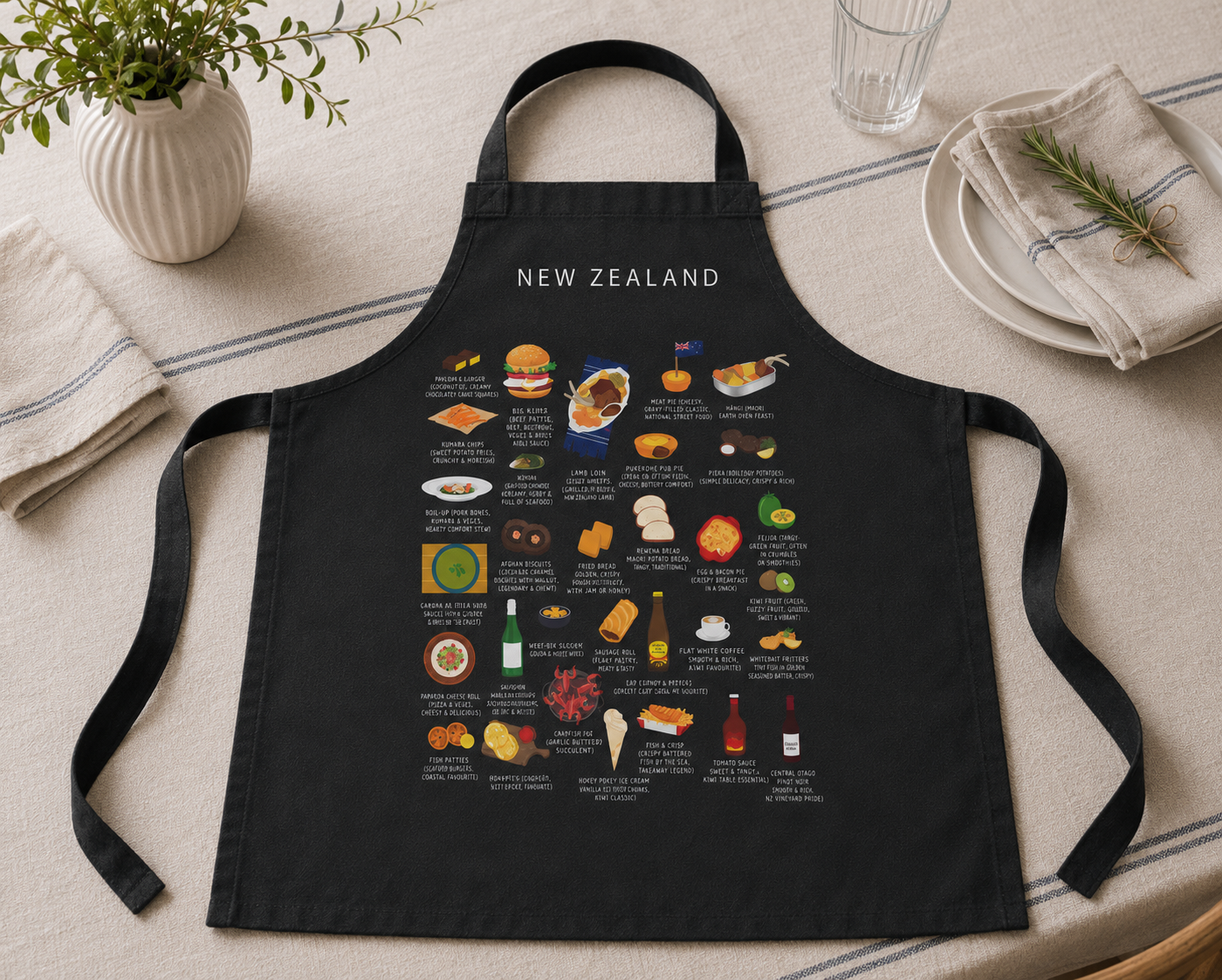
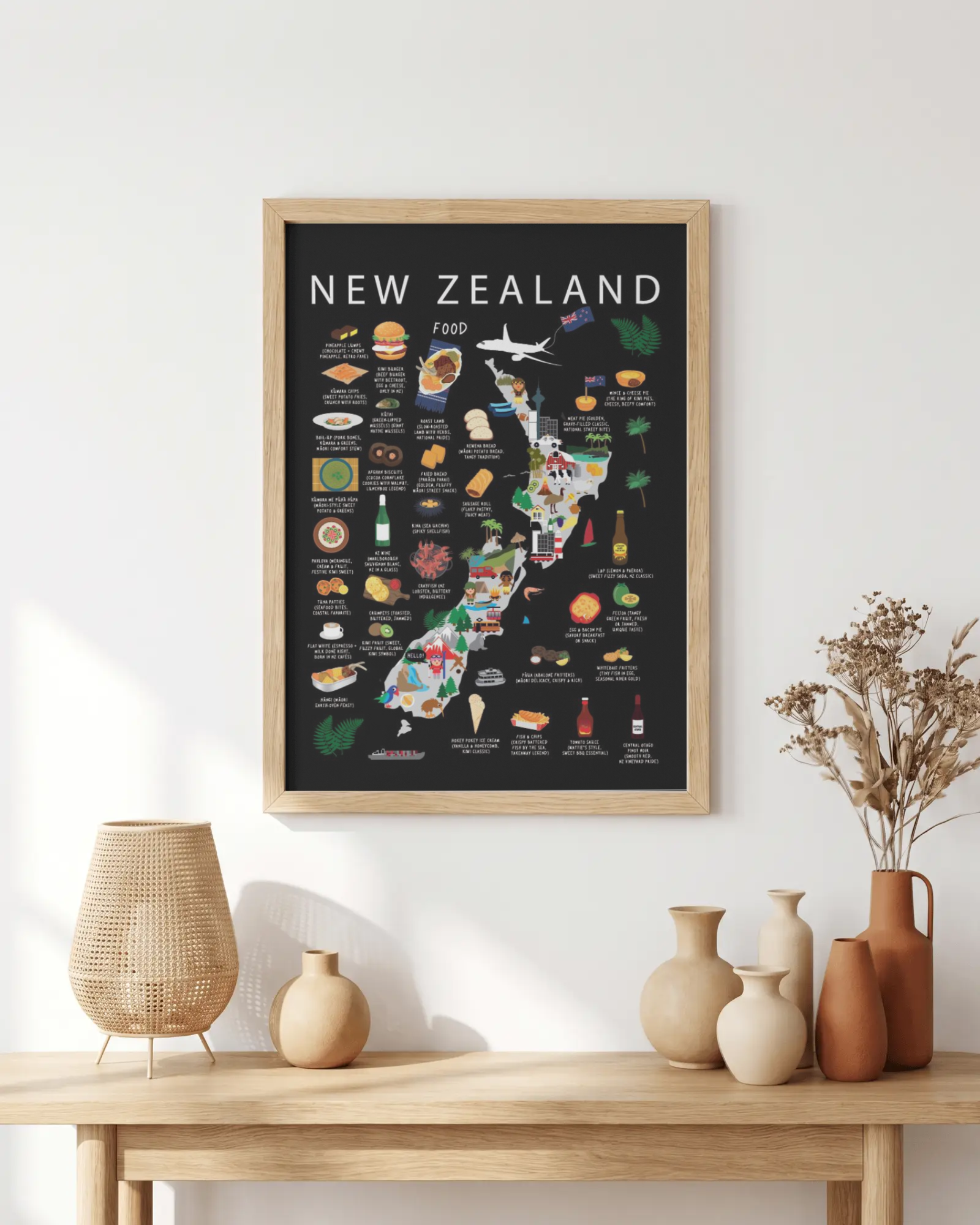
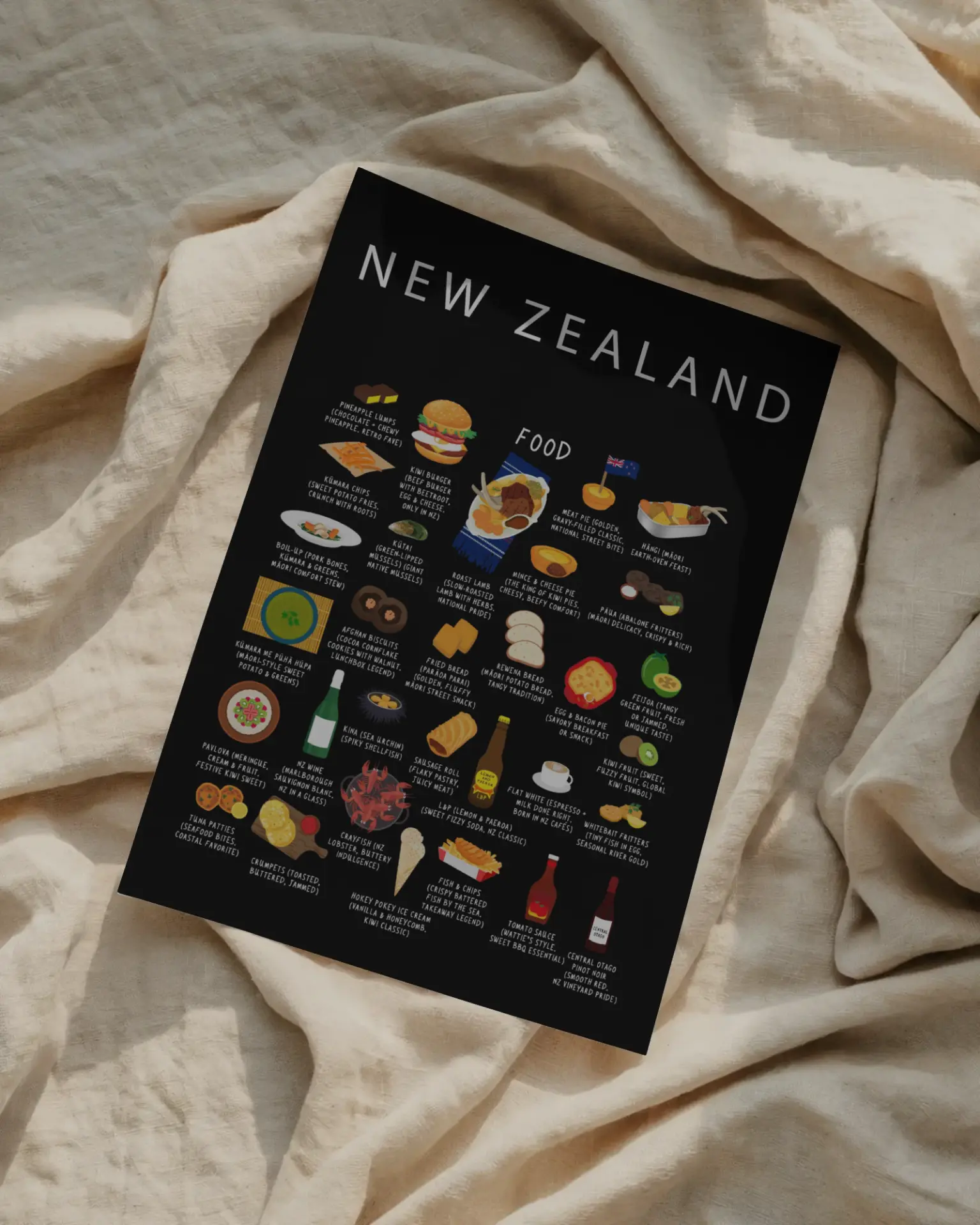
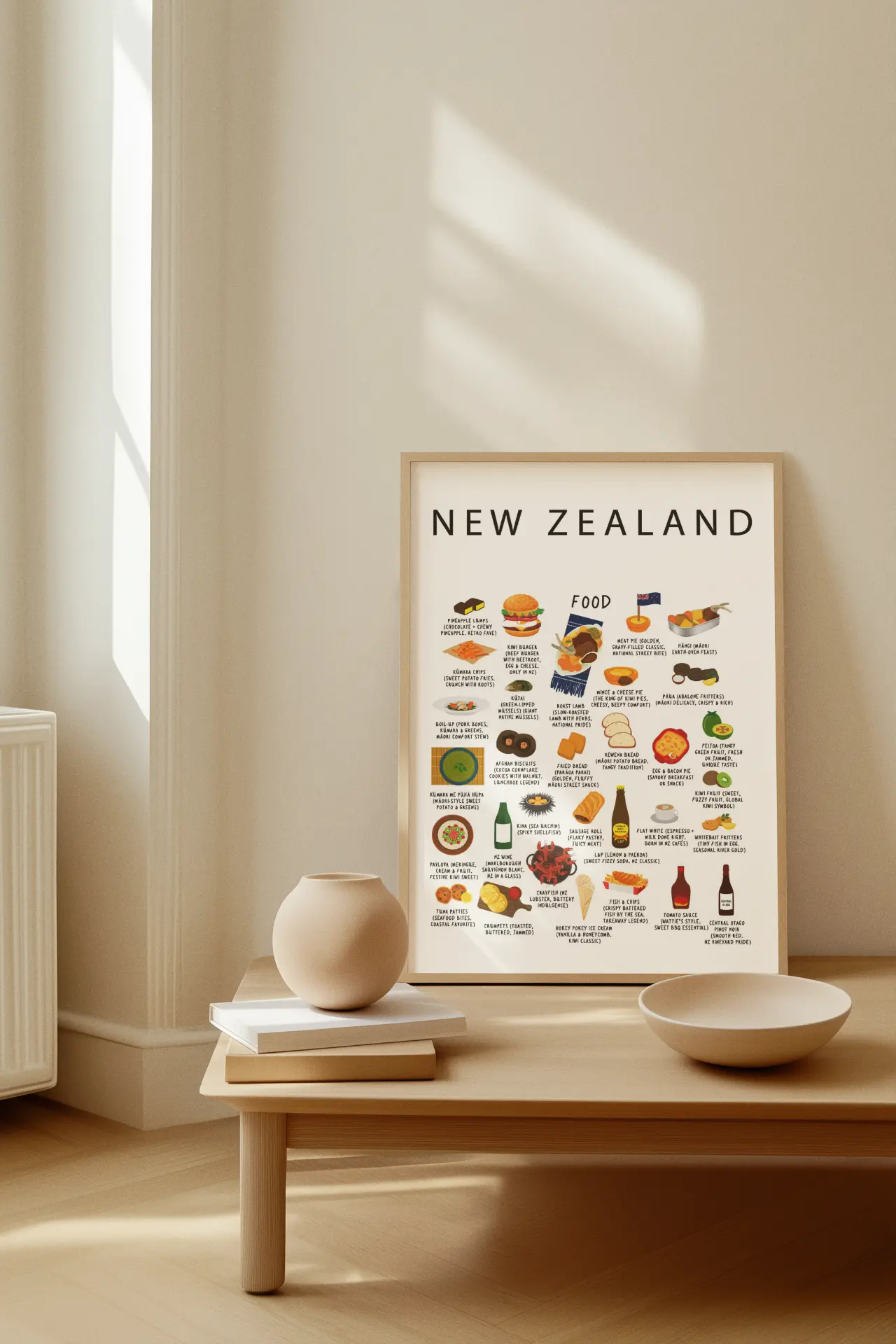
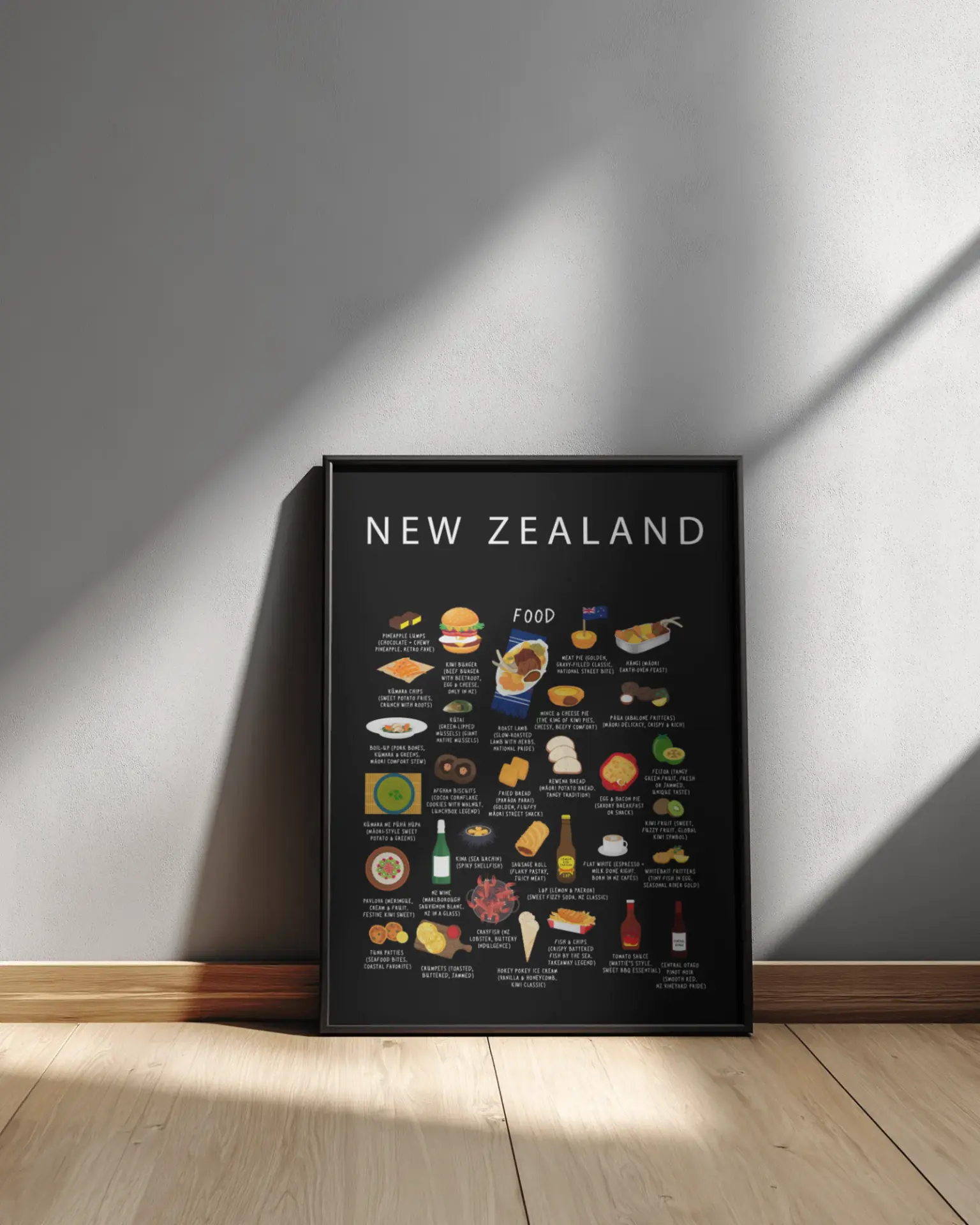
The New Zealand collection gathers hāngī, kūmara, kūtai, whitebait fritters, meat pie, pavlova, hokey pokey and the flat white into one illustrated composition — each dish named and drawn as part of a lived Aotearoa kitchen.
The posters and aprons are made for people who remember the steam of a hāngī, the sweetness of roasted kūmara and a flat white made properly. They keep New Zealand close through the food that actually fills its tables.
Ready to bring the New Zealand kitchen home?
Shop the New Zealand collection →