The Story
Australia Food Culture
A Kitchen With the Doors Wide Open
Australian food culture lives outdoors. The barbecue in the backyard, brunch on a laneway pavement, fish and chips eaten straight from the paper as the sun goes down — this is a cuisine shaped by climate, coastline and a national instinct for keeping things easy. The Australian kitchen is confident, produce-first and quietly cosmopolitan, drawing on Indigenous traditions, British roots and the deep influence of Southern European, Middle Eastern and Southeast Asian communities who have made Australian cities some of the most delicious in the world.
The result is a food identity that resists clichés. Yes, there is Vegemite on toast. But there is also miso-glazed kingfish, laksa served at plastic tables in Sydney's food courts, and a coffee culture so refined it has quietly rewritten the world's espresso standards.
Brunch, Cafés and the Flat White
It is impossible to talk about Australian food without talking about coffee. Melbourne and Sydney turned the humble café into a modern institution, and the flat white — velvety milk, double shot, silky rather than foamy — became one of Australia's most successful cultural exports. Brunch here is not an occasion. It is a habit. Smashed avocado on toast is genuinely from here, along with poached eggs on sourdough, ricotta hotcakes and slow-cooked mushrooms with feta.
Every neighbourhood has its café, and every café has a devoted queue on weekend mornings. The vibe is polished but relaxed, the coffee is exceptional, and the pastries — from the flaky Portuguese tarts of Fitzroy to the escargot buns of Bondi — draw on the country's endless migrations.
The Barbecue, the Beach and the Sunday Roast
The barbecue — or 'barbie' — remains Australia's most enduring social ritual. It is less about the meat and more about the gathering: sausages in bread with fried onion, prawns on the grill, halloumi charred at the edges, salads built from stone fruit and pomegranate. Coastal kitchens lean into fresh seafood: barramundi, Moreton Bay bugs, Sydney rock oysters. Inland, lamb takes centre stage, still often served as a slow-roasted Sunday centrepiece.
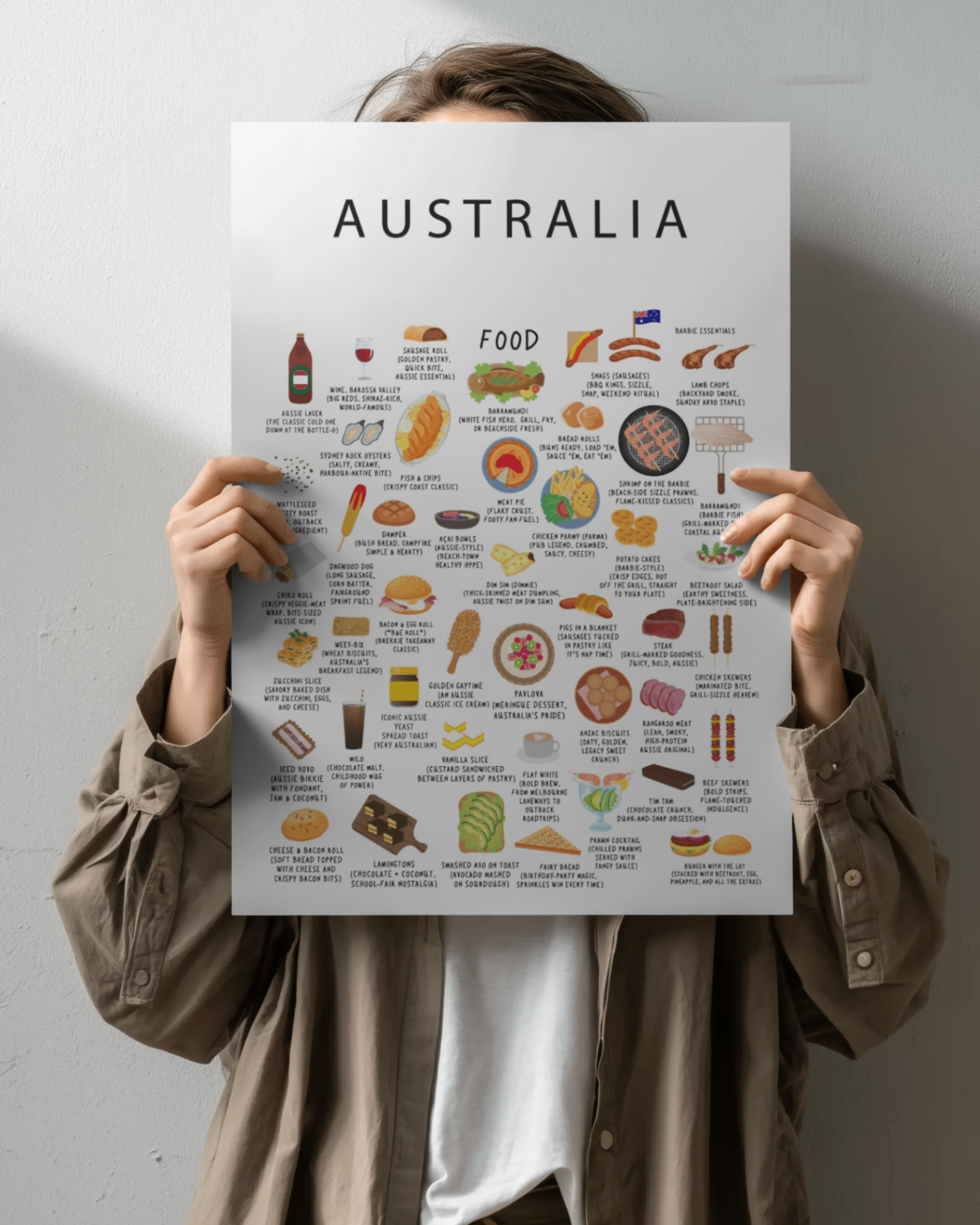
Then there are the icons: the meat pie, eaten at football matches; the sausage roll, always warm; fish and chips wrapped in butcher's paper; Tim Tams dunked into coffee at afternoon tea. Pavlova and lamingtons remain the country's most contested desserts, both claimed with equal enthusiasm by New Zealand.
Native Ingredients and a New Australian Voice
A new generation of Australian chefs has turned to native ingredients with growing confidence: finger lime, wattleseed, saltbush, kangaroo, macadamia, warrigal greens. This is not fusion — it is a slow, respectful acknowledgment that Aboriginal and Torres Strait Islander peoples have been cooking on this land for tens of thousands of years, and that their pantry deserves to sit at the centre of the country's culinary future.
In parallel, Modern Australian cuisine — a term coined to describe the country's genre-fluid restaurant kitchens — leans on Asian techniques, Mediterranean produce and a beach-town informality. It is quietly one of the world's most exciting food scenes.
Why Maison Maps Celebrates Australia
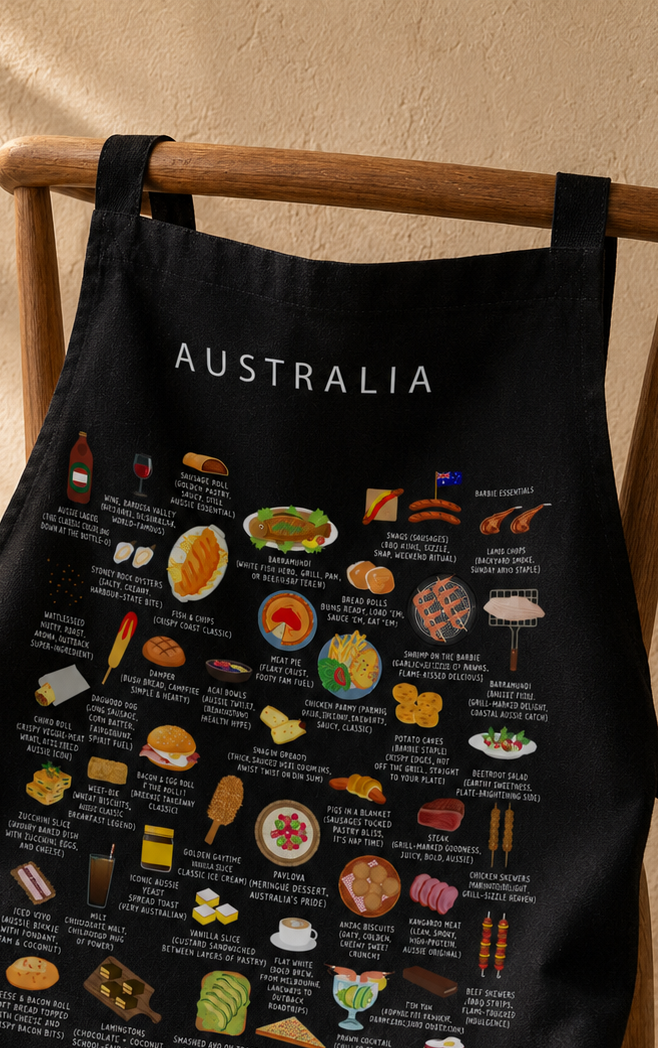
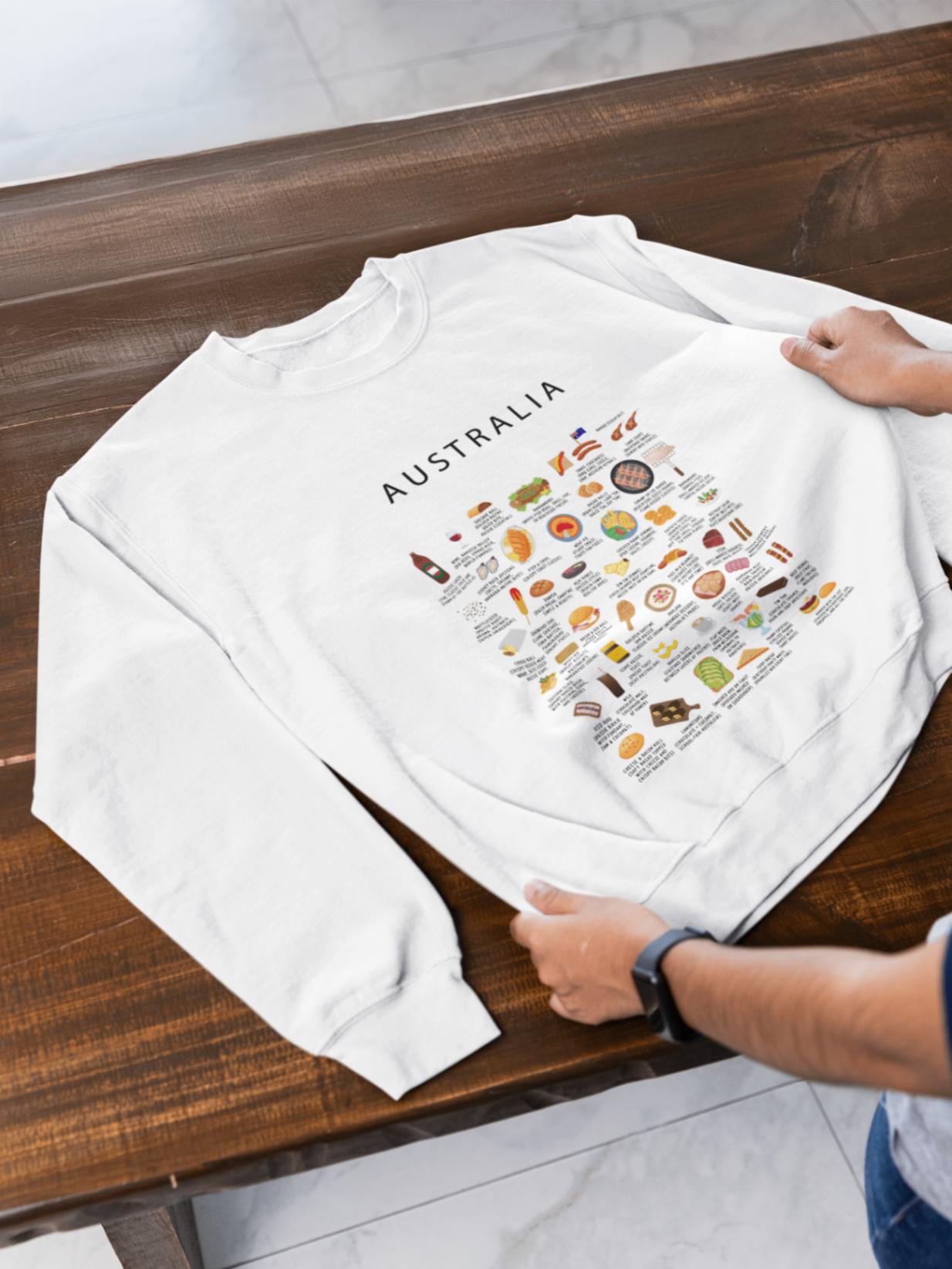
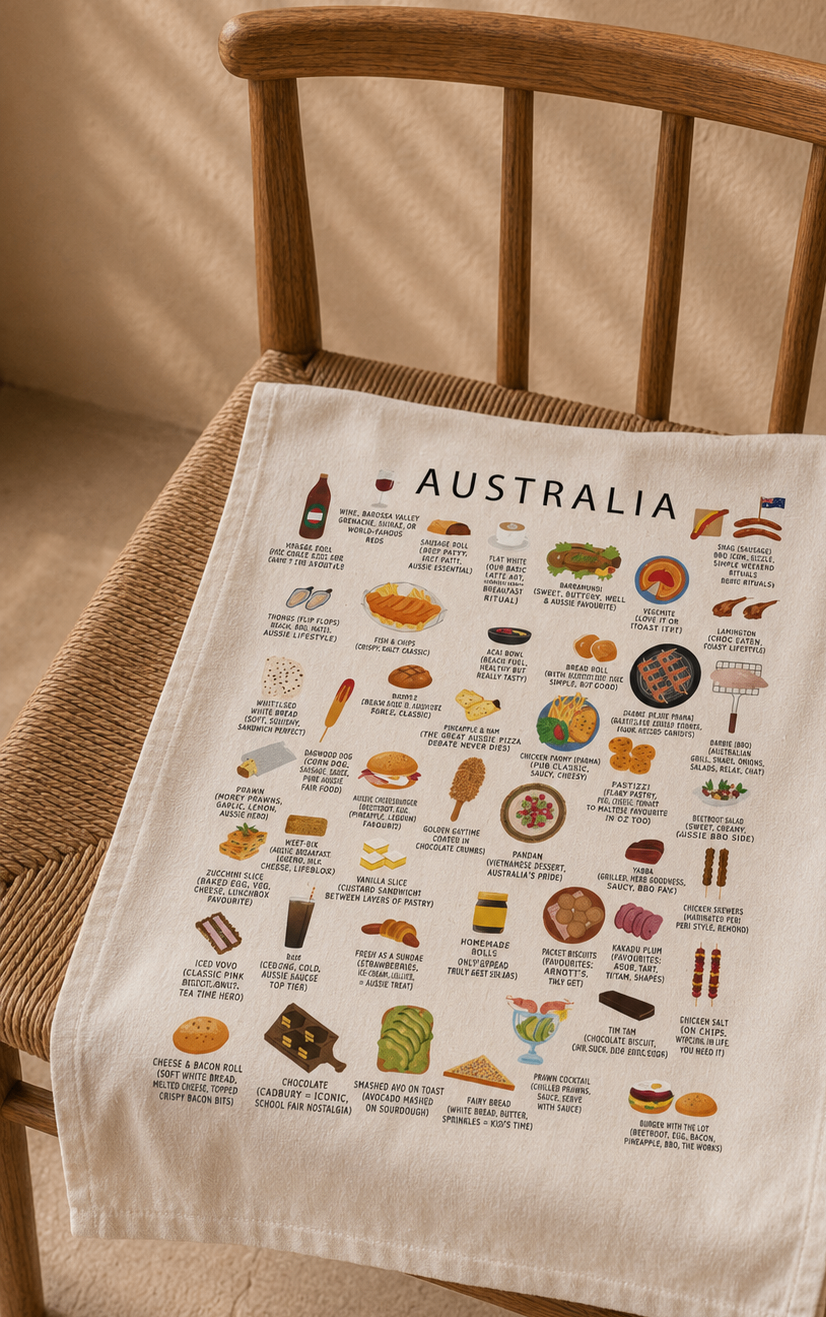
Our Australia collection was designed to feel like a coastal weekend — bright, easy, sun-warmed. Illustrated meat pies, flat whites, pavlovas, prawns and Vegemite jars come together on the Australia food poster, framed by the same generous, low-key confidence Australian kitchens are known for.
The collection extends into aprons, tea towels, T-shirts and sweatshirts — pieces made for the cook who grills with the door open and eats with sand still on their feet. Explore the full Australia collection on Etsy and bring a little of that indoor-outdoor Australian ease into your own home.
Ready to bring the Australia kitchen home?
Shop the Australia collection on Etsy →