The Story
Nepal Food Culture
Kathmandu Mornings Begin at the Stove
Before the lanes fill, Kathmandu kitchens are already awake. Tea simmers with milk and spice, sel roti turns golden in hot oil, and steam gathers over pots of tarkari. Breakfast is practical but never careless: something warm, something sustaining, and a cup offered before any conversation needs to begin.
Nepali food is often described through altitude, but its real character is found closer to the table. It is shaped by daily repetition, by ingredients carried home from the market, and by the expectation that rice, lentils, greens and achar can become a complete act of care.
Dal Bhat, the Everyday Centre
Dal bhat is less a single dish than the rhythm of the day: rice, lentil soup, seasonal vegetables, pickle and, when the occasion asks for it, meat or fish. The plate changes by household and region, yet the structure remains reassuringly constant. Refills arrive before anyone asks.
Around it sit aloo tama, gundruk, kwati and bowls of sharp, fermented achar. These are flavours built from thrift and attention — drying greens for later, fermenting what the season gives, tempering lentils until the kitchen smells of cumin, garlic and ghee.
Momos, Newari Feasts and Food Shared by Hand
Momos belong to the social table. The wrappers are rolled, filled and pleated in company; the finished dumplings arrive in clouds of steam beside a tomato-sesame achar. Jhol momo adds a fragrant broth, while buff momo carries the particular savour of the Kathmandu Valley.
Newari food traditions make hospitality ceremonial. Samay baji gathers beaten rice, bara, choila, black soybeans, pickles and small portions into a composition where every element has its place. At festivals and family gatherings, food records the occasion as precisely as a photograph.
Tea Shops, Thukpa and the Warmth Between Meals
Tea punctuates the Nepali day. Sweet milk tea moves through homes, shops and roadside stops, poured into small glasses and taken with conversation. In cooler places, thukpa brings noodles, broth and vegetables together in one warming bowl; sekuwa adds smoke and spice from the grill.
Market stalls supply the colour: heaps of chillies and turmeric, radish pickle, leafy greens, citrus and sacks of lentils. This is the visual language behind the Nepal collection — food seen not as spectacle, but as part of the room and the day.
Why Maison Maps Celebrates Nepal
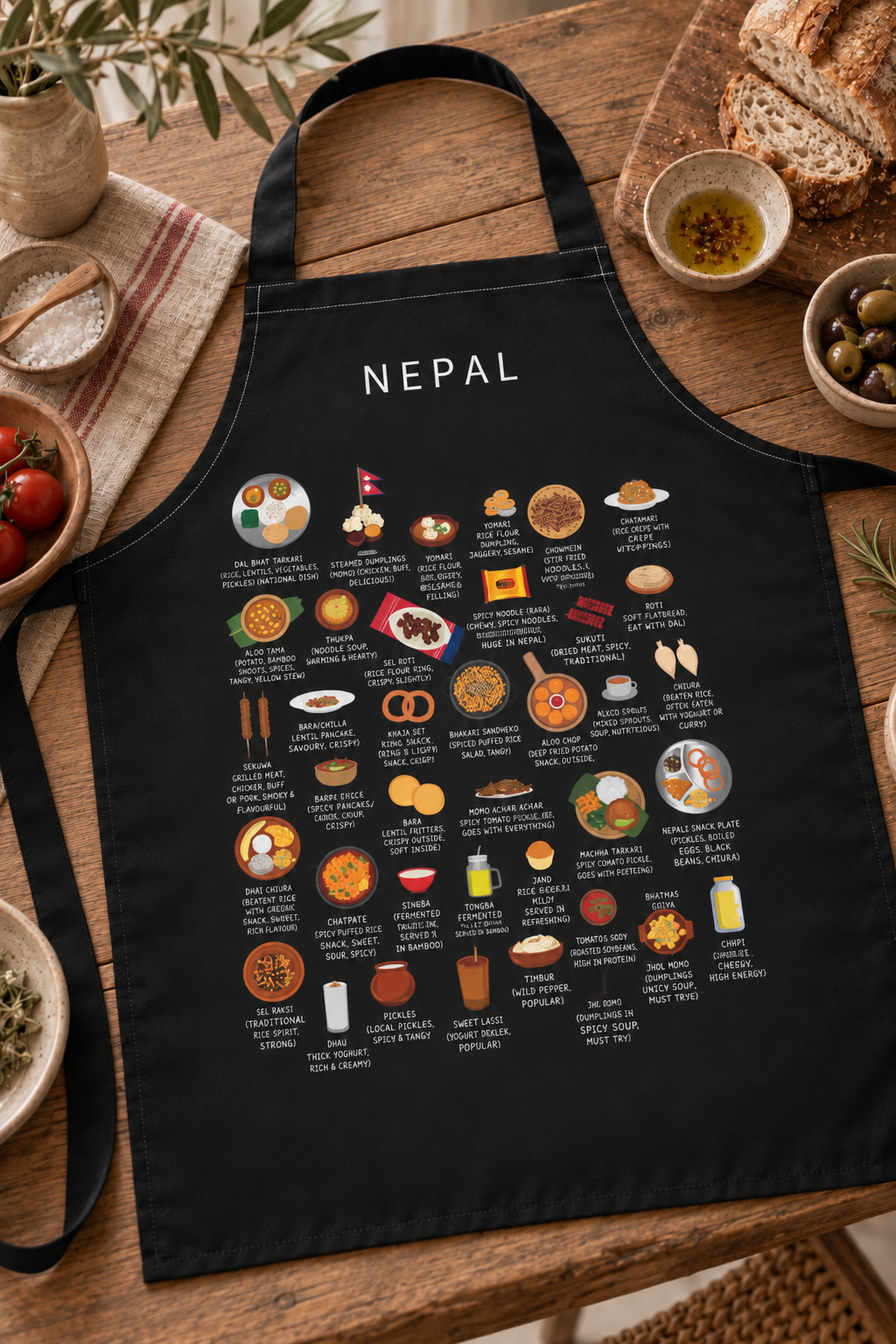
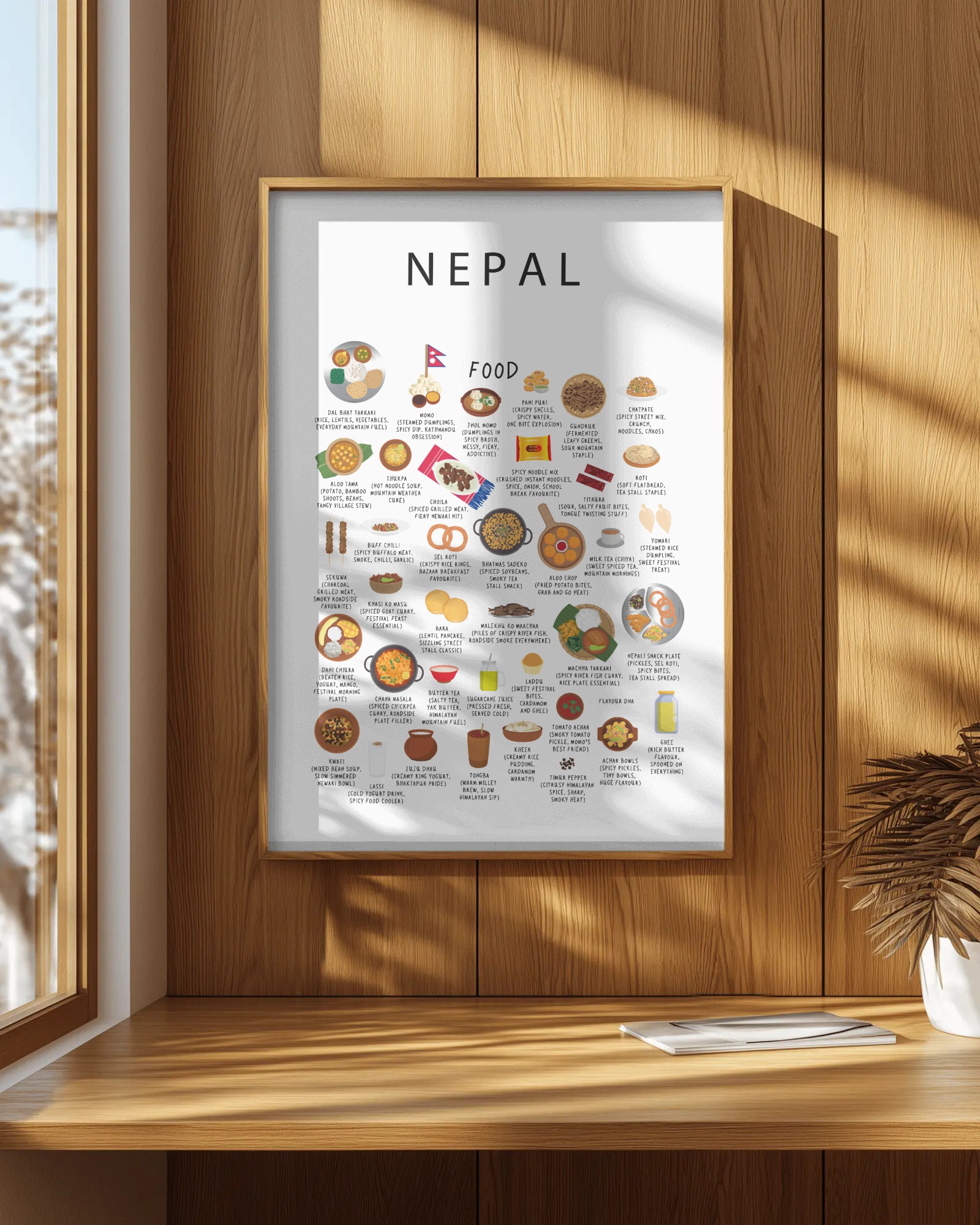
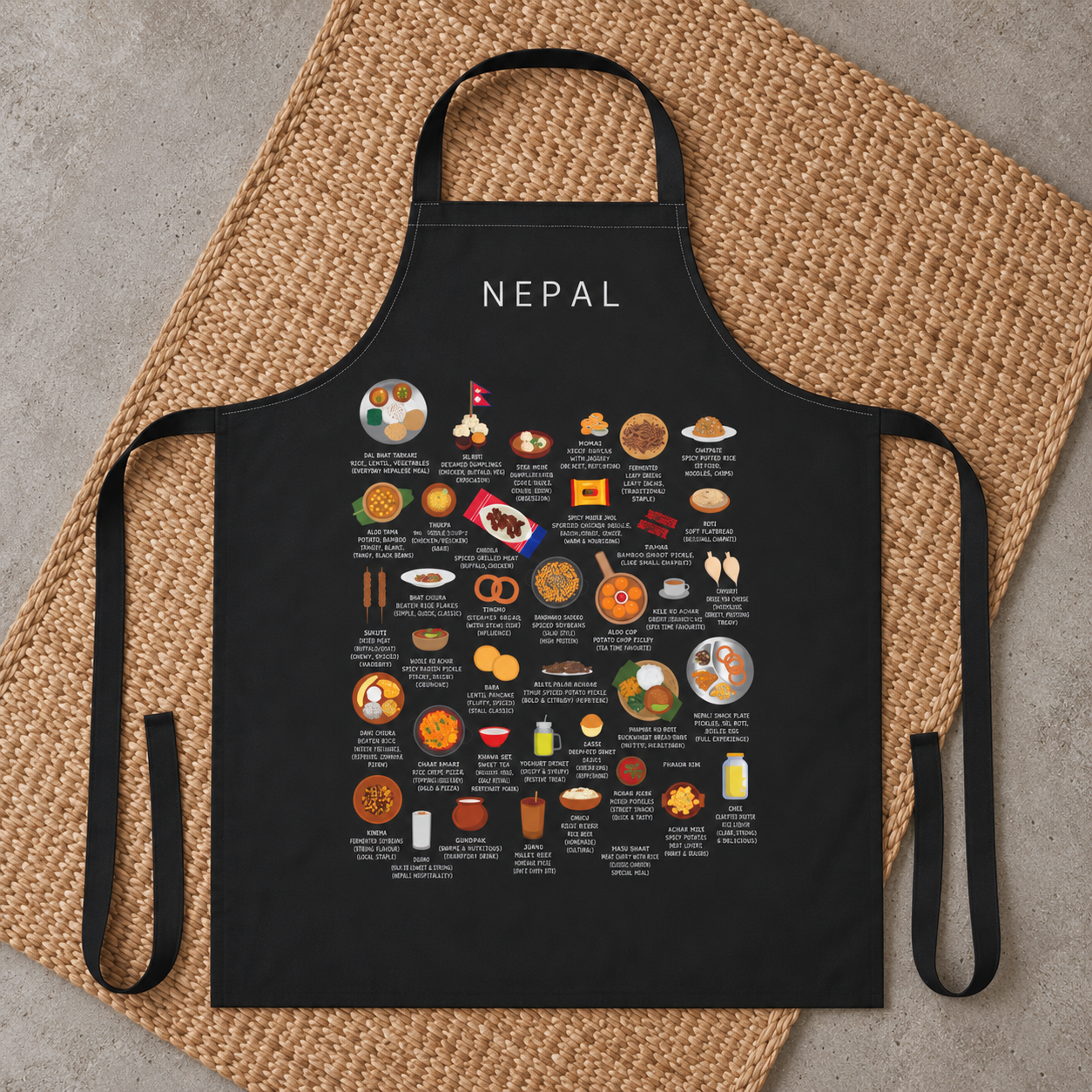
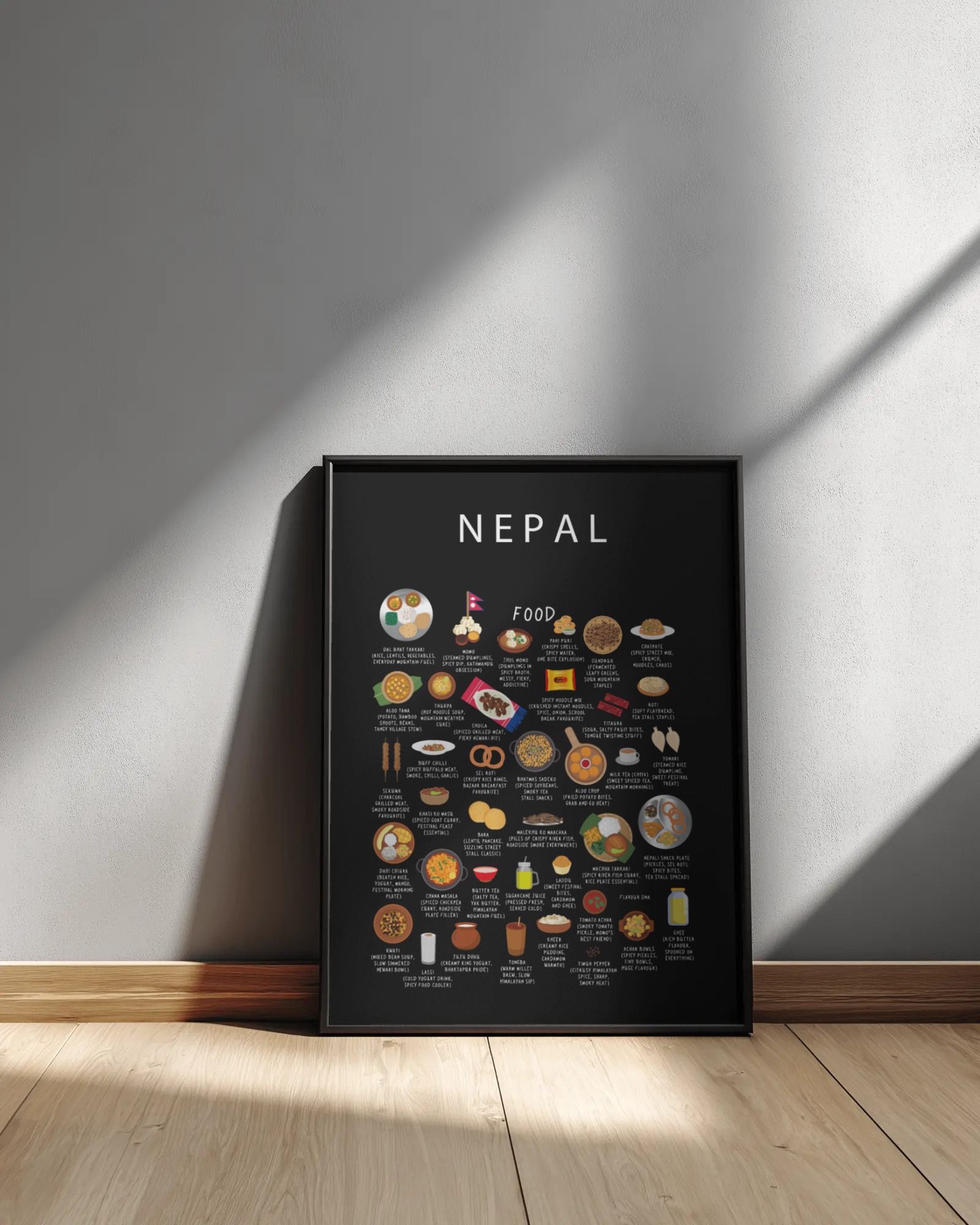
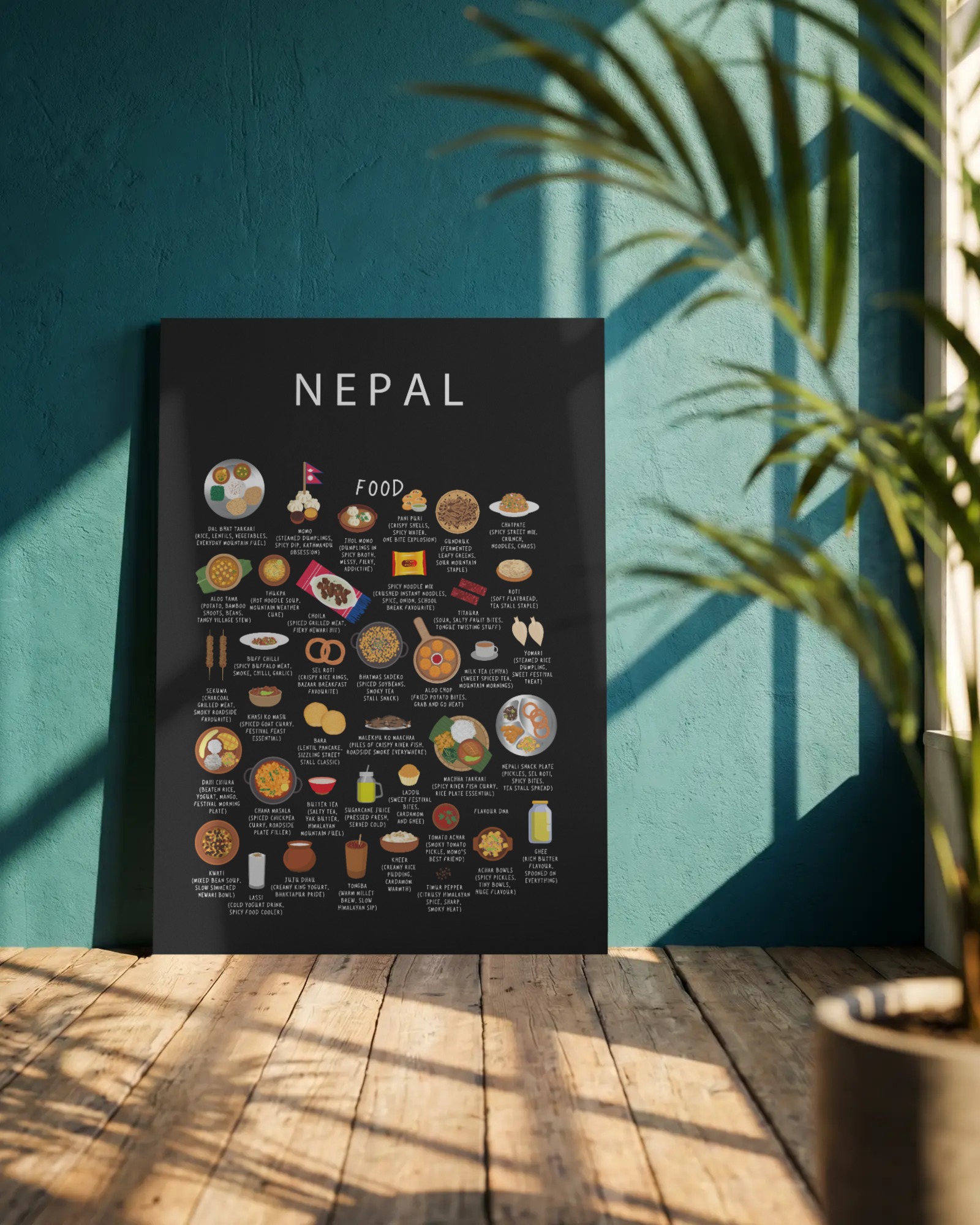
The Nepal collection gathers dal bhat, momos, thukpa, sel roti, chatamari, choila, achar and chiya into one illustrated composition. Each dish is named and drawn as part of a lived kitchen rather than a travel checklist.
The posters and aprons are made for people who remember the sound of a pressure cooker, the steam of a momo plate and the comfort of rice being served again. They keep Nepal close through the rituals that make a place feel like home.
Ready to bring the Nepal kitchen home?
Shop the Nepal collection →