The Story
China Food Culture
A Chinese Table, Shared in Every Direction
Chinese food is not a cuisine — it is a continent of them. Stretching from the snowbound northeast to the tropical south, from the deserts of Xinjiang to the coastline of Fujian, China's kitchens speak dozens of dialects at once. What unites them is a philosophy: meals are shared, dishes arrive together, and the round table exists so no one is left out. To eat well in China is to eat with people, and to eat with people is to be looked after.
The Chinese kitchen is one of the oldest and most technically ambitious in the world. Knife work is a discipline. Wok hei — the smoky breath of a well-heated wok — is a sensory signature. Flavour is built in layers: soy, vinegar, ginger, garlic, chili, sesame, fermented bean, star anise. Nothing is accidental. Everything is balanced.
Eight Great Cuisines, One Vast Country
China is traditionally divided into eight regional cuisines, each with its own logic. Cantonese cooking, from Guangdong, is delicate and produce-led, giving us dim sum, char siu and steamed fish with ginger and scallion. Sichuan brings the ma-la — the numbing tingle of Sichuan peppercorn and dry chili — in mapo tofu, dan dan noodles and the country's beloved hot pot.
Shandong cooking, in the north, is the cuisine of imperial banquets — braised, savoury, wheat-heavy. Jiangsu and Zhejiang around Shanghai lean sweet and elegant, home to xiao long bao (soup dumplings) and drunken chicken. Hunan is hotter and smokier than Sichuan. Fujian celebrates the sea. Anhui works with wild mountain ingredients. And no map is complete without Beijing's crisp roast duck, sliced tableside and rolled into thin pancakes with hoisin and scallion.
Dim Sum, Dumplings and the Rituals of the Table
Dim sum — literally 'touch the heart' — is Chinese hospitality condensed into small bamboo baskets. Steamed shrimp har gow, pork siu mai, custard buns, turnip cake, char siu bao, chicken feet, egg tarts. It is a Cantonese Sunday morning tradition that turned into a global one, and it is best eaten slowly with good tea and better company.
Dumplings are the other great Chinese constant. Jiaozi are folded and eaten at Lunar New Year for luck. Xiao long bao arrive in Shanghai carrying a spoonful of hot broth inside. Wontons float in delicate soups. Fried potstickers crisp on one side and steam on the other. Every household has a preferred filling, a preferred fold, and a preferred dipping sauce — usually black vinegar, soy and a shred of ginger.
Tea, Bubble Tea and the Street Food Universe
Tea has been part of Chinese life for more than two thousand years. Green, oolong, pu-erh, jasmine, white — each region grows and brews its own. Gongfu tea ceremony is a quiet meditation; a thermos of jasmine on a train is everyday poetry. Tea is served before, during and after meals, and refilled without being asked.
The modern Chinese street is a food culture of its own. Jianbing crêpes at breakfast, lamb skewers in Xi'an, stinky tofu in Changsha, scallion pancakes on any corner, candied hawthorn on winter afternoons, and — the country's most successful cultural export of the last decade — bubble tea, invented in Taiwan and adopted by the mainland with total enthusiasm. Youtiao dipped into hot soy milk. Baozi steamed at dawn. Congee eaten with pickles and a century egg.
Why Maison Maps Celebrates China
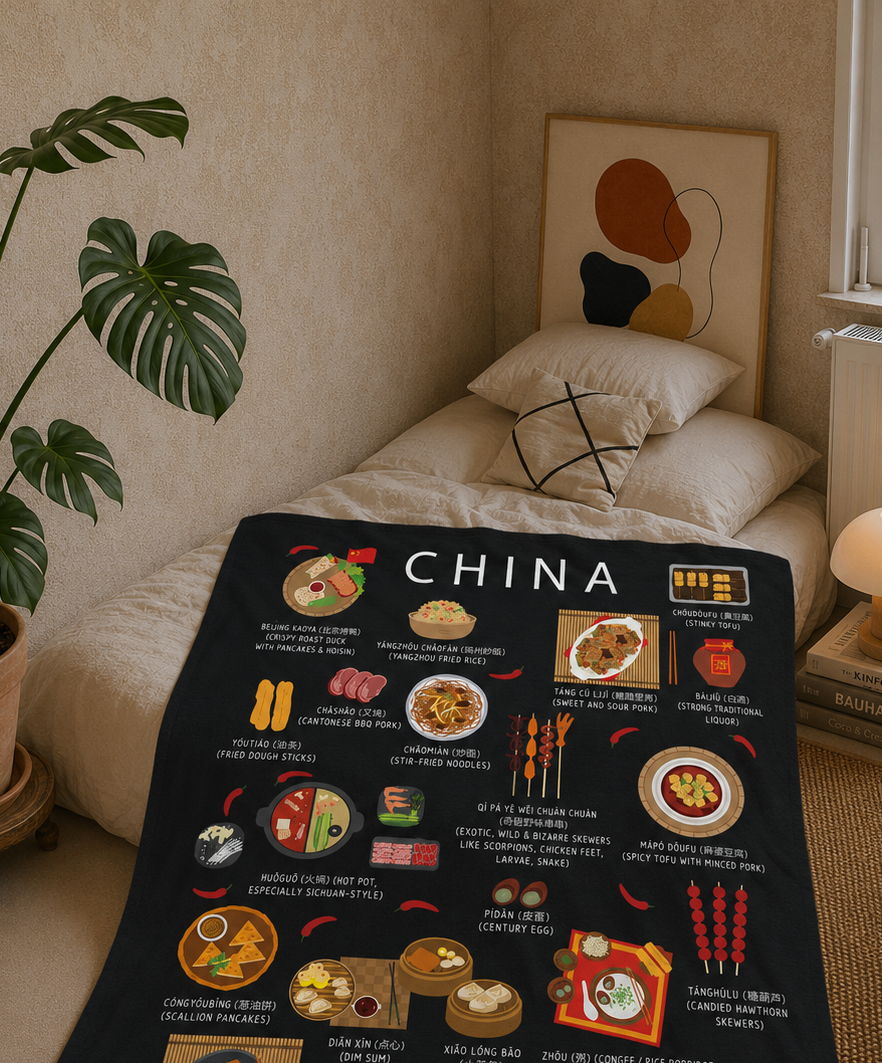
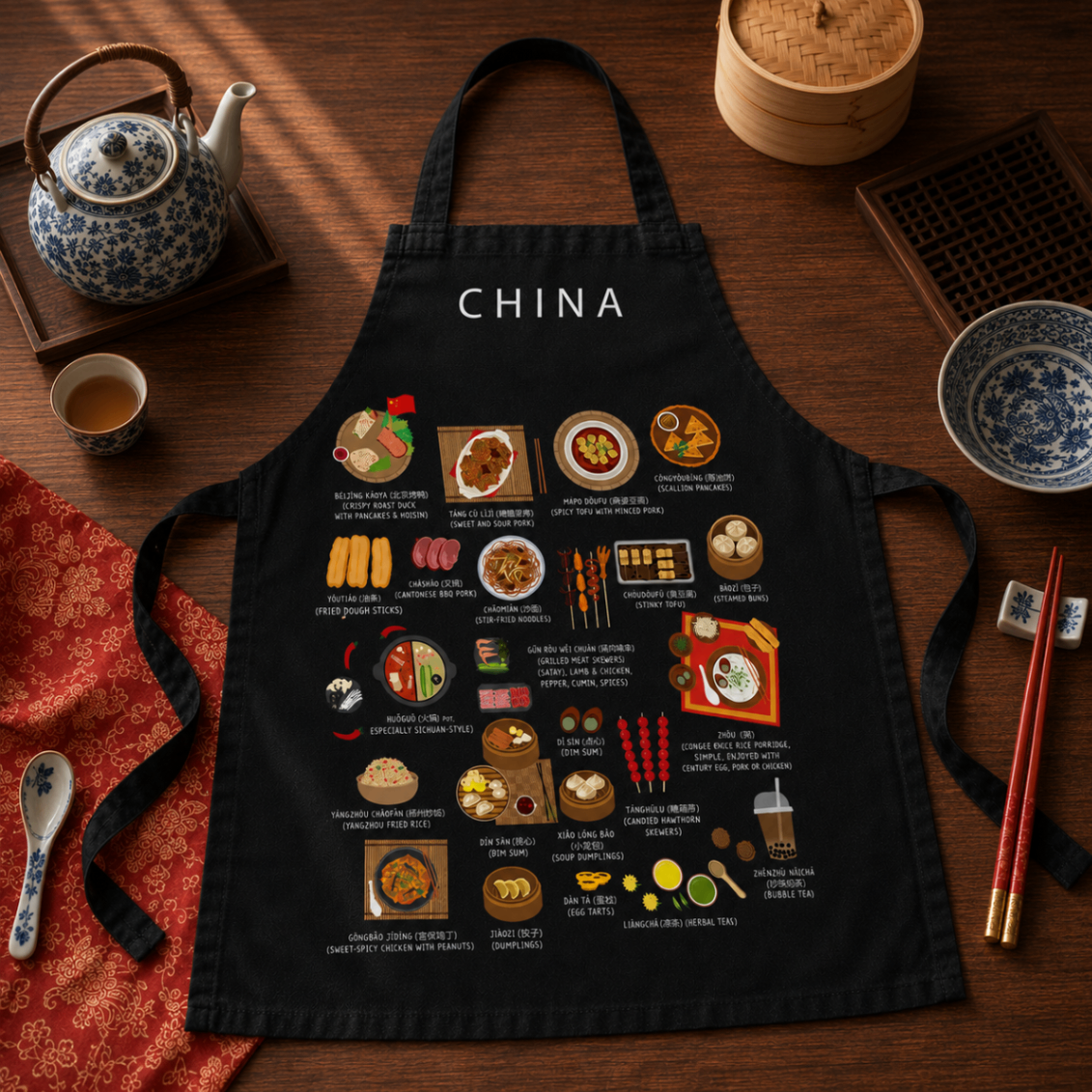
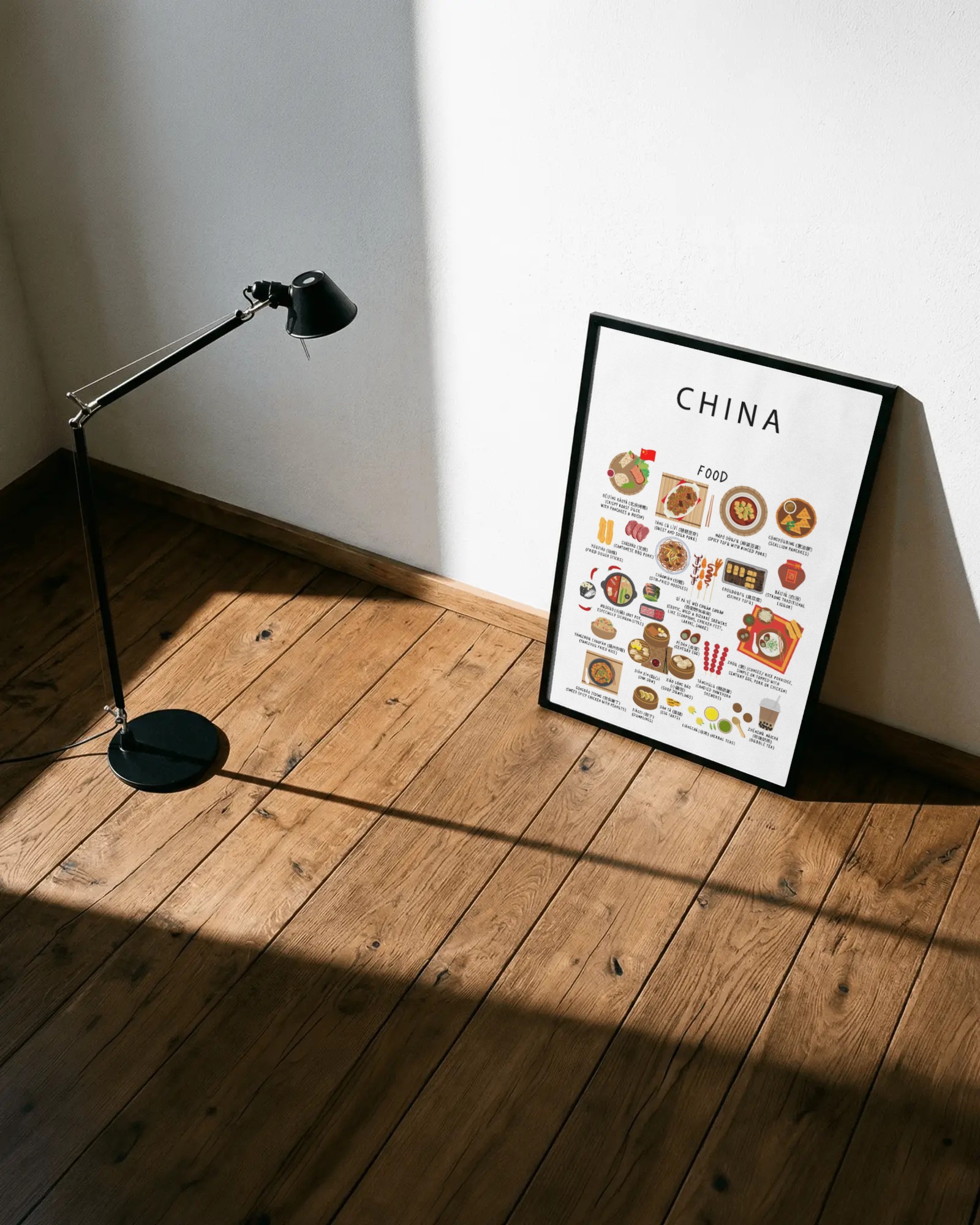
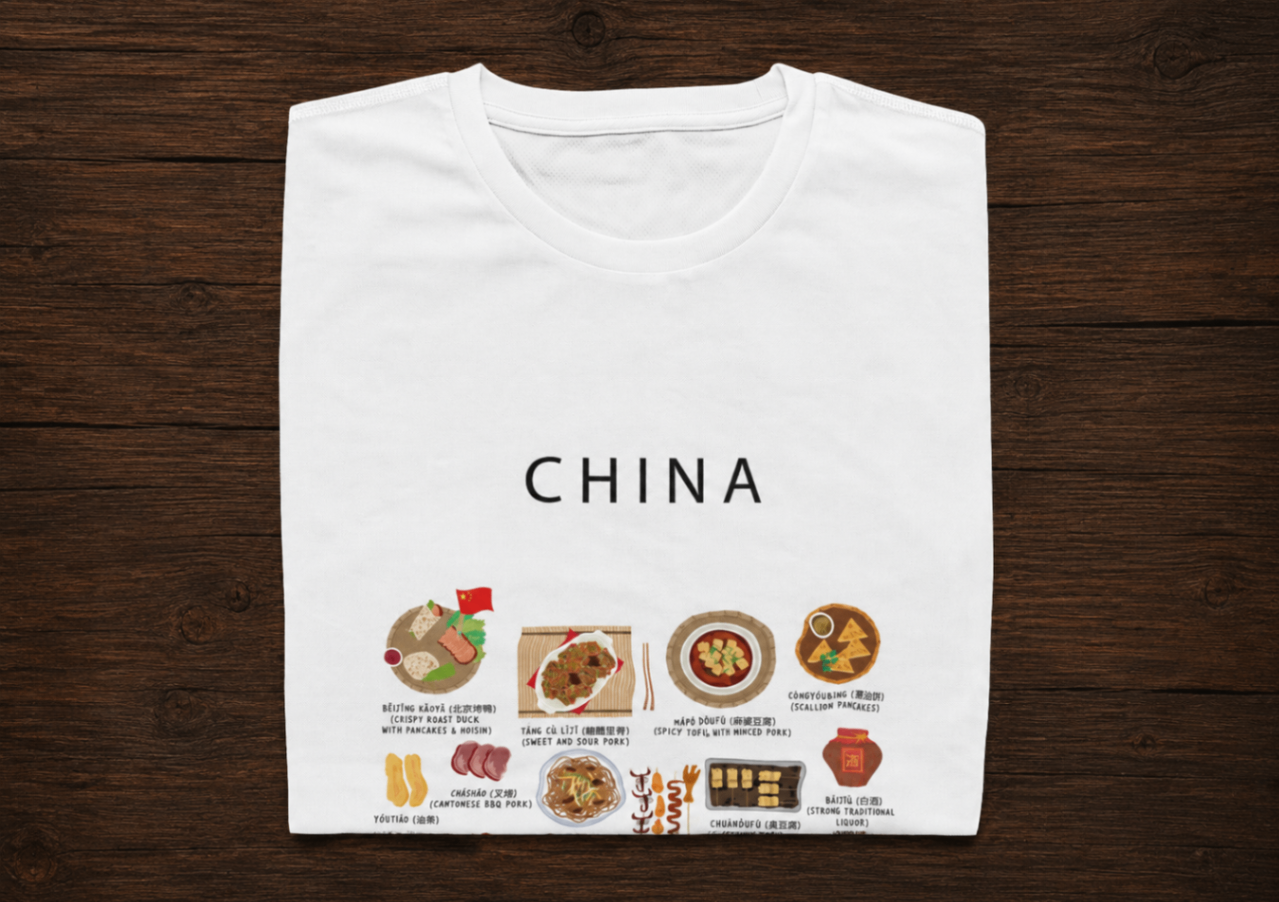
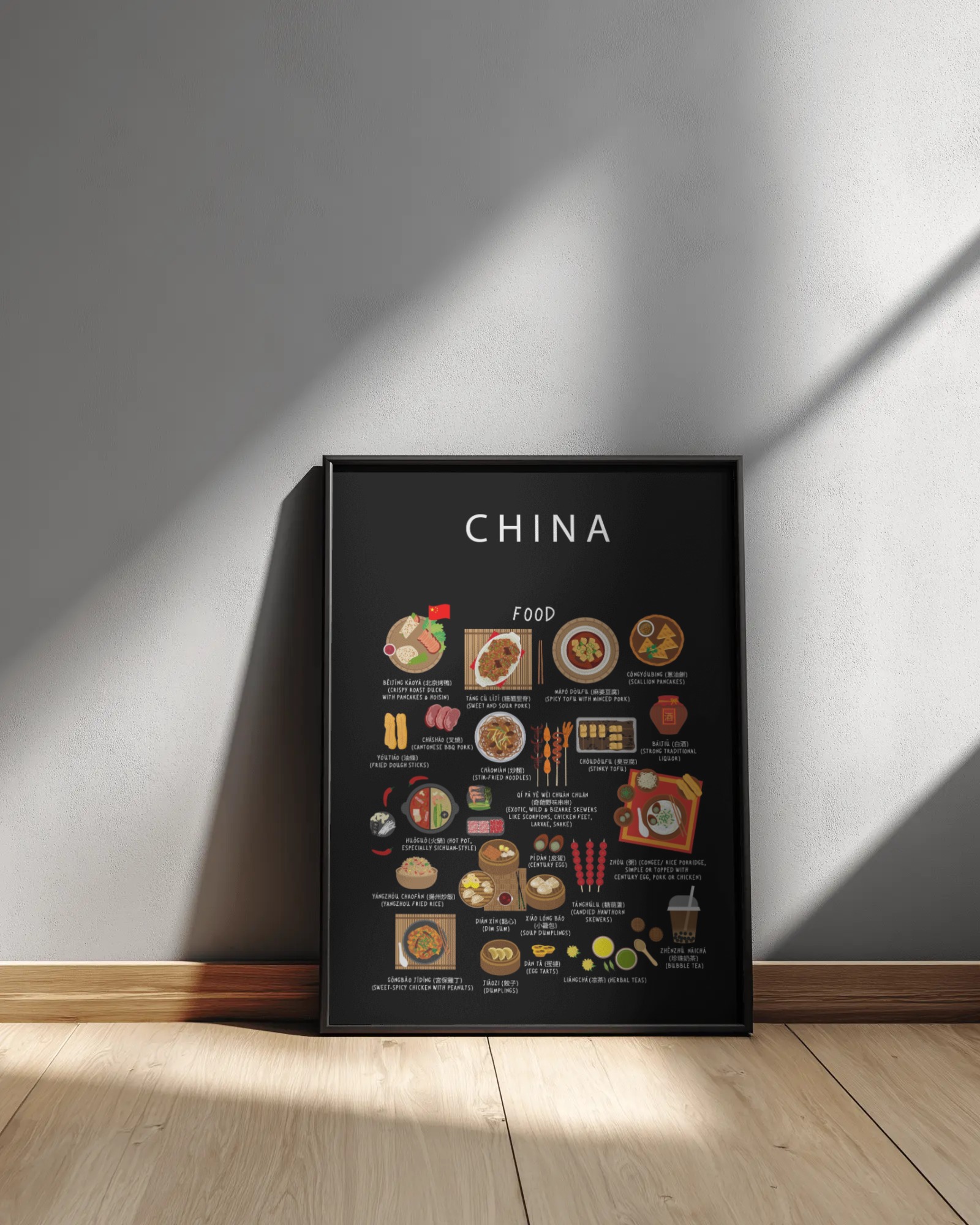
Our China collection was designed to feel like a shared round table — generous, layered, and rich with the small details that make Chinese food culture feel like home. Illustrated bowls of mapo tofu, dumplings, Peking duck, dim sum, hot pot, hand-pulled noodles, egg tarts and bubble tea gathered onto a single China food poster, arranged with the same quiet care a Chinese cook brings to a family meal.
The China collection extends into aprons, blankets and t-shirts — pieces made for people who love regional depth, shared meals and the slow pleasure of tea. Explore the full China collection on Etsy and bring a little of that shared-table warmth into your own home.
Ready to bring the China kitchen home?
Shop the China collection on Etsy →