The Story
Malta Food Culture
A Mediterranean Island with a Very Specific Appetite
Malta is a small country with a very particular kitchen. Sitting between Sicily and North Africa, the islands have absorbed centuries of Phoenician, Arab, Norman, French, Spanish and British influence — and quietly turned it all into something unmistakably Maltese. Rabbit stew perfumed with wine and bay, pastizzi eaten on the way to work, ftira sandwiches taken to the beach: the food here belongs to nowhere else.
There is a rhythm to Maltese life that revolves around the table. Sunday lunch stretches into evening. Village feasts spill into the streets with nougat stalls and fried fish. And in every kitchen, a bottle of extra-virgin olive oil, a jar of capers, and a handful of sun-dried tomatoes sit within easy reach.
Fenek, Ftira and the Village Kitchen
Fenkata — a rabbit feast — is the country's most beloved gathering. Rabbit is fried and then slowly braised in red wine, garlic and bay, served first as a pasta sauce and then as the main course. It is a two-part meal, and no one leaves early.
Ftira, the flattish Maltese bread with a hole in the middle, is torn open and filled with tuna, olives, capers, tomato, boiled egg and a drizzle of oil — the island's answer to a picnic sandwich. Aljotta (garlicky fish soup), bragioli (beef olives in tomato and wine), timpana (baked macaroni pie), and stuffat tal-qarnit (octopus stew) round out the rest of the Maltese comfort repertoire.
Pastizzi, Qassatat and Street-Corner Life
Malta's street food is small but mighty. Pastizzi — diamond-shaped filo parcels of ricotta or curried peas — are the country's most iconic snack, sold hot from bakeries and pastizzerij for a few cents each. Qassatat, round savoury pastries filled with cheese, spinach or peas, sit beside them.
Kinnie, the bittersweet Maltese soft drink made from bitter oranges and herbs, is the country's answer to Coca-Cola and pairs perfectly with a pastizzi and a strong espresso.
Sweets, Feasts and the Village Festa
Maltese sweets carry a distinctly Mediterranean-Arab lineage. Imqaret — date-filled pastries — are fried and eaten warm at feasts. Kannoli, filled with fresh ricotta and candied fruit, are cousins of the Sicilian version but firmly Maltese in their own right. Prinjolata appears at Carnival, torta tal-marmurat at Christmas, figolli at Easter — each sweet keyed to a specific moment on the calendar.
The village festa, held for the patron saint of each town, is where the food culture really shows itself. Nougat stalls, fried fish, roasted chickpeas, and the whole community in the streets until midnight.
Why Maison Maps Celebrates Malta
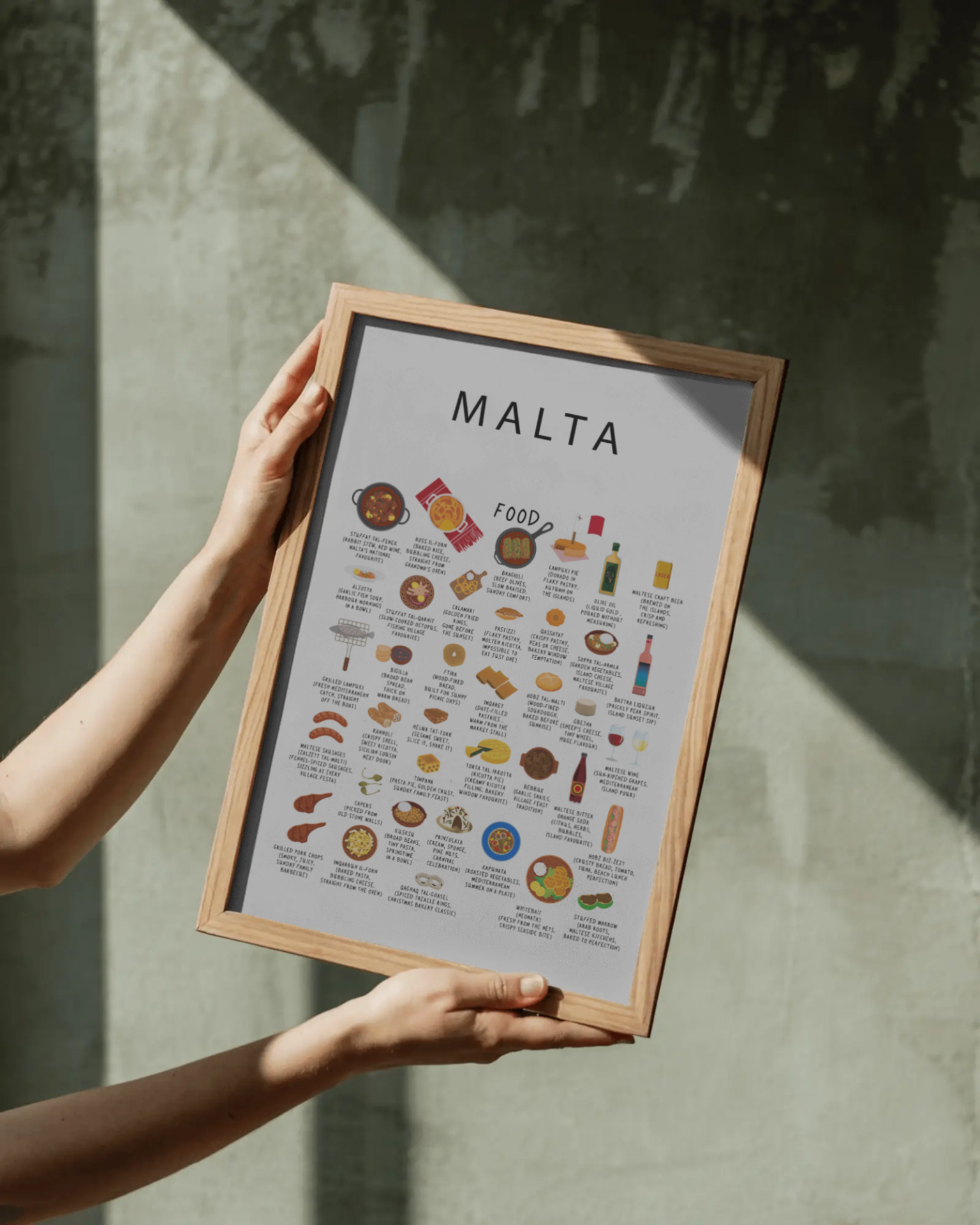
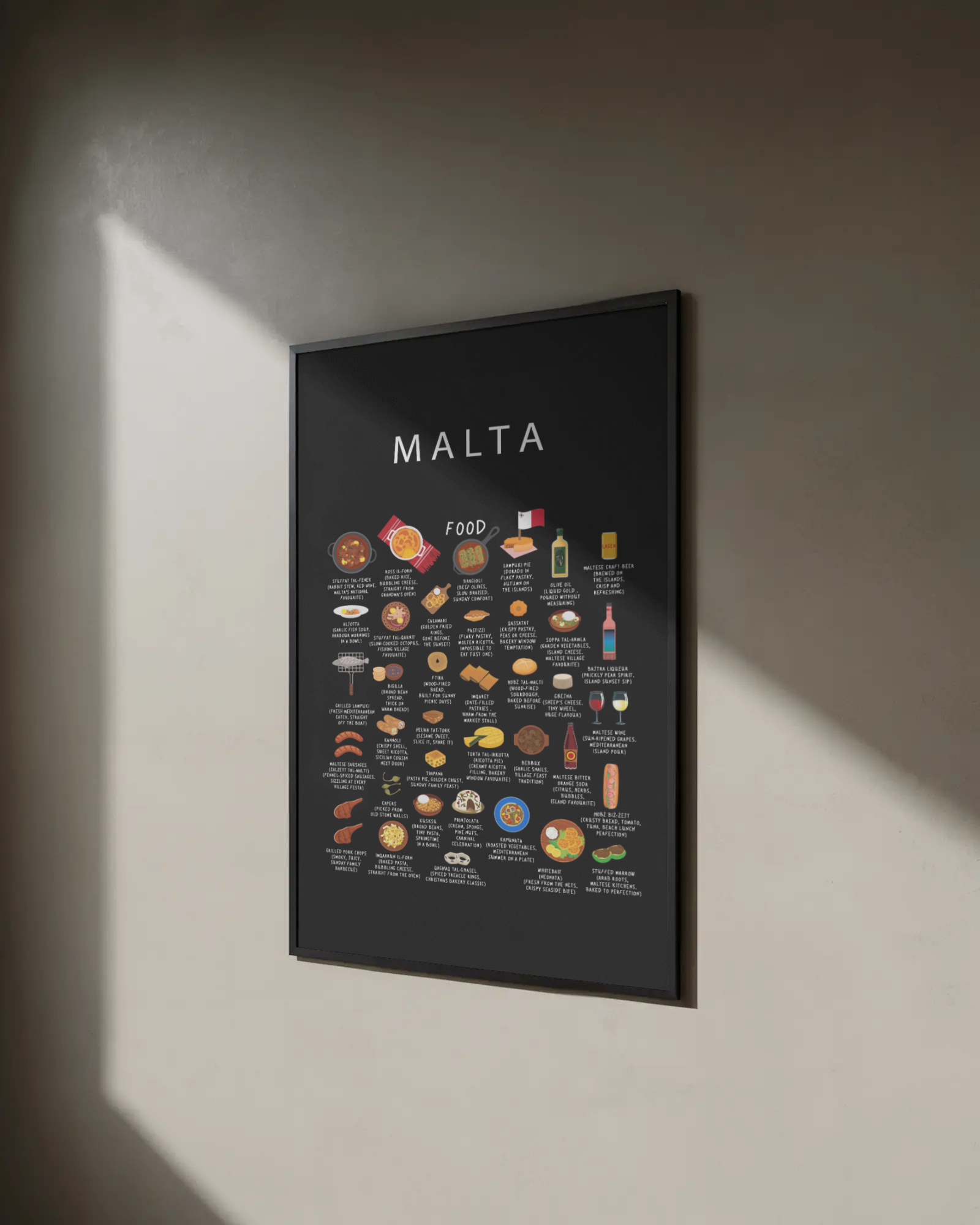
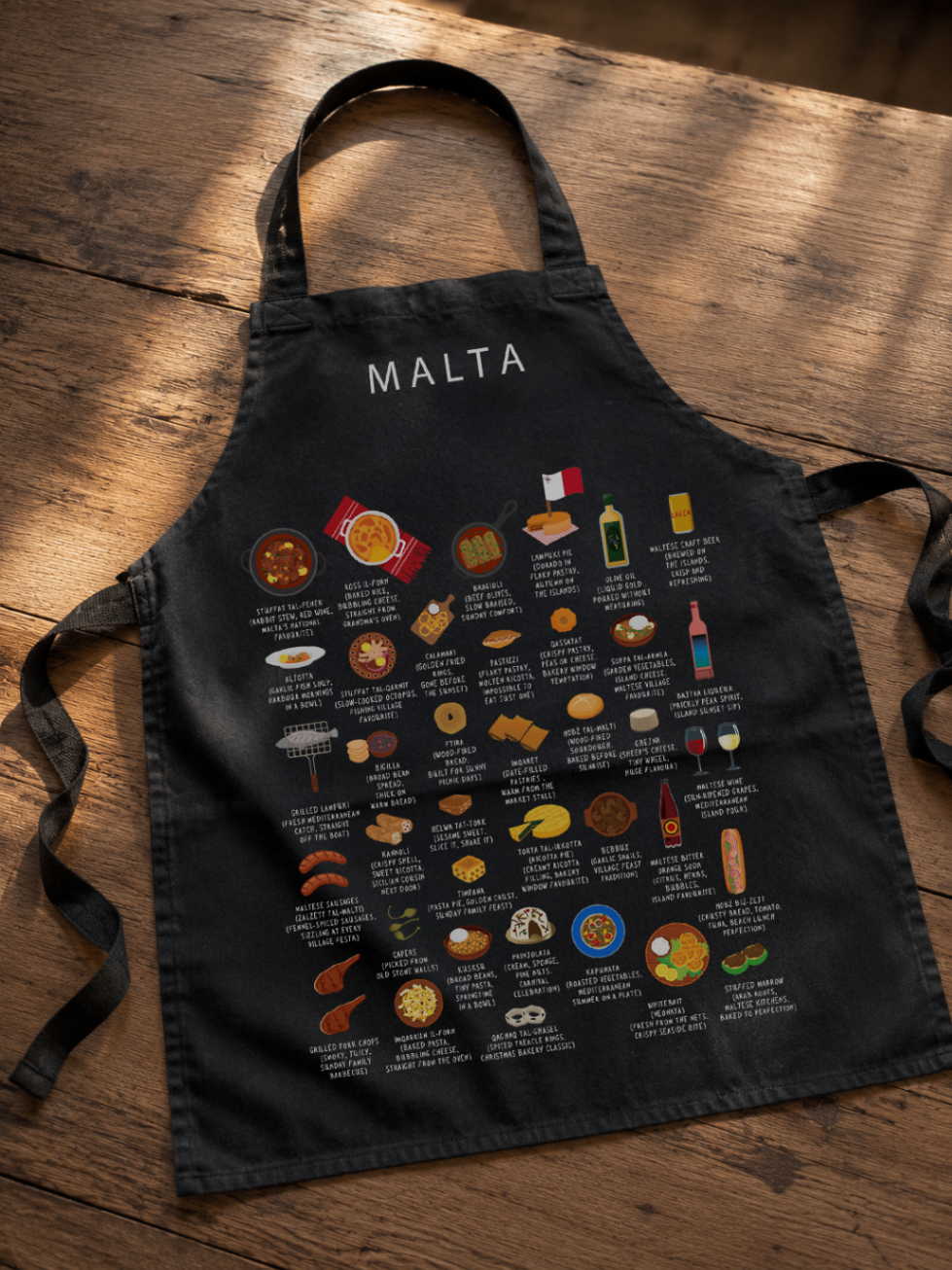
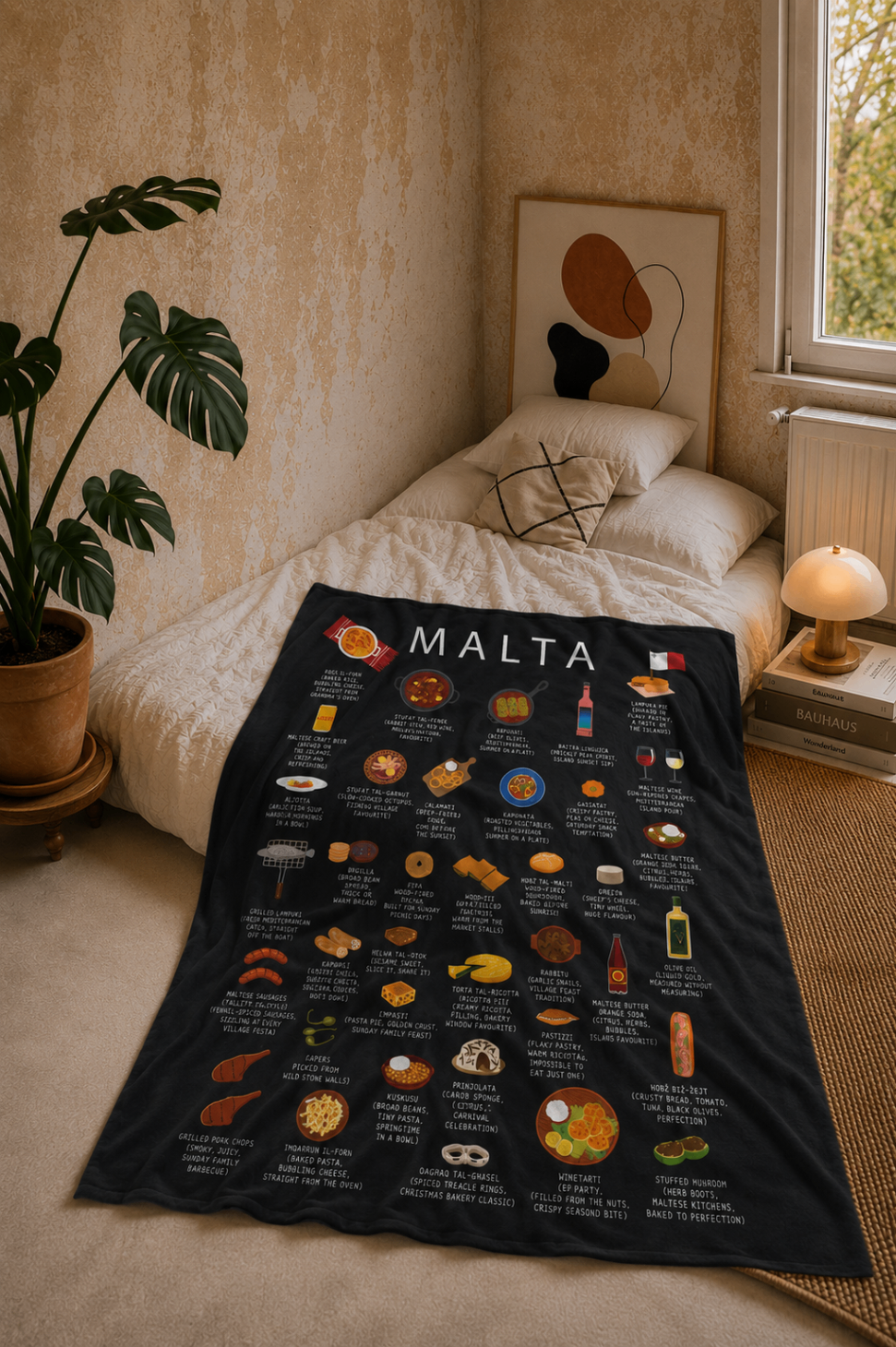
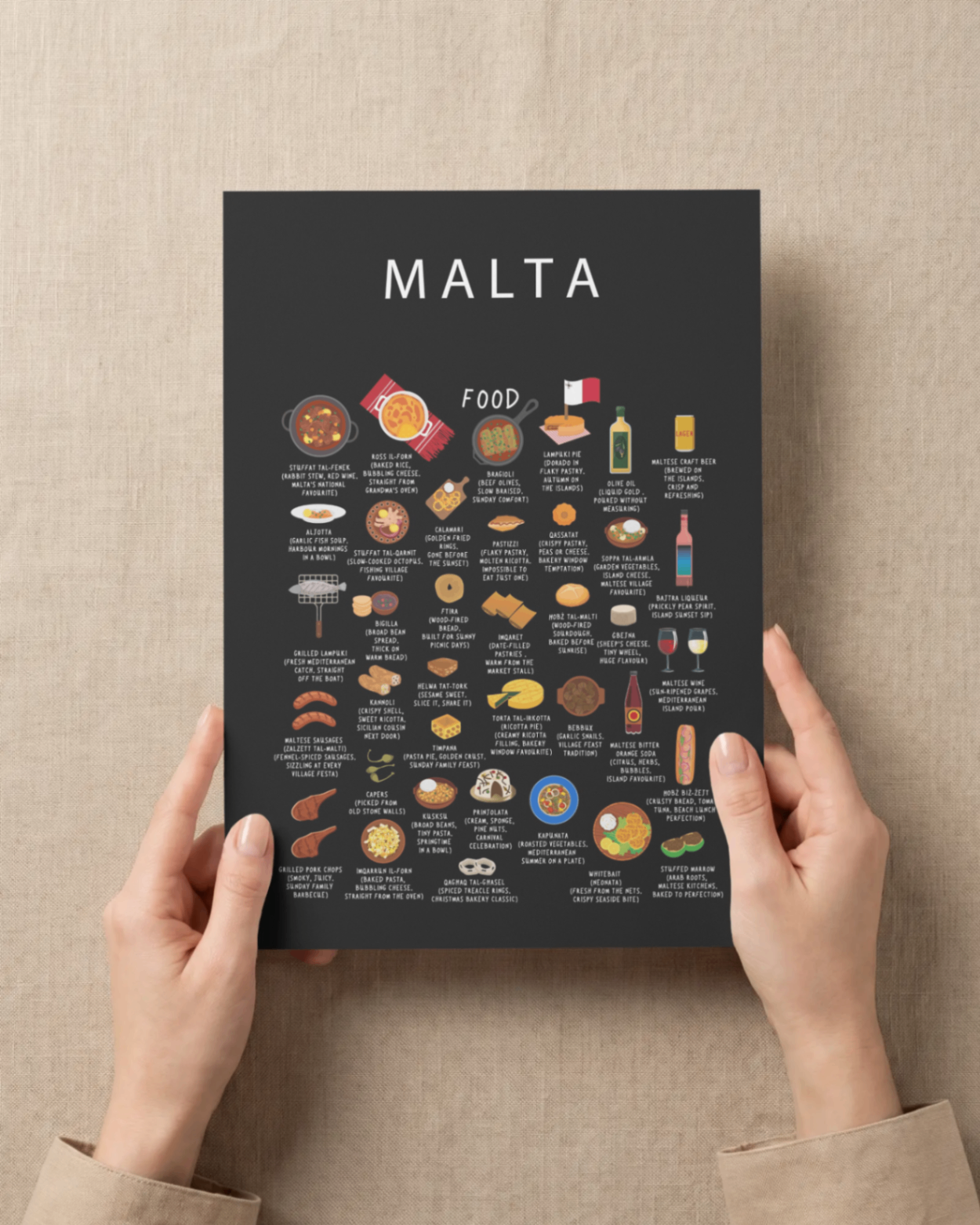
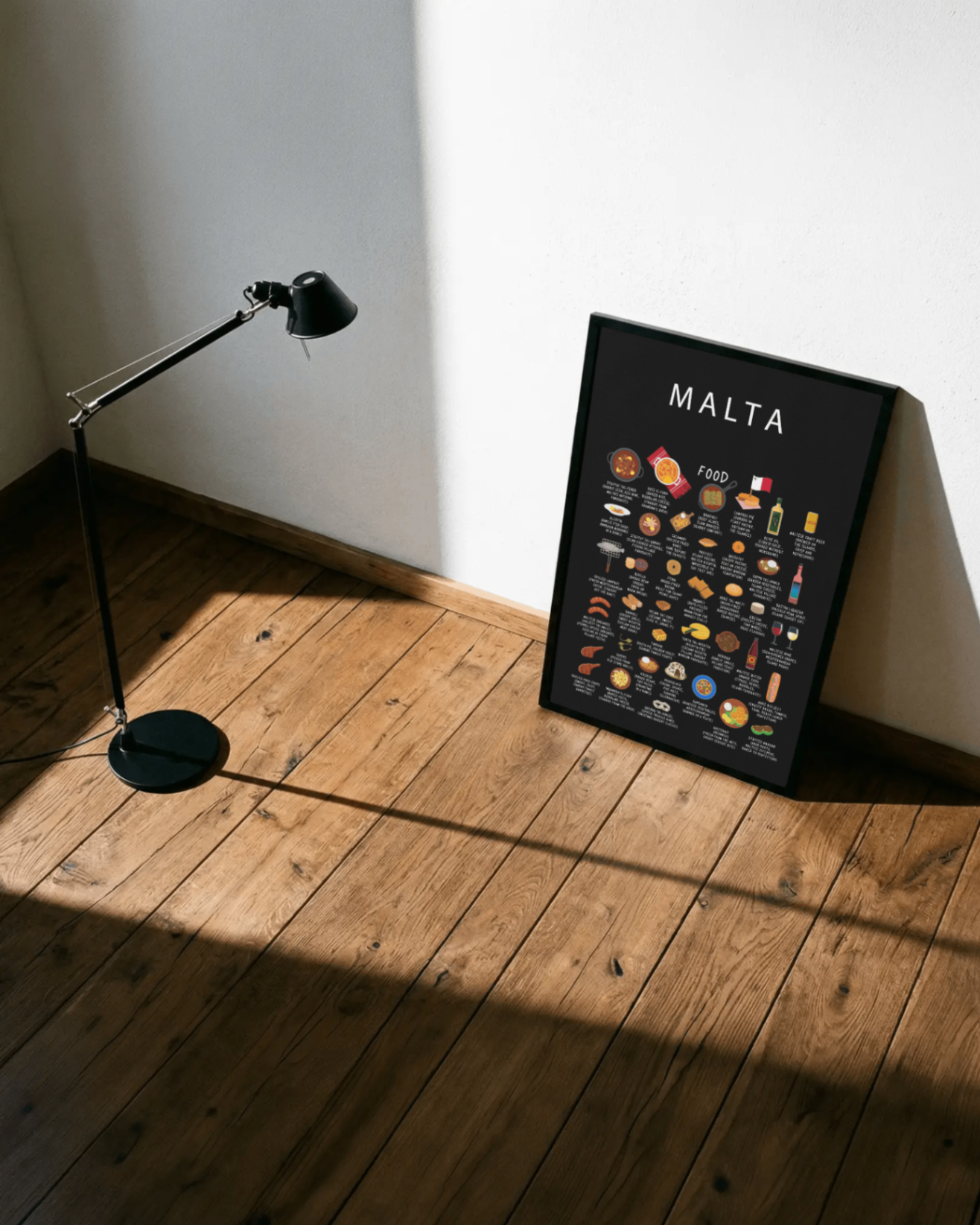
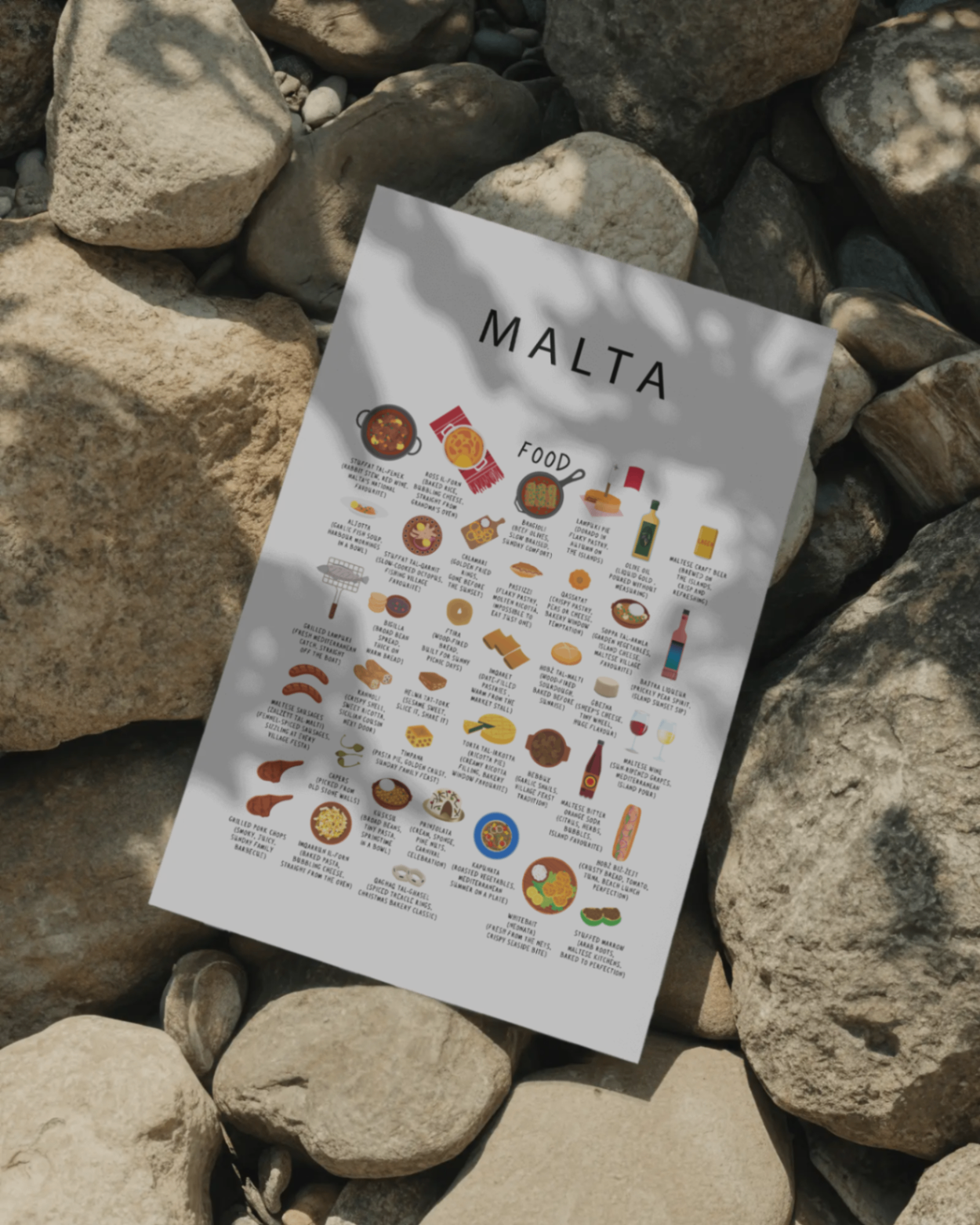
Our Malta collection turns the archipelago's most beloved flavours into one calm illustrated composition — fenek, ftira, pastizzi, timpana, aljotta, imqaret, kinnie, and the sun-warmed olive-oil kitchen that ties it all together. It's a piece that reads like a walk from Valletta's cafés to a village festa in Gozo.
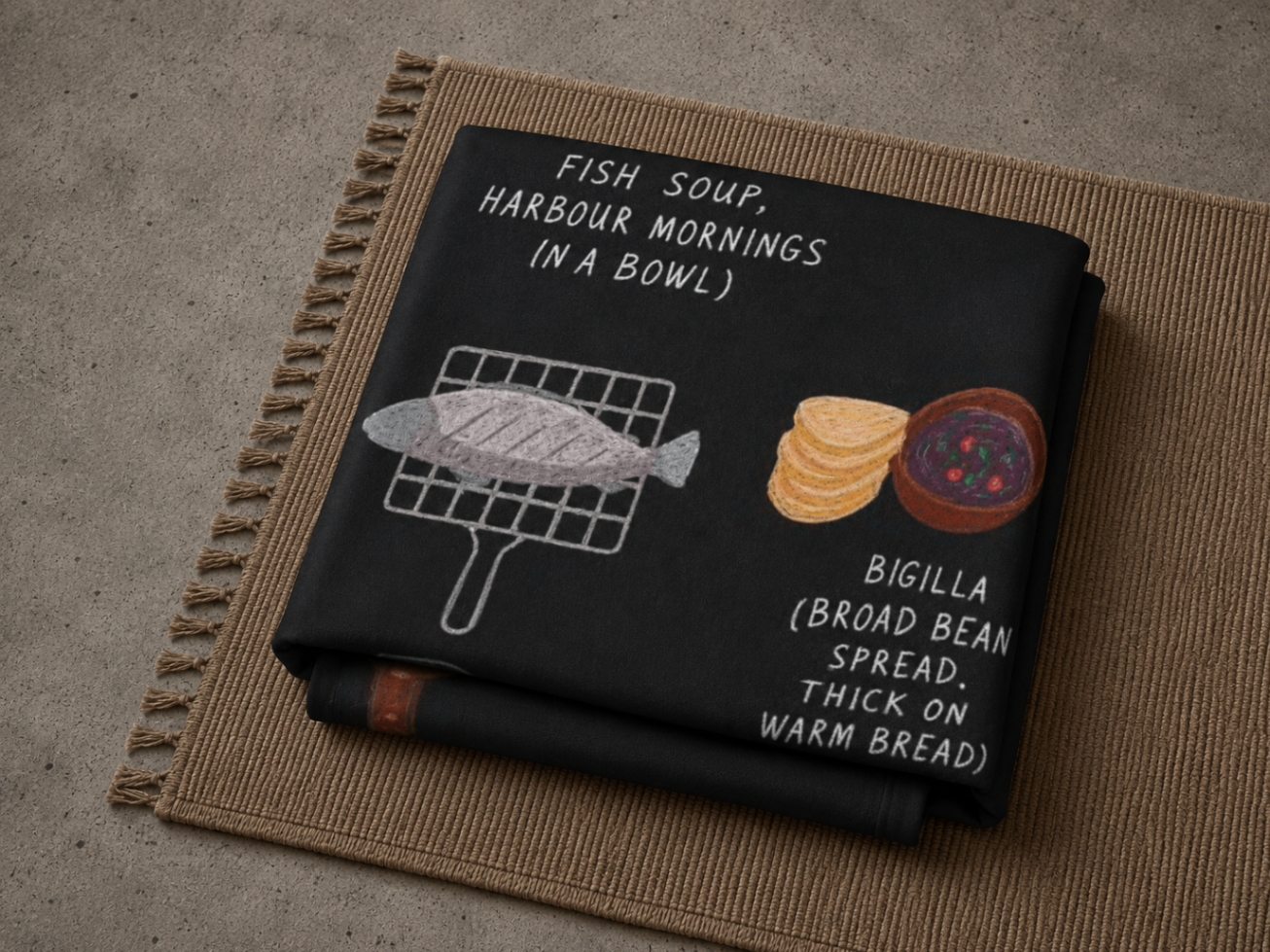
Every Malta piece is printed and shipped through our Etsy shop — posters, blankets, aprons and lifestyle pieces for anyone who has swum in a Comino cove, torn open a warm pastizzi on a Sliema morning, or simply loves the quiet character of the Maltese table.
Ready to bring the Malta kitchen home?
Shop the Malta collection →