The Story
Curaçao Food Culture
A Kitchen Built on Caribbean Spice, Dutch Tradition and the Blue of the Sea
Curaçao's food culture is a small, sun-warmed island with a huge kitchen — a place where Caribbean produce, West African technique, Dutch pantry staples, Sephardic Jewish heritage and Latin American neighbours all meet at the same table. The result is a plate that tastes unmistakably of its own island: slow-cooked stews, salty fried dough, sweet plantain, fresh reef fish, and the deep spice of colonial trade routes. From Punda's harbourside cafés to Willemstad's family kitchens, Curaçaoan cooking is generous, colourful and rooted in island time.
What makes Curaçao's kitchen so distinctive is its everyday layering. Pastechi from the corner bakery, keshi yená at Sunday lunch, a plate of stoba on a weekday evening, and a bottle of Blue Curaçao poured slowly at sunset — the same island runs through all of it. Food here is memory, hospitality and identity, held together by the Papiamentu spoken around the pot.
Signature Dishes and the Stories Behind Them
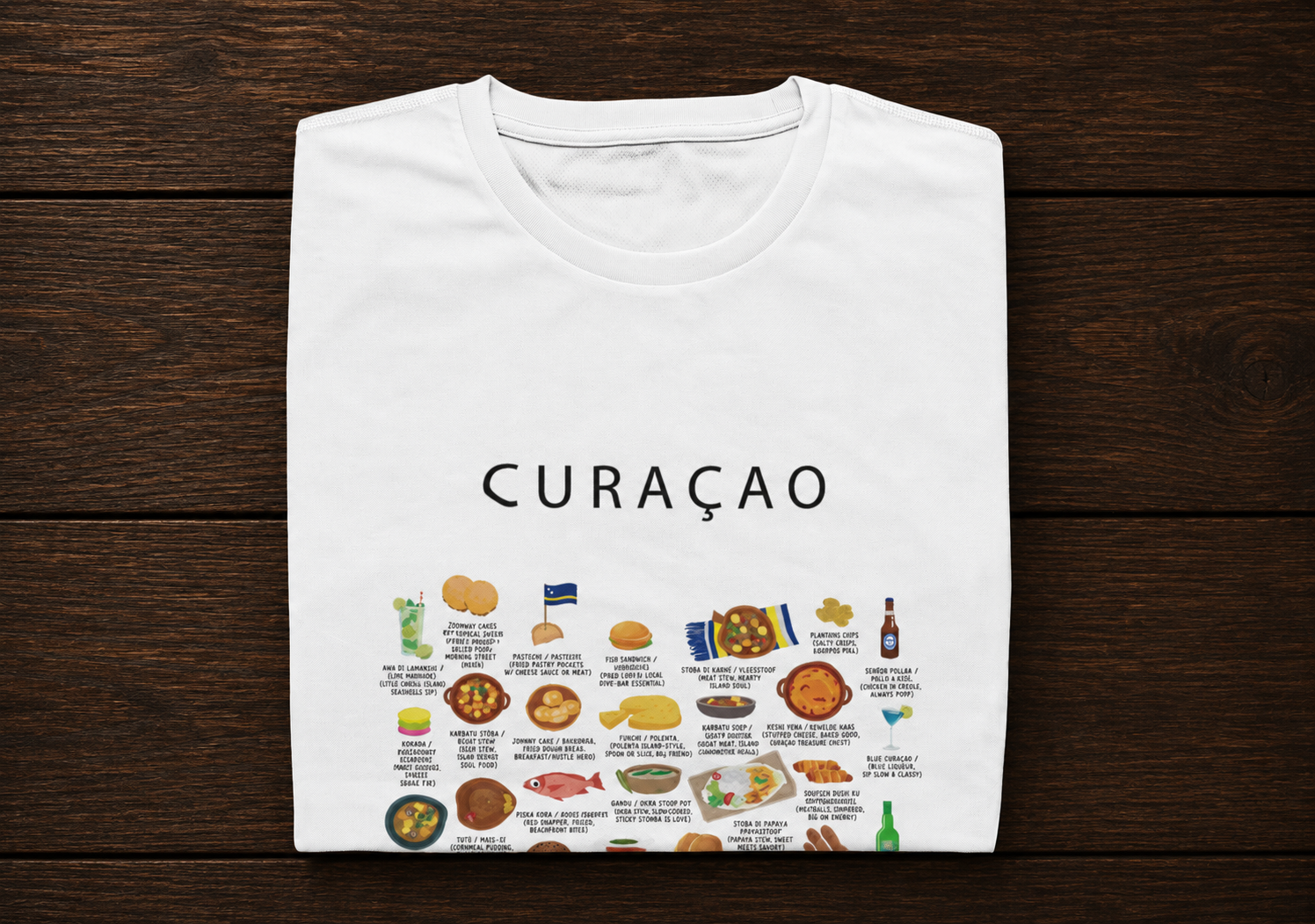
Keshi yená — a whole wheel of Edam or Gouda hollowed out and stuffed with spiced chicken, capers, olives, raisins and prunes, then baked until the cheese melts around the filling — is Curaçao's most famous ambassador and its clearest edible symbol of Dutch pantry meeting Caribbean spice. Stoba di karní, the slow-cooked meat stew served with funchi (Caribbean cornmeal polenta) or rice, is the everyday centrepiece. Sopi di piská, the deep golden fish soup, carries the sea to the table in a single spoon.
Around those anchors sit the deep favourites: pastechi filled with cheese, ham or tuna; johnny cakes and bakkeljauw for breakfast; kabritu stoba, the goat stew that anchors every family gathering; piská korá with tomato and okra; giambo, the sticky okra stoofpot; ayaka, banana-leaf-wrapped meat parcels for Christmas; kroketten and bitterballen inherited from the Netherlands; kokada and bolo di cashupete for something sweet; and ice-cold Polar or Amstel Bright on the side. Every dish carries a piece of Willemstad's coloured waterfront with it.
Blue Curaçao, Rom Berde and the Long Island Evening
Curaçao's drinks map is as iconic as its plates. Blue Curaçao — the bright cobalt liqueur distilled from the peel of the laraha citrus that only grows on the island — is the country's most famous export and its most photogenic pour. Rom Berde and Rum Punch keep the sunset table warm, Polar and Amstel Bright anchor every beachside afternoon, and awa di lamunchi (fresh limewater) or awa di koko (young coconut water) run under everything as the daytime refresher.
Evenings soften into music. Dominoes on the porch, a pot of stoba still on the stove, and the sea turning pink beyond the pastel houses of Punda. The Curaçaoan meal is rarely just about the food — it is about the hours spent around it.
Why Maison Maps Celebrates Curaçao
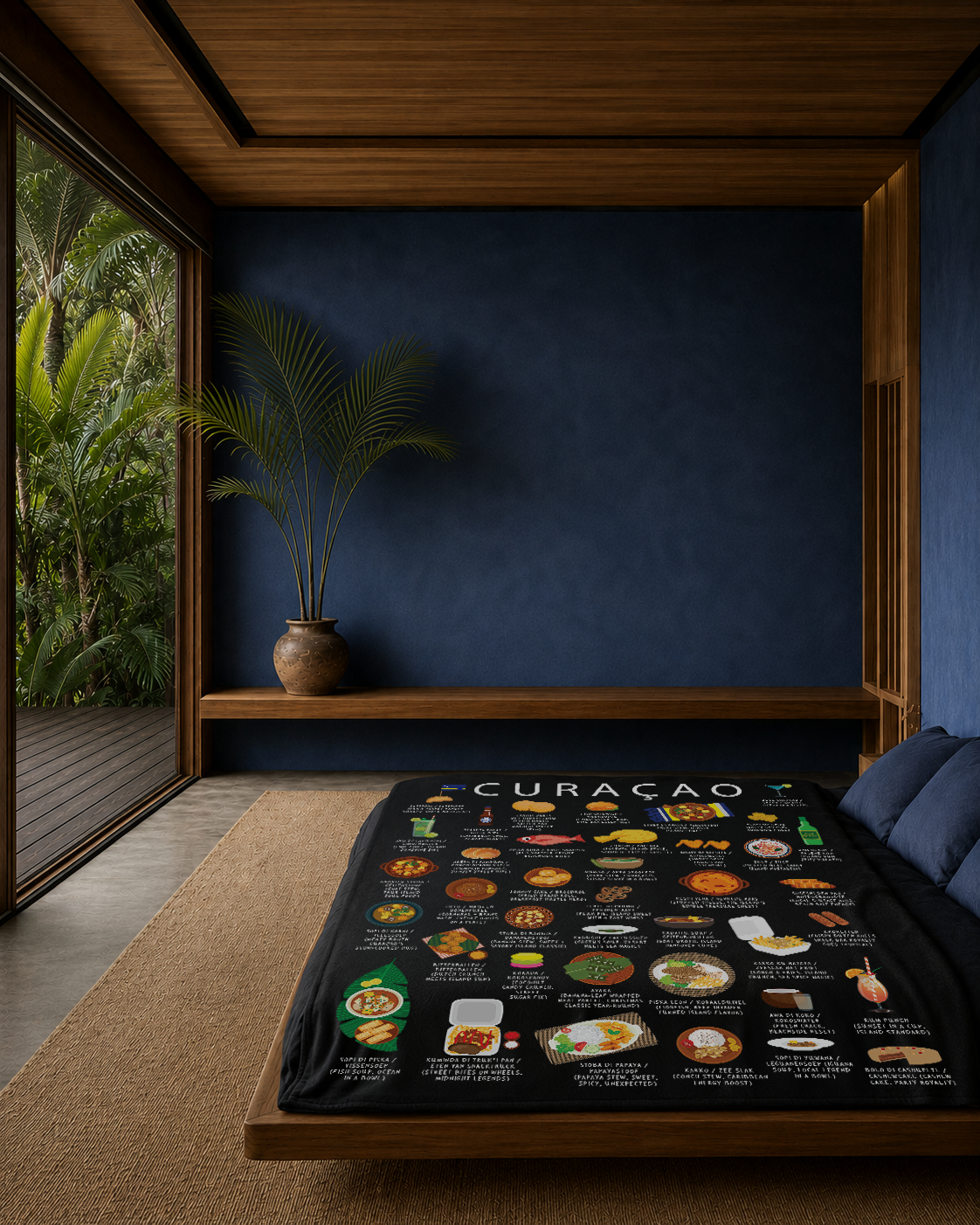
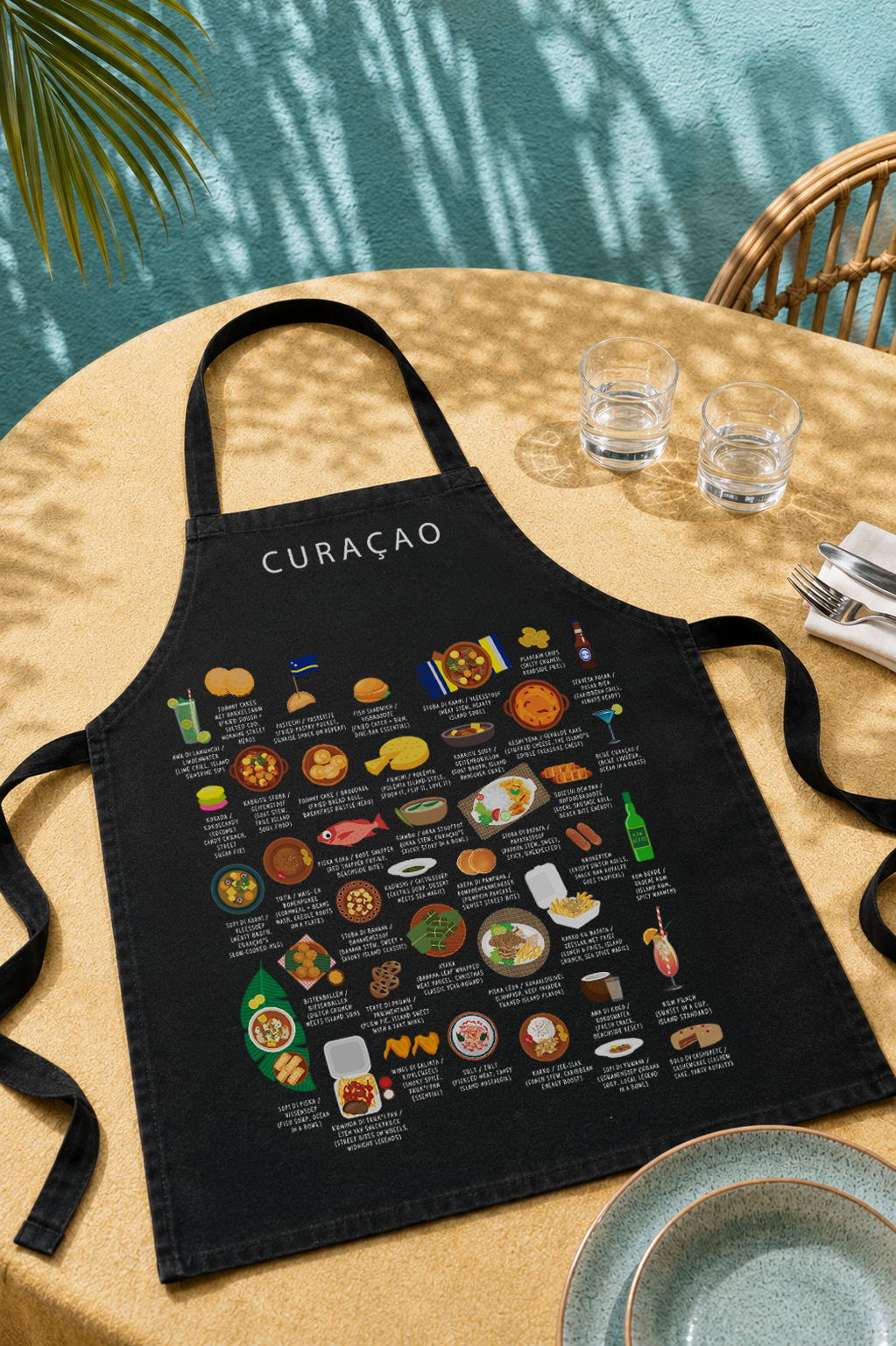
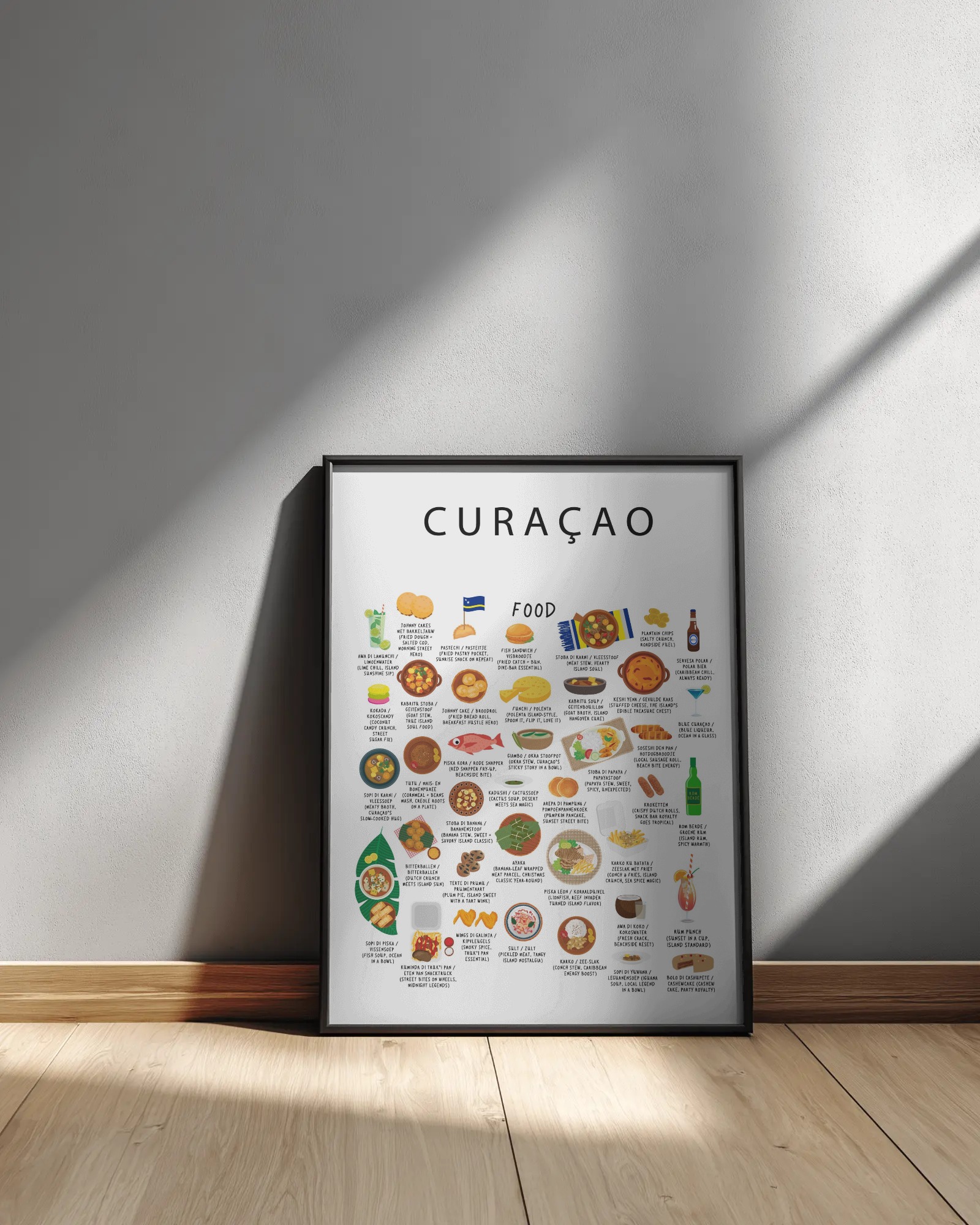
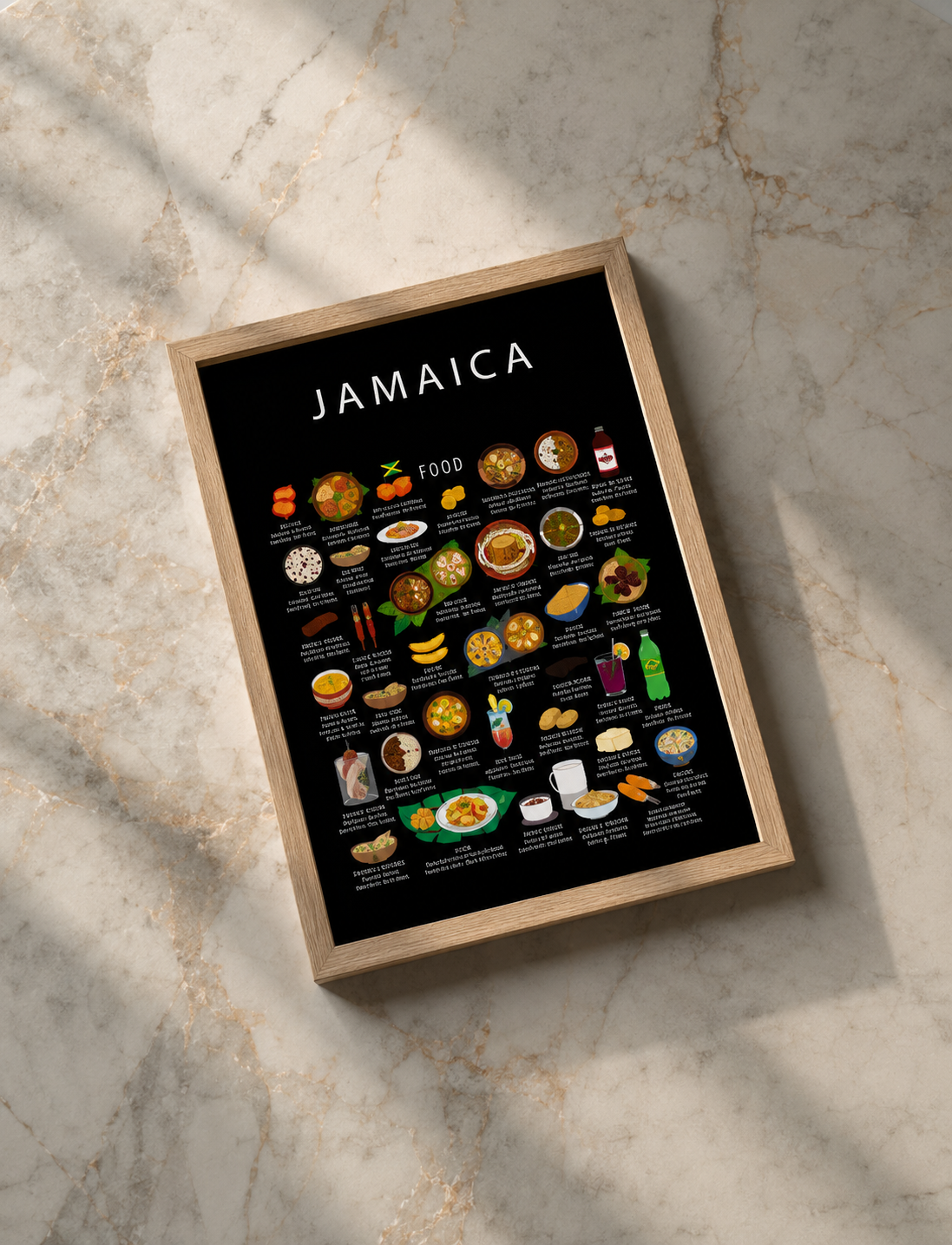
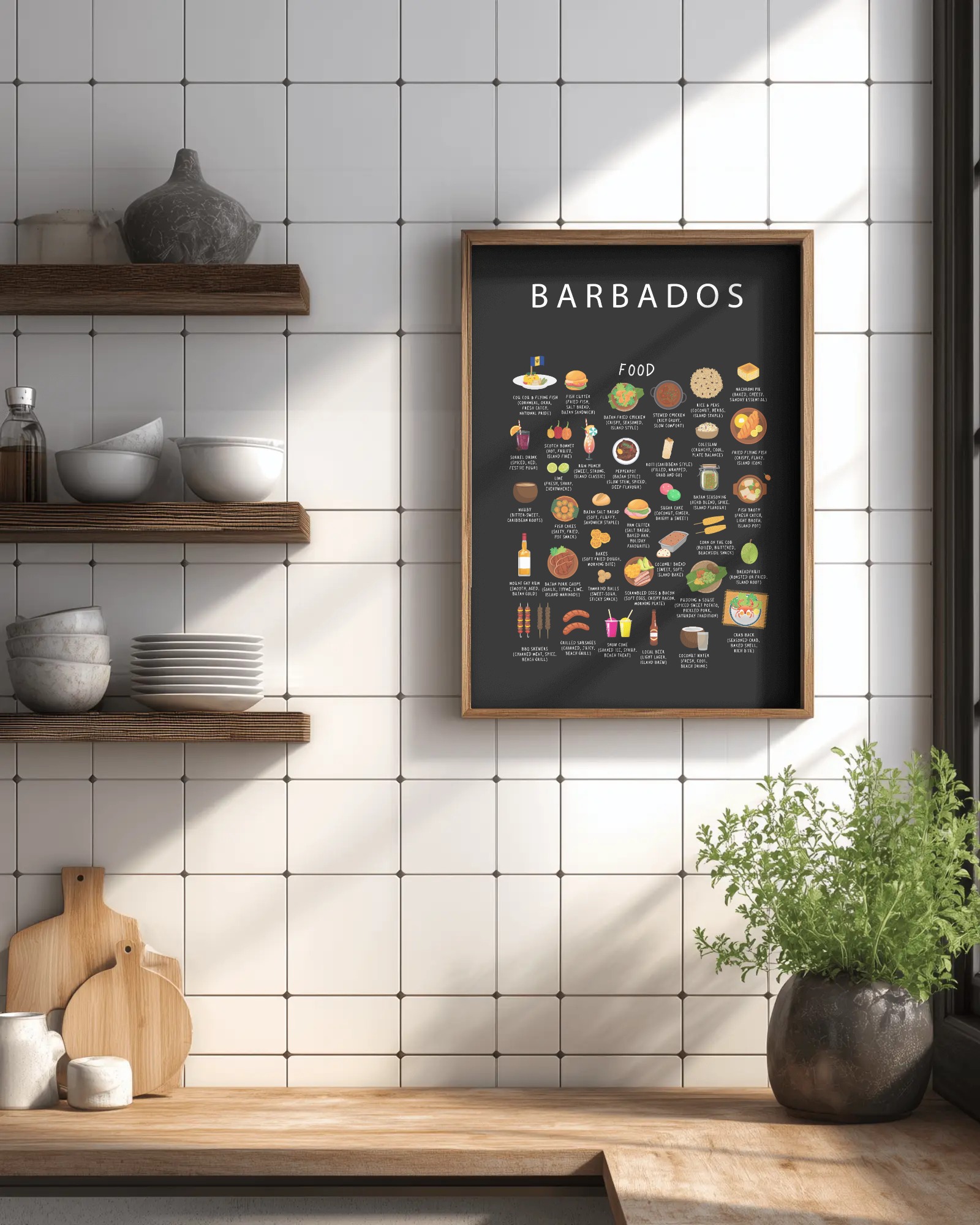
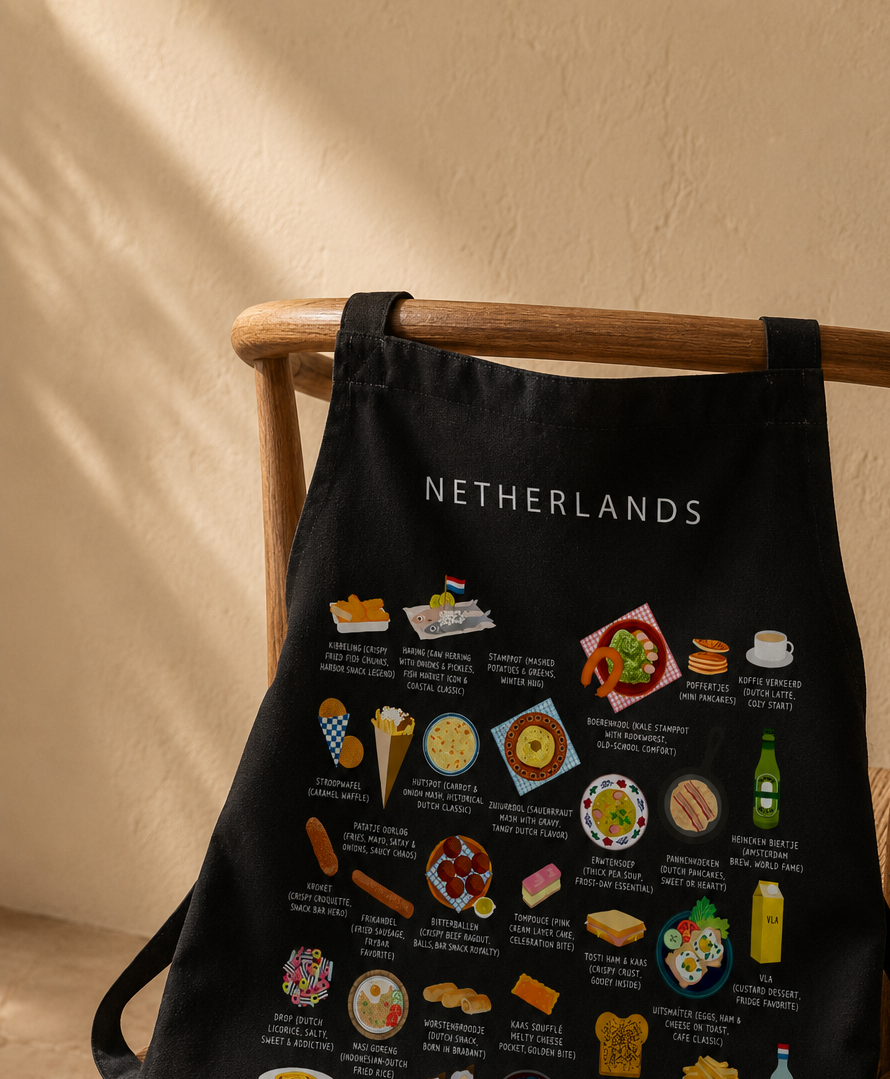
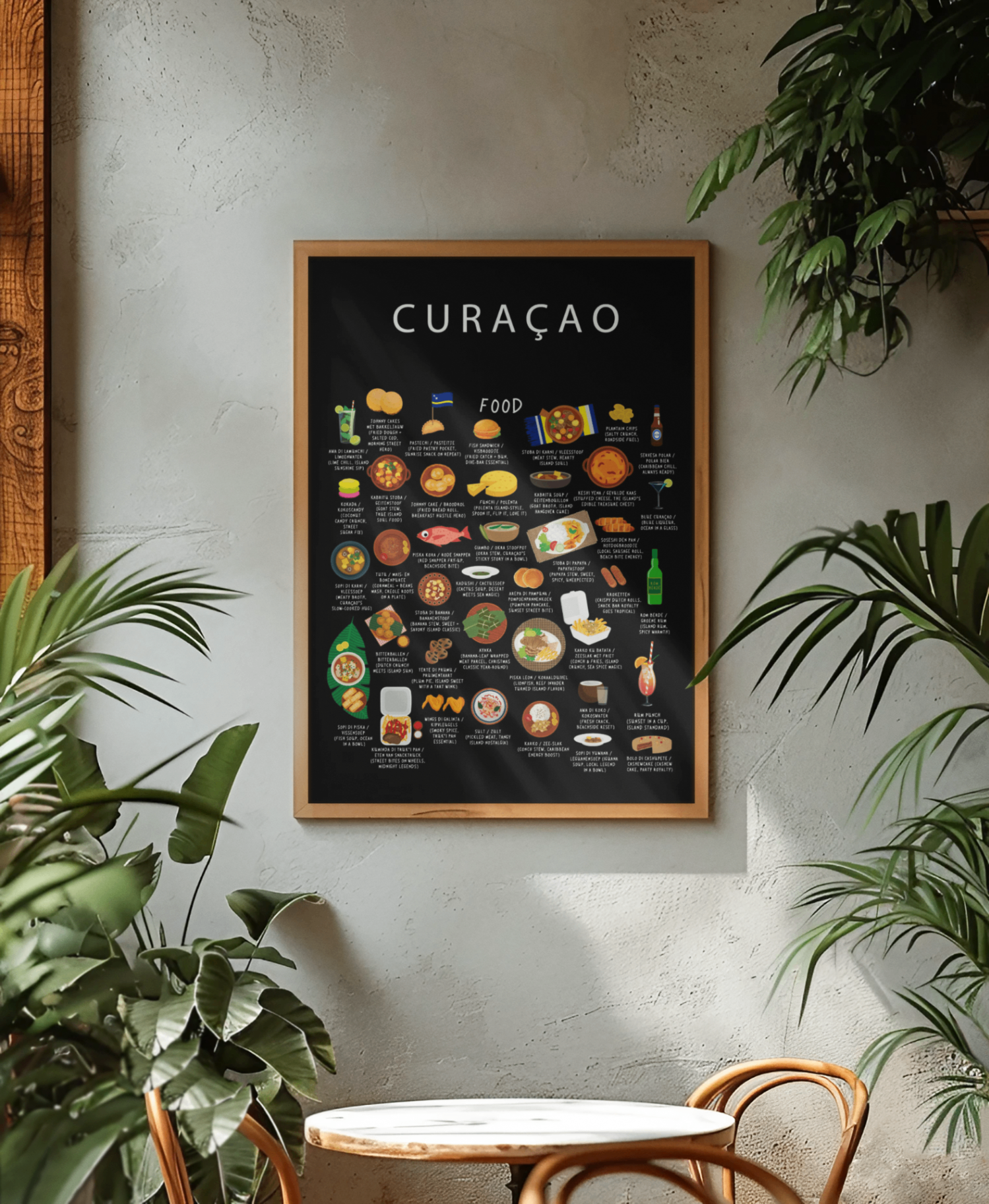
Curaçao's food story is one of the most visually rich in the Caribbean — keshi yená, stoba, pastechi, funchi, kabritu, ayaka, kroketten, Blue Curaçao and all the small sweets and drinks that soundtrack the island. Our Curaçao collection turns that whole world into a single illustrated composition, celebrating the dishes that define the island's slow, generous, sea-scented kitchen.
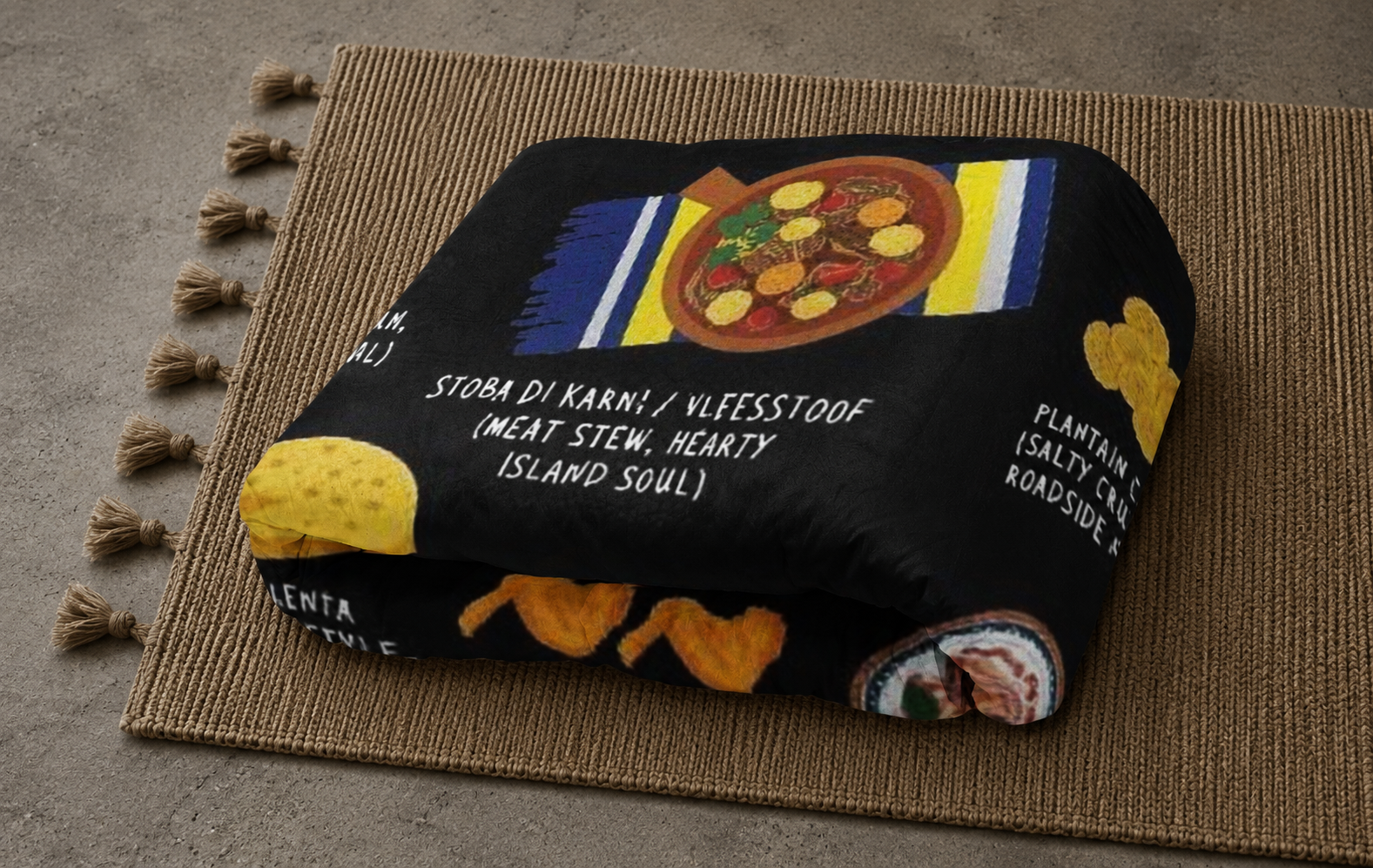
Every Curaçao piece is printed and shipped through our Etsy shop — posters, blankets and aprons for anyone who grew up on stoba, Sunday keshi yená and Blue Curaçao at sunset and wants to keep a little of the island table on the wall and in the kitchen.
Ready to bring the Curaçao kitchen home?
Shop the Curaçao collection on Etsy →