The Story
Poland Food Culture
Mornings in Kraków
Kraków wakes to bread. Obwarzanki are stacked on street carts before the trams fill, bakeries open onto cobbled lanes, and the smell of poppy seed and warm dough drifts through the Old Town. Breakfast is modest and serious: rye bread, butter, white cheese, a pickle, strong tea.
On colder mornings there is żurek — the sour rye soup poured over sausage and egg — a dish that tastes of patience, because its starter has been fermenting for days.
Warsaw, Between the Milk Bar and the New Table
In Warsaw, the bar mleczny still serves pierogi, placki and soup at a counter where students, pensioners and office workers sit side by side. Nearby, a new generation of cooks reworks the same dishes with seasonal produce and lighter hands. Contemporary Polish food keeps one foot in the family kitchen, and that continuity is its strength.
Sunday Tables and Recipes Passed Down
Sunday in Poland means rosół, then something roasted, then cake. Bigos simmers across several days and improves each time it is reheated. Pierogi are pinched by many hands at one table, the filling argued over, the method learnt by watching rather than reading. On Fat Thursday, pączki disappear from every bakery by noon.
These recipes travel. In Polish families abroad, the dish often outlives the language — the same dumplings folded in Chicago, London or Toronto as in a grandmother's kitchen near Lublin.
Why Maison Maps Celebrates Poland
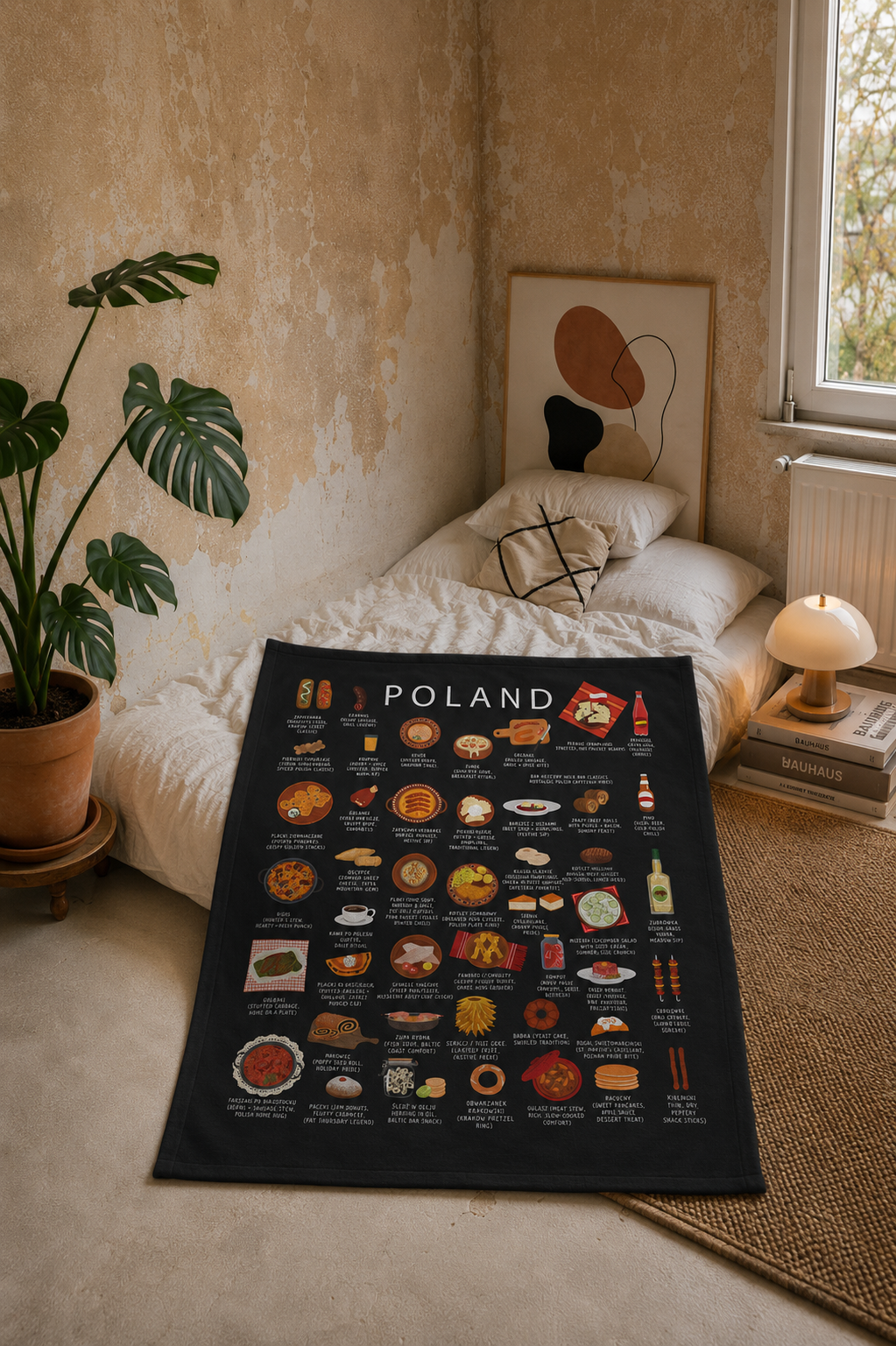
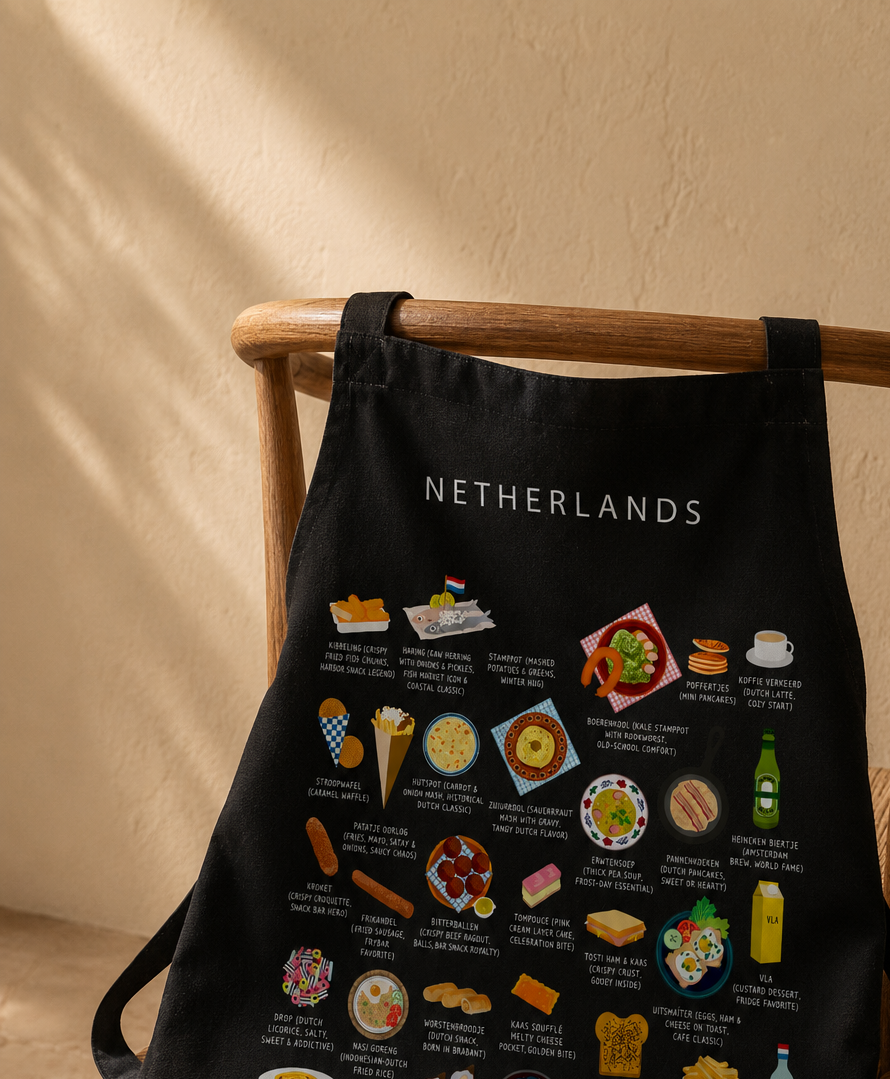
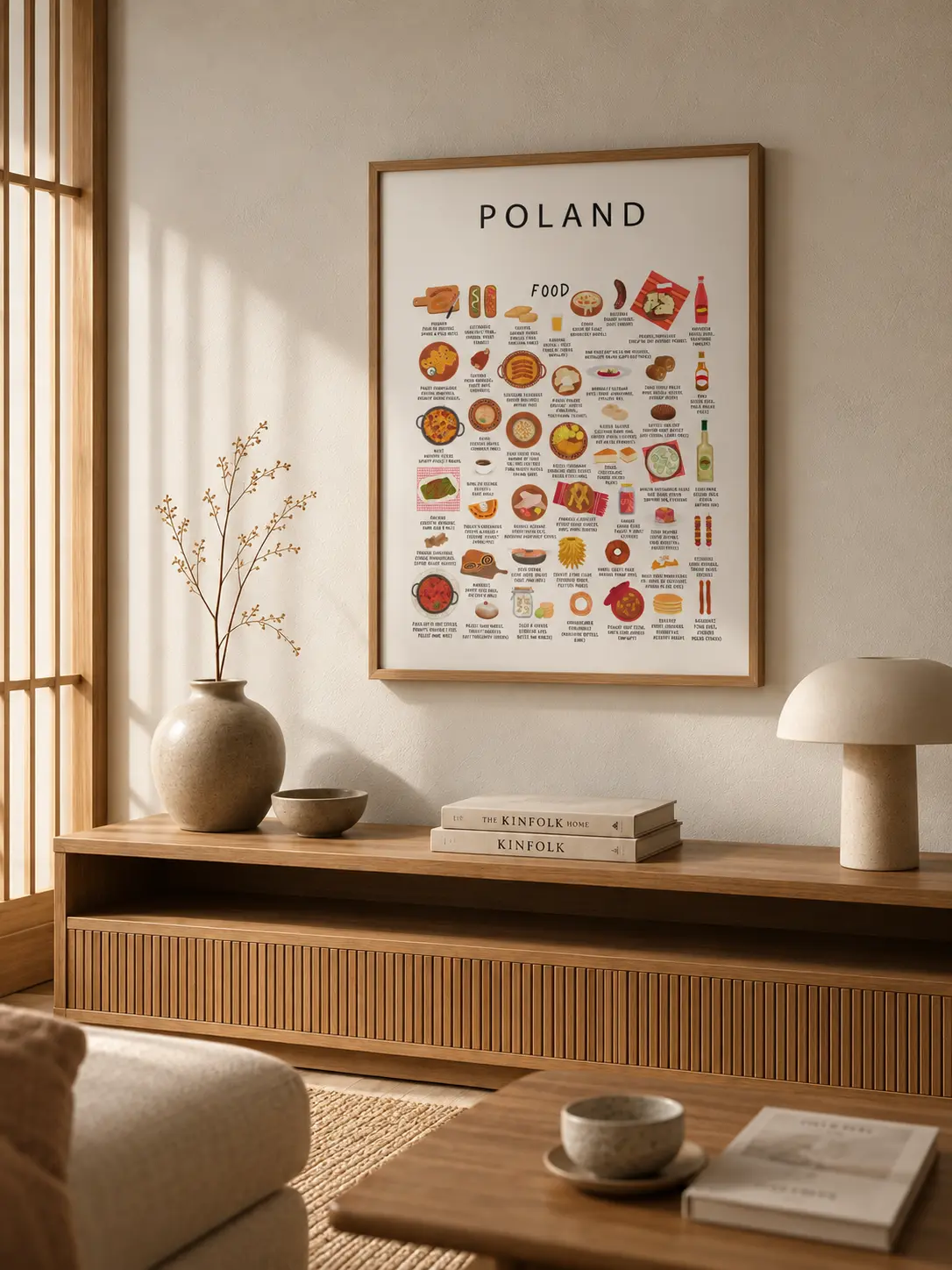
The Maison Maps Poland collection gathers pierogi, żurek, bigos, kielbasa, placki, sernik and pączki into illustrated Poland food posters, aprons, blankets and apparel. They are made for people who remember those tables, and for families who want Polish heritage kept close through the food they still cook.
Ready to bring the Poland kitchen home?
Shop the Poland collection →