The Story
Bosnia & Herzegovina Food Culture
A Kitchen Built on Coal Smoke, Coffee and Old Town Craft
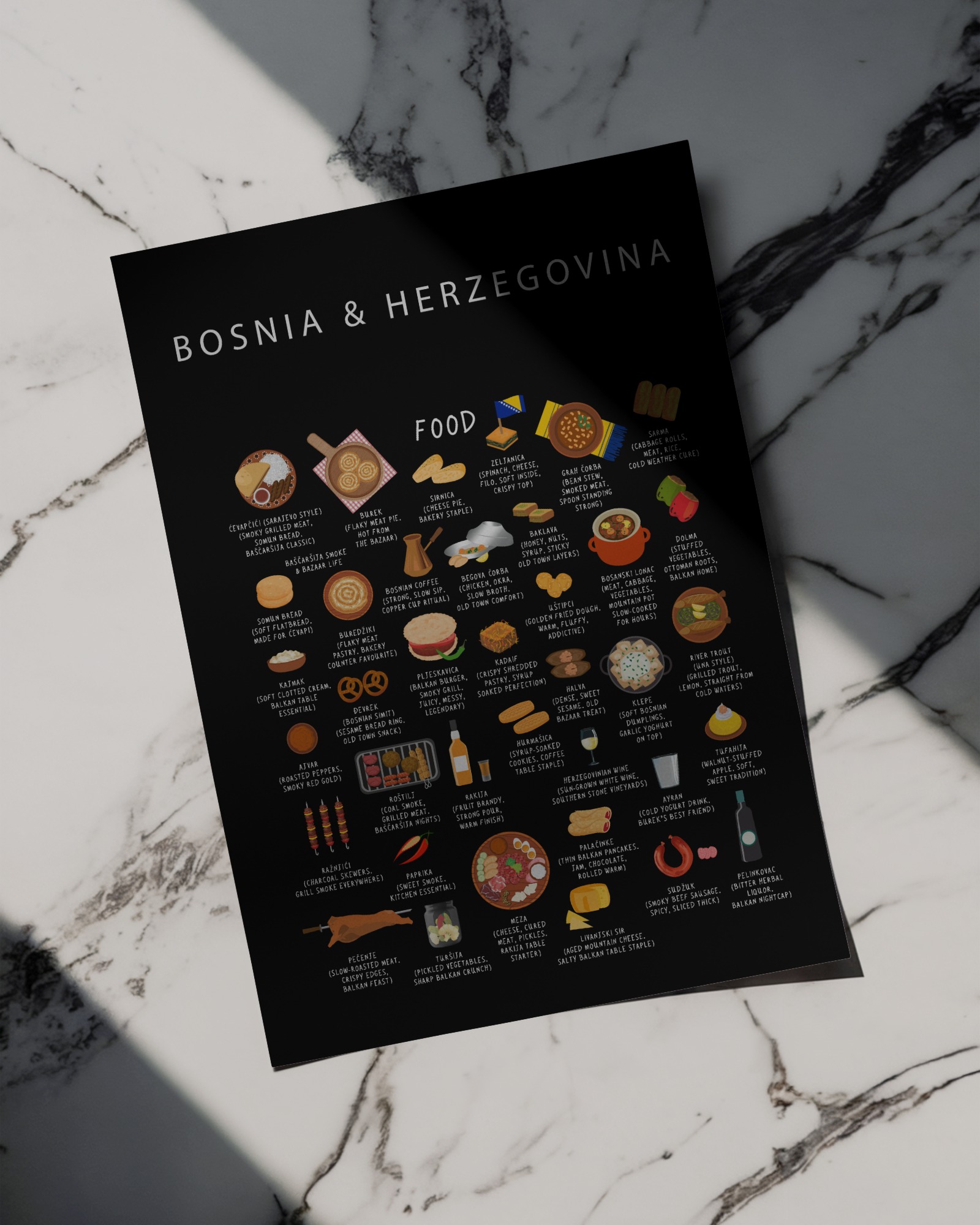
Bosnian food culture sits at a crossroads. Ottoman kitchens left behind slow-cooked meats, layered pies and a coffee ritual that still shapes the day. Balkan neighbours pushed grilled meats, sour dairy and pickled peppers onto the table. Central Europe added pastries and beer halls. The result is a cuisine that feels both intimate and generous — a country where cooking is a form of hospitality first, and technique second.
Walk through Baščaršija in Sarajevo and you smell it immediately: coal from the ćevabdžinica, warm somun bread from the bakery, and the copper-cup steam of Bosanska kafa drifting out of a shaded courtyard. Meals here are unhurried, portioned generously, and almost always shared.
Signature Dishes and the Stories Behind Them
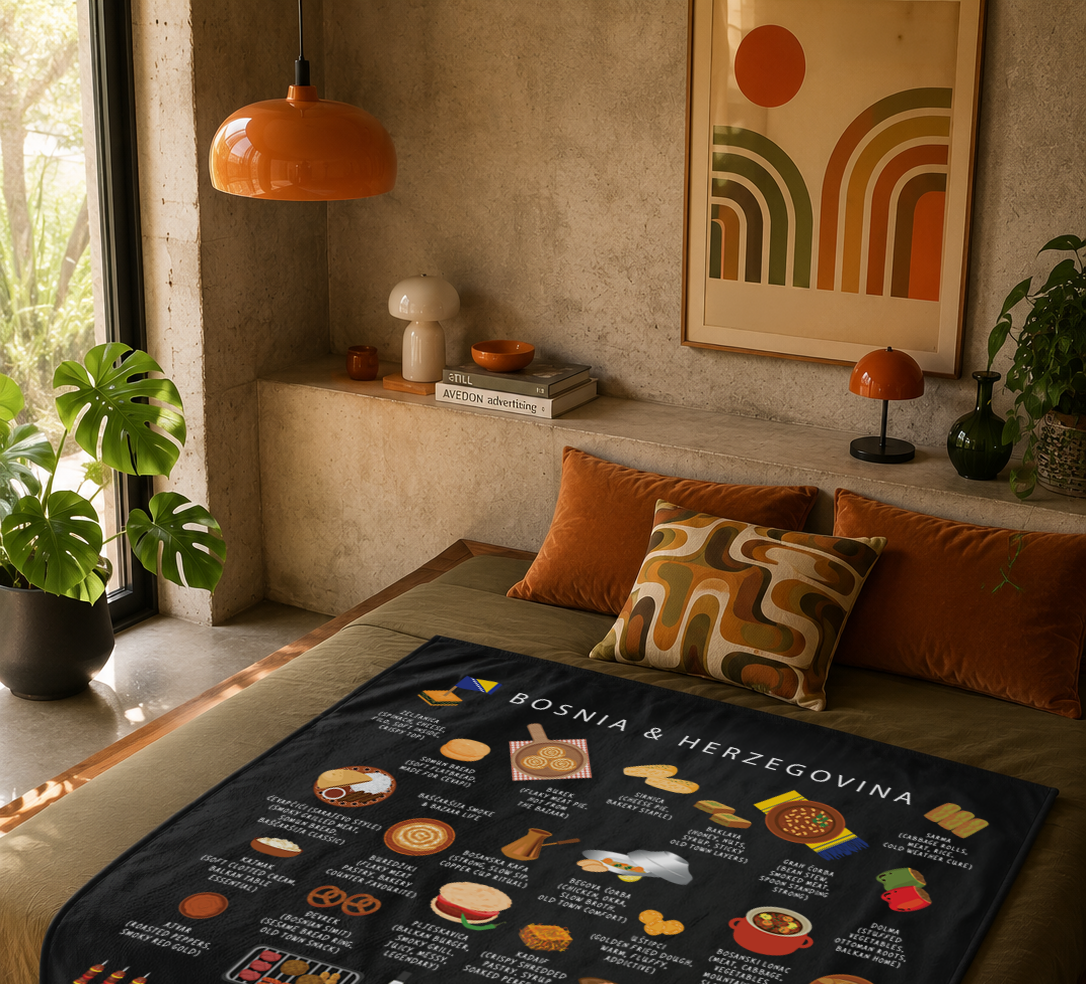
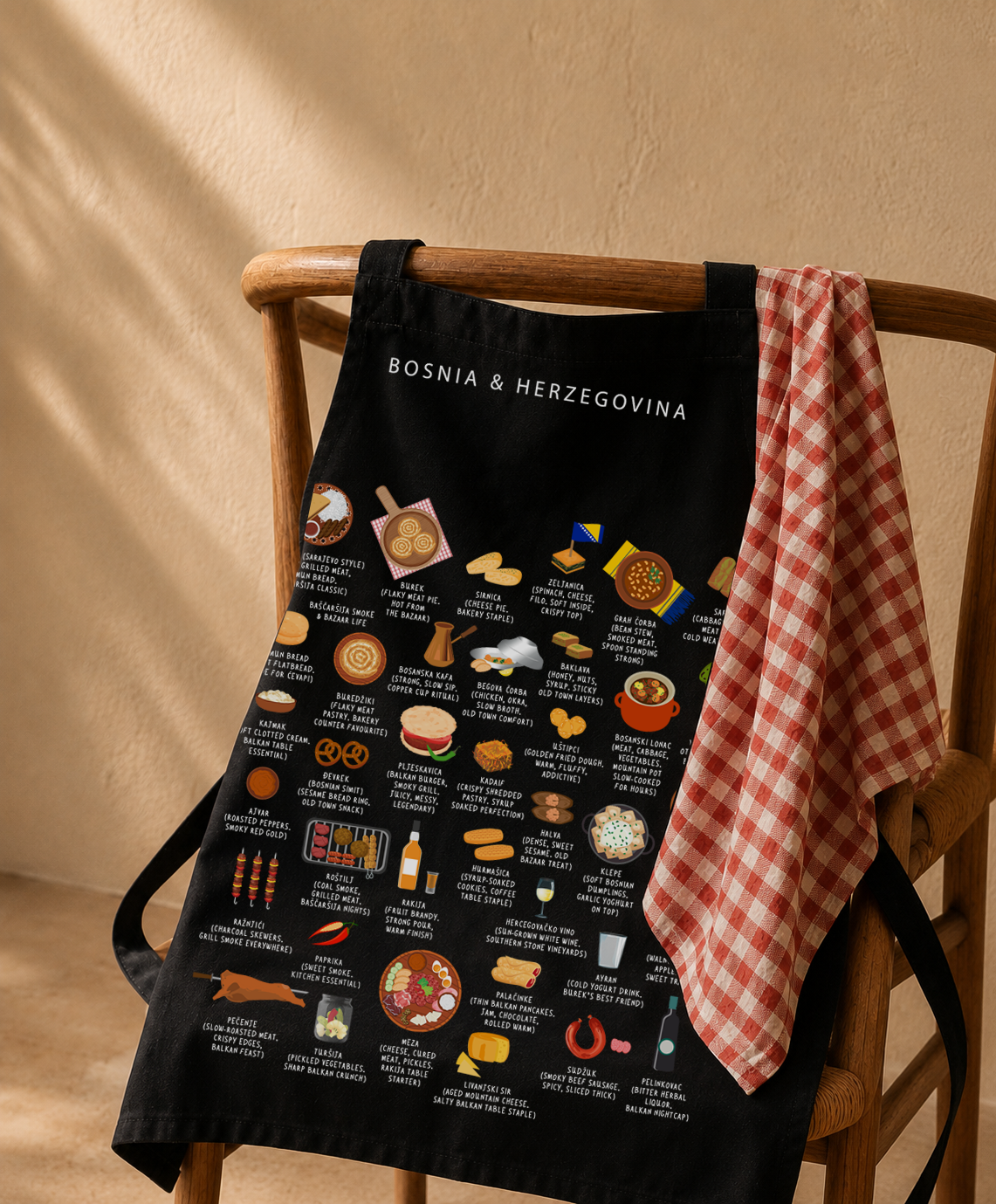
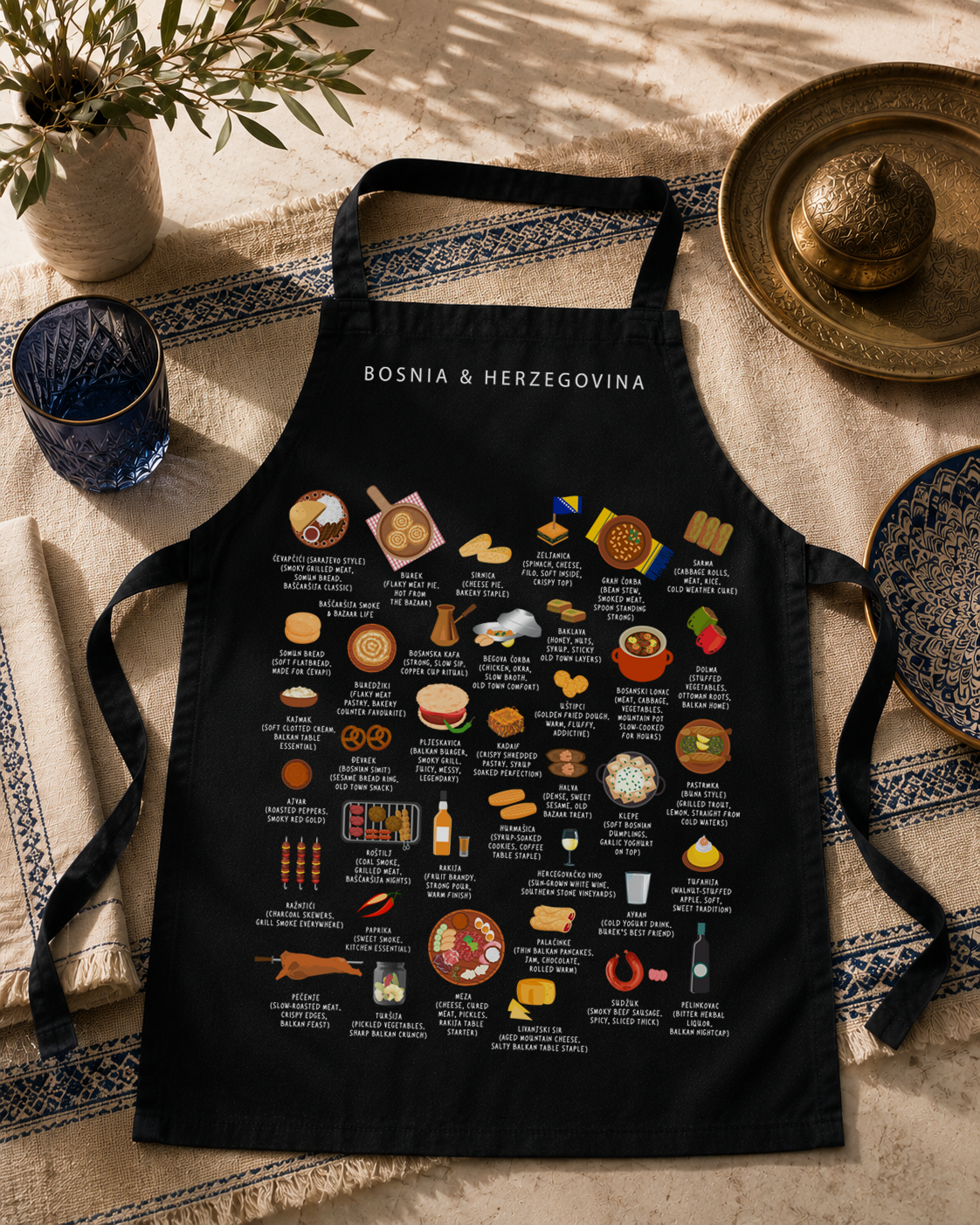
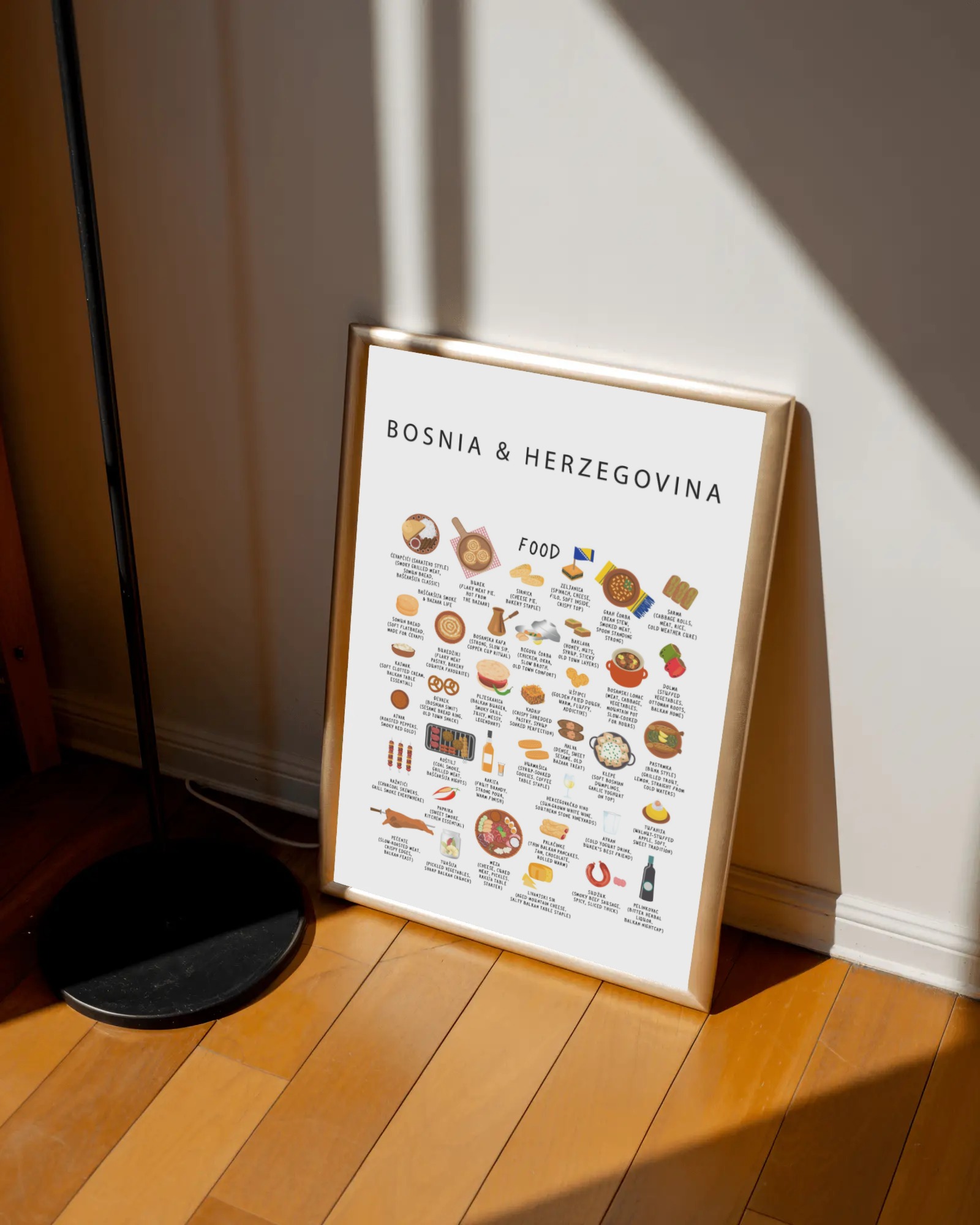
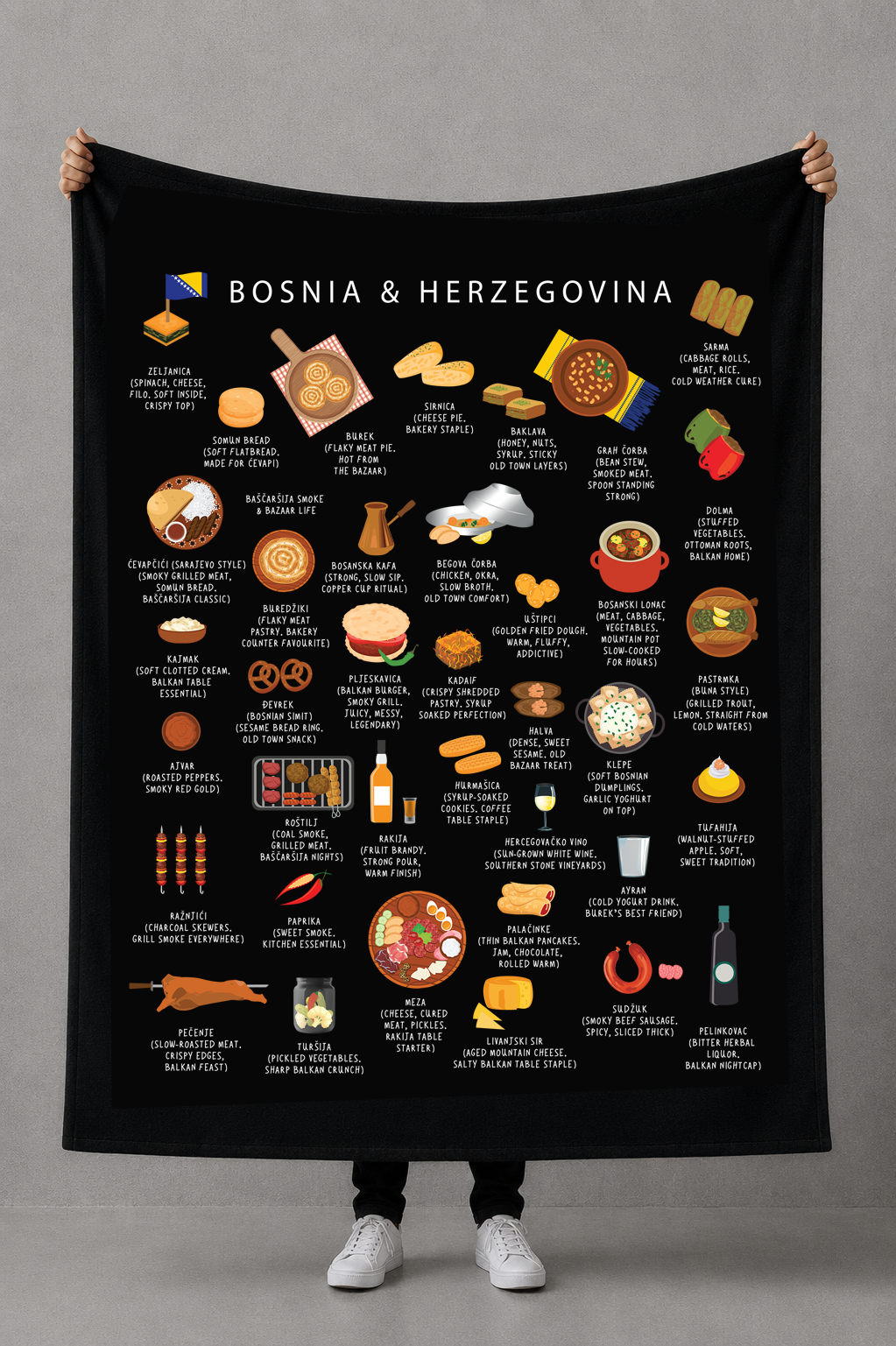
Ćevapi are the country's most famous plate — small grilled meat sausages served in a puff of somun bread with raw onion and kajmak. In Sarajevo they are ordered in fives or tens, never counted, always eaten by hand. Burek, the flaky spiral of meat-filled pastry, comes from the wood-fired ovens of neighbourhood bakeries and is best eaten standing up, with a glass of cold ayran.
Deeper in the kitchen you find bosanski lonac, a slow-simmered pot of meat, cabbage and root vegetables that tastes of mountain winters. Begova čorba is the elegant chicken-and-okra soup once served in Ottoman courts. Sarma wraps rice and meat in sour cabbage leaves for the coldest months, and dolma stuffs peppers and vine leaves the same way. On the sweet side, baklava, hurmašica and tufahija — walnut-stuffed apples in syrup — carry the country's Ottoman memory forward.
Bosnian Coffee, Rakija and the Ritual of Sitting Down
Bosanska kafa is not espresso and not Turkish coffee — it is its own ceremony. Water is heated in a small copper džezva, ground coffee is added, and the whole thing is served with a sugar cube, a piece of rahat lokum and enough time to actually talk. Refusing a coffee in Bosnia is close to refusing a conversation.
In the evening the ritual shifts to rakija — a strong fruit brandy, usually plum — poured in small glasses before dinner, and to Hercegovačko vino from the sun-baked stone vineyards of the south. Beer, especially Sarajevsko, holds down the casual side of the table.
Why Maison Maps Celebrates Bosnia & Herzegovina
Bosnia's food story is one of layers — Ottoman, Slavic, Mediterranean, mountain — held together by hospitality. Our Bosnia & Herzegovina collection maps the country's most-loved dishes and drinks in a single illustrated composition, from ćevapi and burek to bosanska kafa, rakija and tufahija.
Every Bosnia piece is printed and shipped through our Etsy shop, ready to hang in a kitchen, drape over a chair or wear into the market.
Ready to bring the Bosnia & Herzegovina kitchen home?
Shop the Bosnia & Herzegovina collection on Etsy →