The Story
Algeria Food Culture
A Kitchen Between the Sea and the Sahara
Algerian food culture is shaped by geography as much as by history. To the north, the Mediterranean fills the pantry with olive oil, sardines, dorade and citrus. To the south, the Sahara answers with dates, semolina, slow-roasted lamb and the endless glass of mint tea. Between them sit the Berber highlands, French café tradition, Ottoman pastry technique and Andalusian spice — a cuisine layered by every civilisation that has ever passed through Algiers.
What makes Algerian food so quietly distinctive is its restraint. Where Moroccan tagines lean sweet and Tunisian cooking leans fiery, Algeria sits in the calm middle: warm spice, gentle heat, deep olive oil, and an obsession with the loaf of bread on the table. A meal here is judged as much by the quality of the khobz as by anything cooking beside it.
Couscous, Chorba and the Dishes That Anchor the Week
Couscous is Algeria's most sacred plate. Steamed three times over an aromatic broth of lamb, chicken, chickpeas and seasonal vegetables — carrots, turnips, zucchini, cabbage — and served on a single wide platter for the family to gather around. Friday is couscous day across the country; to skip it is almost unthinkable.
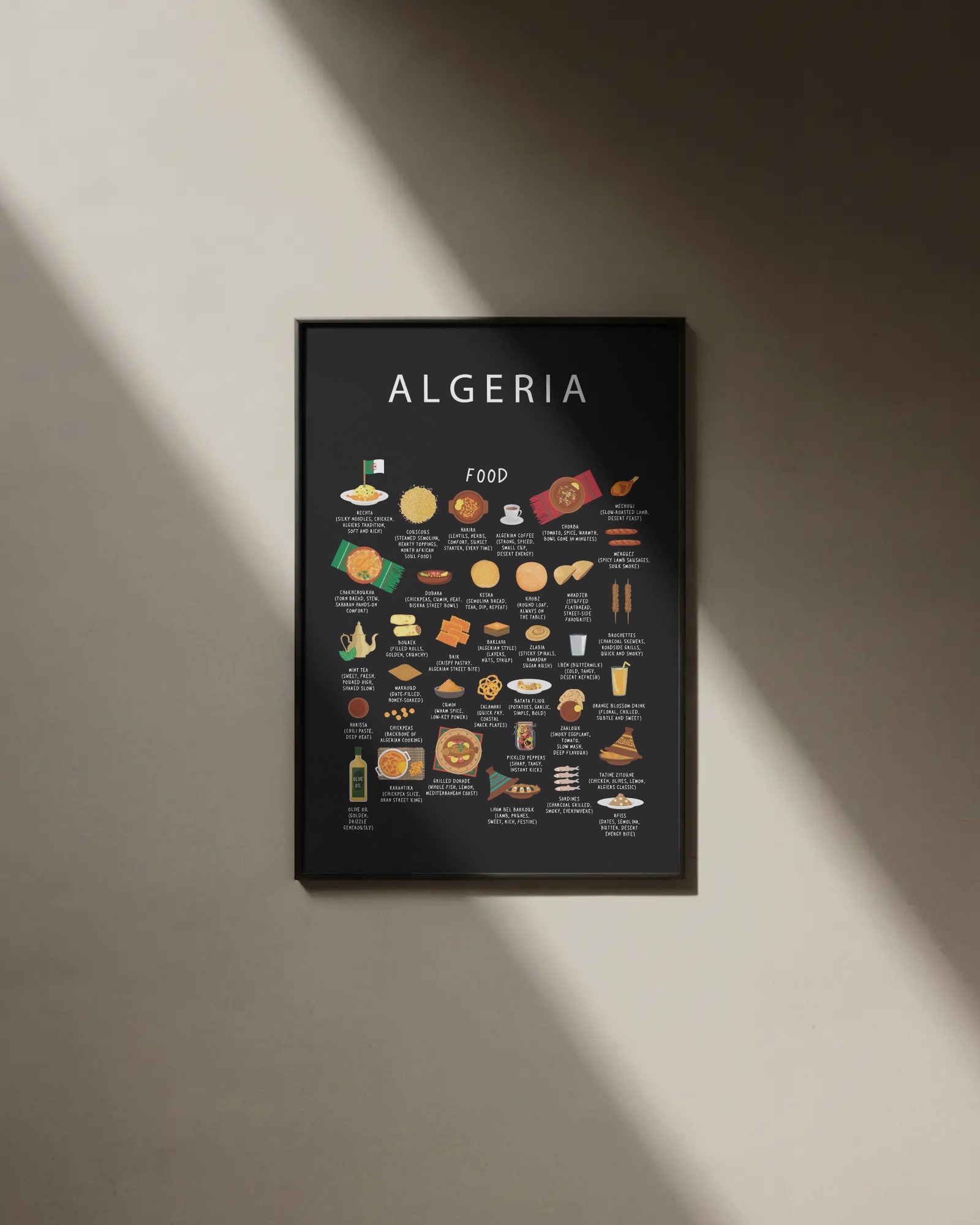
Alongside couscous sits chorba frik — the Ramadan soup made from freekeh, tomato, lamb and coriander that breaks the fast in nearly every Algerian home — and harira's Algerian cousin, thick with chickpeas and lentils. Rechta, silky handmade noodles bathed in a saffron-scented chicken and chickpea sauce, is Algiers' answer to comfort food. Mechoui — a whole lamb roasted slowly over embers until the meat pulls apart with a fingertip — is the desert feast reserved for the biggest gatherings.
Street Food, Bread and the Rhythm of the Souk
Algerian street food is a small universe of its own. Mhadjeb — semolina flatbreads folded around a slow-cooked onion, tomato and pepper filling — sizzle on flat griddles from Algiers to Oran. Karantika, the chickpea-flour bake sold from open ovens along the coast, is Oran's most beloved snack. Brochettes of charcoal-grilled lamb, merguez sausages glossy with harissa, and bourek — crisp filled rolls of pastry — round out the everyday street table.
And behind it all is bread. Khobz eddar (home bread), kesra (semolina flatbread), matlouh (spongy round loaf) — Algerians bake, tear and dip endlessly. A meal without bread is not really a meal.
Mint Tea, Coffee and the Sweet Side of Algeria
Mint tea in Algeria is poured from a great height, three times, until each glass wears a foamy crown. It is the drink of welcome, of negotiation, of long afternoons in the shade. Alongside it sits Algerian coffee — small, strong, sometimes spiced with cardamom — a French colonial inheritance the country has quietly made its own.
The sweets are jewel-box small and deeply generous: makroud, the date-filled semolina diamonds soaked in honey; baklava layered with almonds and orange-blossom syrup; zlabia, the bright-orange fried spirals of Ramadan; kalb el louz, the semolina-and-almond cake perfumed with rosewater; and griwech, the honeyed pastry knots served at every celebration.
Why Maison Maps Celebrates Algeria
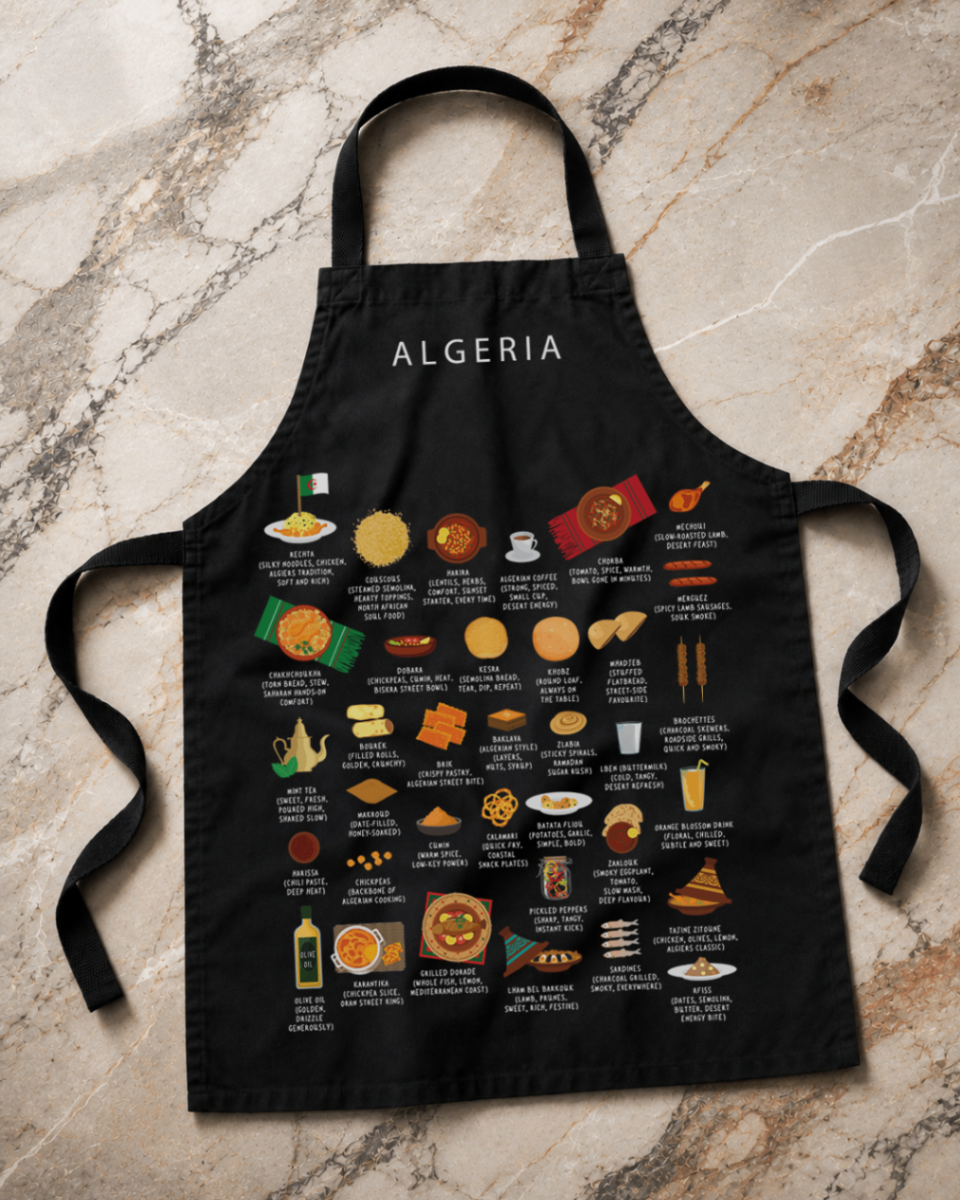
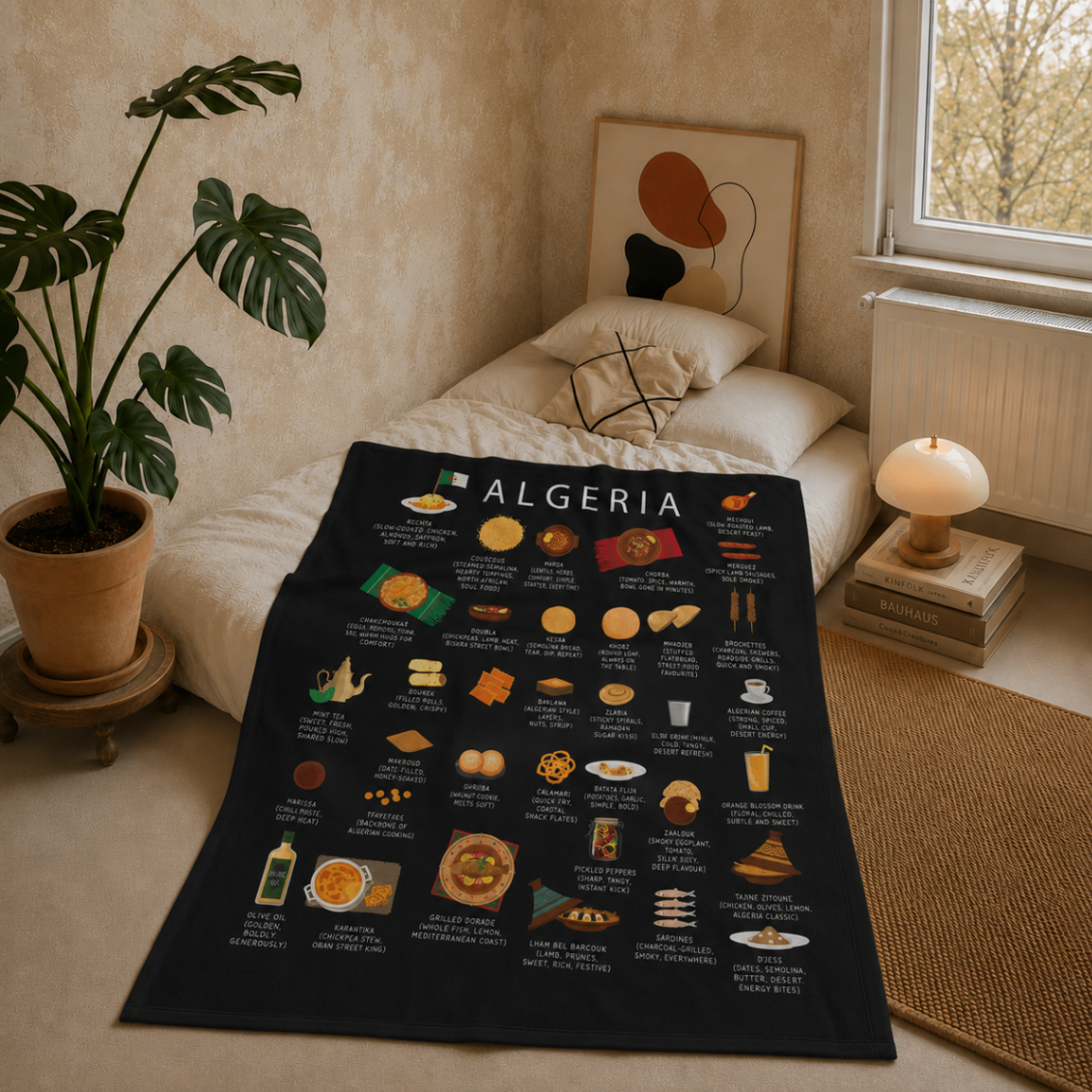
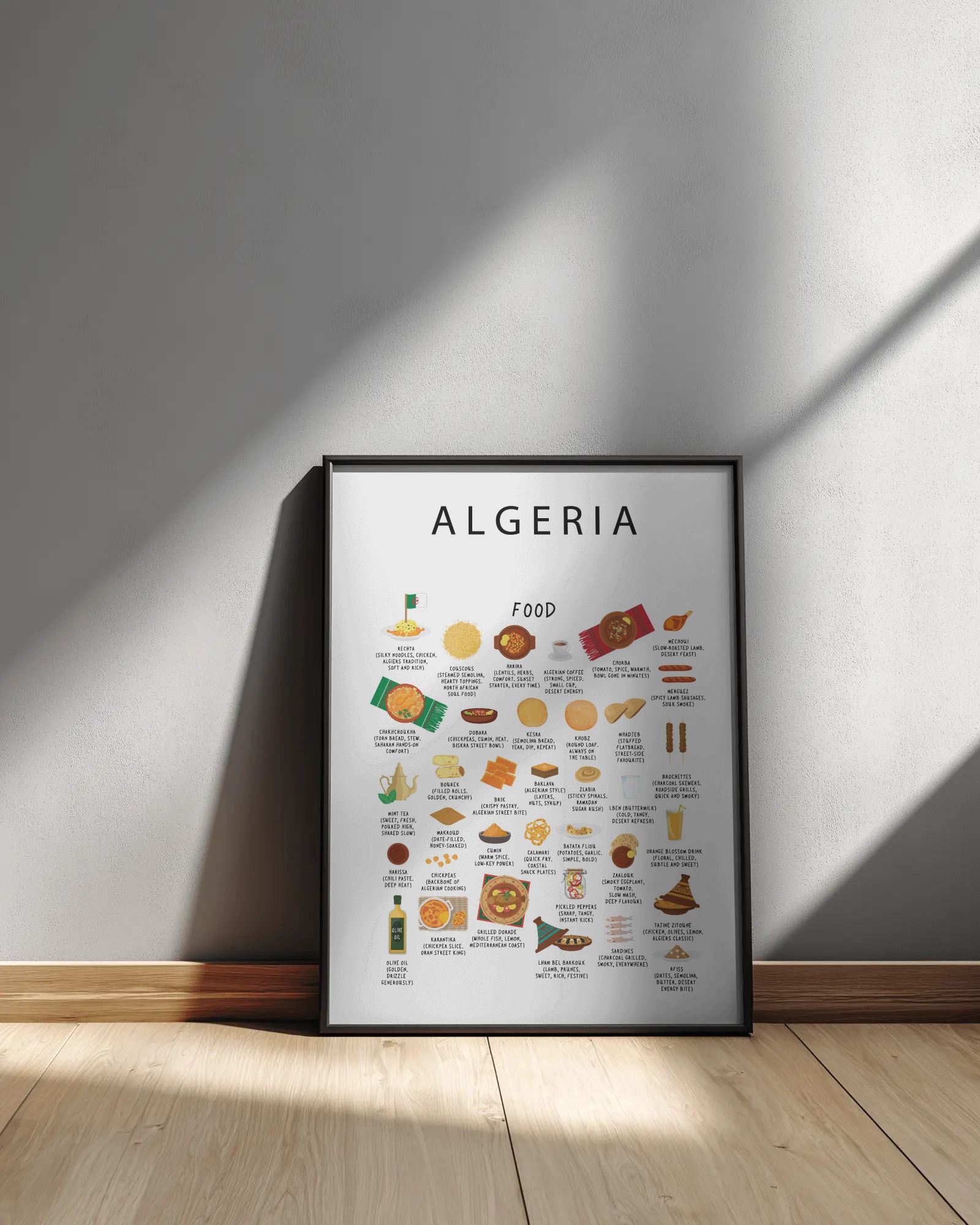
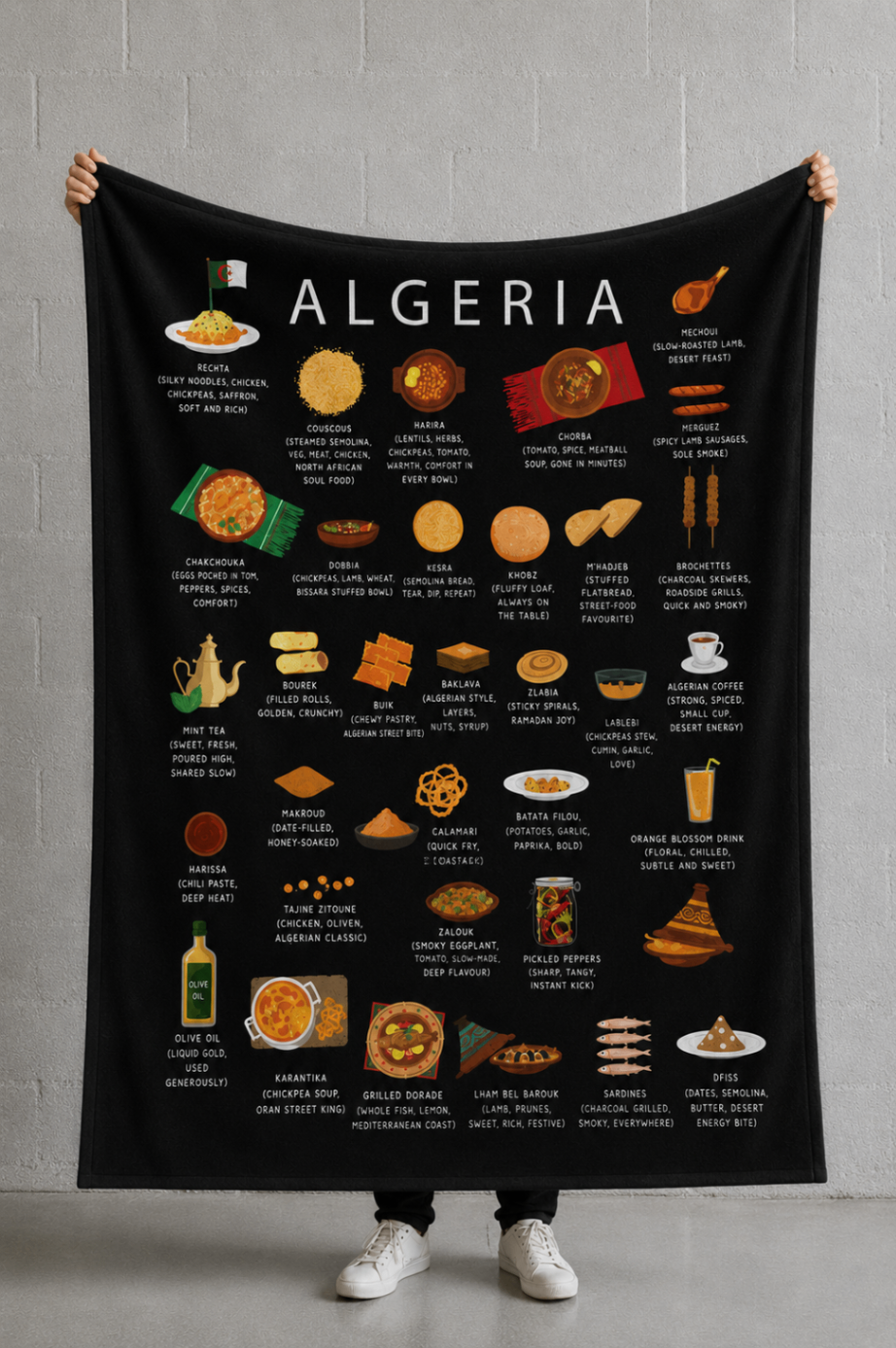
Our Algeria collection was designed to feel like an Algiers afternoon — sea breeze, mint tea, warm bread and the slow, generous rhythm of a Mediterranean-Saharan kitchen. Illustrated plates of couscous, chorba, mechoui, rechta, mhadjeb, makroud and steaming glasses of mint tea gathered onto a single Algeria food poster, framed with the same quiet elegance the Algerian table is known for.
The Algeria collection extends into aprons, tea towels and blankets — pieces made for people who love the depth, warmth and Mediterranean calm of North African cooking. Explore the full Algeria collection on Etsy and bring a little of that Algiers sunlight into your own home.
Ready to bring the Algeria kitchen home?
Shop the Algeria collection on Etsy →